
What to expect from sports physiotherapy for a groin strain
Short answer
Expect a movement assessment and gradual loading programme that rebuilds groin strength, hip control and confidence for sport.
This answers one question. It is not a diagnosis and does not replace an assessment by a licensed doctor.
At a glance
- Main targets
- Adductors, hip control, trunk control and running tolerance
- Typical approach
- Progressive loading matched to symptom response
What happens in sessions
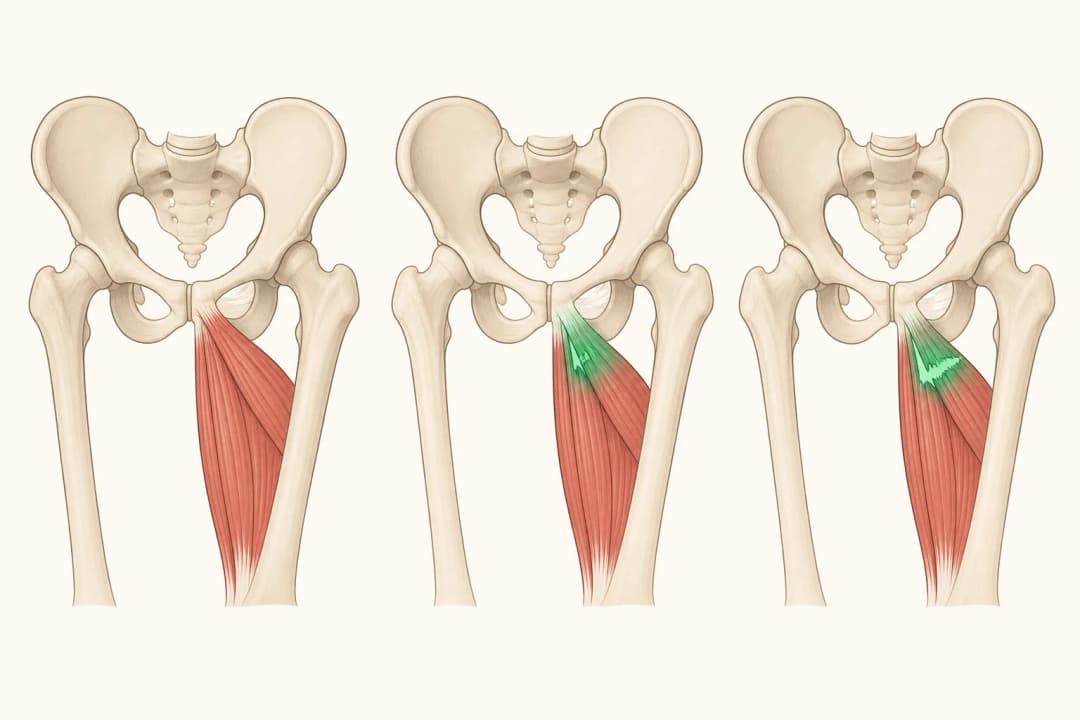
The physiotherapist may examine the painful area, hip movement, adductor strength, abdominal control and the actions that reproduce symptoms, such as cutting, kicking or changing direction. Early treatment often uses comfortable range-of-motion work and gentle isometric strengthening. As irritability settles, exercises can progress to resisted adduction, lunges, squats, running drills and sport-specific direction changes. The goal is to improve how the groin shares load with the hip and trunk, rather than simply testing pain.
What you can do between visits
Complete the prescribed exercises with the stated repetitions and rest periods, and tell your physiotherapist how symptoms respond later that day and the next morning. Avoid repeatedly testing the injury with maximal sprinting, wide lunges or powerful kicks while it is irritable. Keep fitness with alternatives your clinician considers suitable. Progress should follow better strength and movement control, not pressure to meet a match date.
When to seek further care
Arrange medical review if pain is severe, the injury followed a significant impact, bruising or swelling is increasing, or you cannot walk normally. Seek urgent help for sudden testicular pain or swelling, severe abdominal pain, vomiting, a painful groin bulge that cannot be pushed back, or new leg numbness. These features may need assessment beyond routine sports rehabilitation.
Questions for your clinician
Ask which tissues may be involved, whether imaging or a specialist examination is needed, which training can continue, and what strength and running milestones should precede full sport.
Find care
General Clinics & Polyclinics in Abu Dhabi
That answer is general. If you want it applied to your own case, these are licensed general clinics & polyclinics listed in Abu Dhabi.
27 Ar Ruwwad St - Shakhbout City - MSH4 - Abu Dhabi - United Arab Emirates
Accepts: Daman, Thiqa, Cigna, MetLife +20 more
Al Ruwais, Al Dhafrah
Accepts: Daman, Thiqa, AXA, Cigna +16 more
Al Bahyah - Al Bahyah Old - Abu Dhabi - United Arab Emirates
Accepts: Daman, Thiqa, Cigna, Allianz Care +18 more
Abu Dhabi
Accepts: Daman, Thiqa, AXA, Cigna +27 more
Ordered by verification status and how complete each clinic's public record is, then alphabetically. This is a directory listing, not a ranking — Zavis does not rate or recommend providers.
A factual listing drawn from the DHA, DOH and MOHAP licence registers. It is not a referral, an endorsement, or advice that any of these providers is right for you.
Questions people ask
Should you stop all exercise?
Not necessarily. Your clinician can help you keep suitable conditioning while reducing movements that provoke the groin.
Why does the programme progress slowly?
Groin tissues need to tolerate increasing force, speed and direction change before full sports demands are reintroduced.
Keep reading
Medical disclaimer. This page is general health information, not medical advice, and it cannot diagnose you. Always consult a licensed healthcare provider about your own symptoms and treatment. In an emergency in the UAE, call 998 for an ambulance.