
What to expect from a return-to-sport programme for groin strain
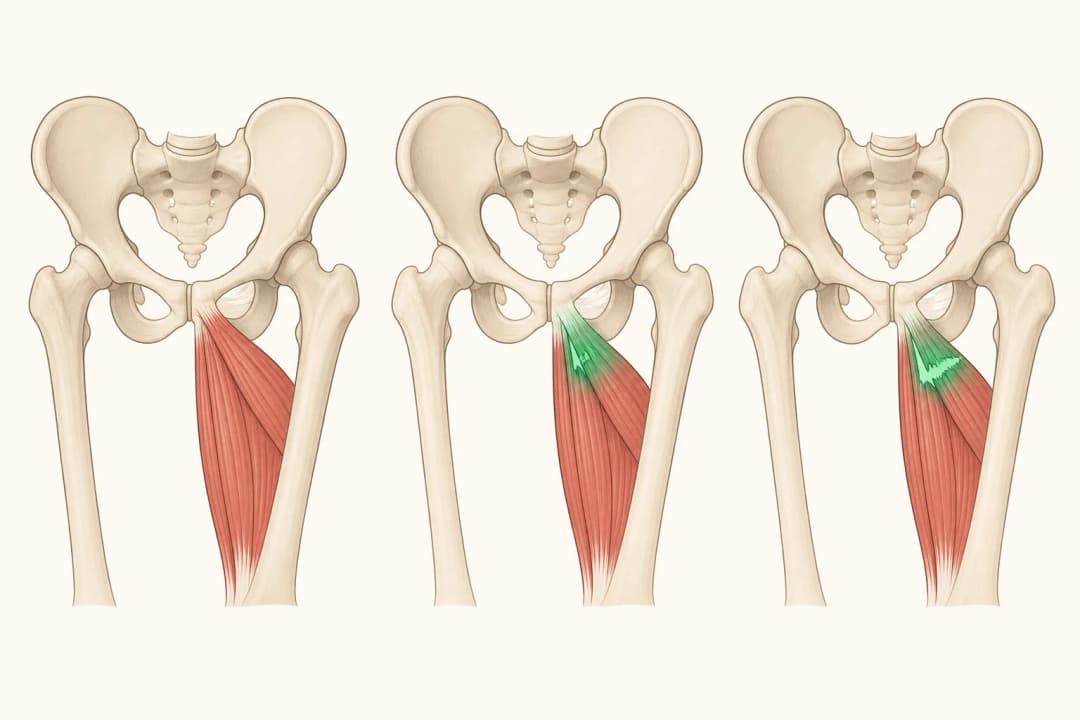
Short answer
Expect a gradual programme that tests groin strength, running tolerance, cutting and sport-specific skills before full return.
This answers one question. It is not a diagnosis and does not replace an assessment by a licensed doctor.
At a glance
- Main focus
- Adductor strength and sport-specific control
- Progression
- Jogging, speed, direction changes, then drills
- Readiness
- Good control without a significant symptom flare
What the programme involves
A clinician first reviews pain, tenderness, hip movement and the demands of your sport. Early work may use gentle range-of-motion exercises and controlled adductor loading. As symptoms settle, exercises can include side-lying leg work, resisted hip movements, bridges, squats and lunges. The load is increased when you can complete it with steady control and no meaningful flare later that day or the next morning.
Running usually progresses from straight-line jogging to faster efforts, acceleration, deceleration and changes of direction. Kicking, shuffling or contact drills are added according to your sport. The final decision considers strength, confidence, movement quality and training tolerance rather than a calendar date alone.
How to take part safely
Follow the prescribed frequency and keep a simple record of pain during exercise and after activity. Warm up before running or drills, use the technique your therapist teaches and avoid suddenly adding extra matches or intense sessions. Tell your clinician if pain becomes sharper, your stride changes, bruising returns or the groin feels weaker. Resume team training in stages, with rest between demanding sessions while capacity builds.
When to seek care
Arrange a clinical review if pain is not improving, keeps returning when running resumes or limits normal walking. Seek prompt assessment after a sudden pop, marked bruising, a new bulge, inability to bear weight, numbness or severe swelling. Chest, abdominal or testicular symptoms are not typical exercise soreness and need urgent medical attention.
Questions for your clinician
Ask which exercises match your strain, what symptom response is acceptable, when to begin jogging, how to progress team training and which movements should be paused. You can also ask how strength and readiness will be checked before competition.
Find care
General Clinics & Polyclinics in Abu Dhabi
That answer is general. If you want it applied to your own case, these are licensed general clinics & polyclinics listed in Abu Dhabi.
27 Ar Ruwwad St - Shakhbout City - MSH4 - Abu Dhabi - United Arab Emirates
Accepts: Daman, Thiqa, Cigna, MetLife +20 more
Al Ruwais, Al Dhafrah
Accepts: Daman, Thiqa, AXA, Cigna +16 more
Al Bahyah - Al Bahyah Old - Abu Dhabi - United Arab Emirates
Accepts: Daman, Thiqa, Cigna, Allianz Care +18 more
Abu Dhabi
Accepts: Daman, Thiqa, AXA, Cigna +27 more
Ordered by verification status and how complete each clinic's public record is, then alphabetically. This is a directory listing, not a ranking — Zavis does not rate or recommend providers.
A factual listing drawn from the DHA, DOH and MOHAP licence registers. It is not a referral, an endorsement, or advice that any of these providers is right for you.
Questions people ask
Can you return as soon as walking feels comfortable?
Comfortable walking is an early milestone, but sport also demands sprinting, cutting and forceful hip movement. These should be rebuilt and assessed progressively.
What if groin pain returns during training?
Stop the provoking drill, note when symptoms appeared and contact your clinician if they persist or recur. The programme may need a slower load increase.
Related
Related reading
Keep reading
Medical disclaimer. This page is general health information, not medical advice, and it cannot diagnose you. Always consult a licensed healthcare provider about your own symptoms and treatment. In an emergency in the UAE, call 998 for an ambulance.