
What to expect from physiotherapy for MCL injury
Short answer
Physiotherapy for an MCL injury usually combines a knee assessment, symptom-guided exercises, movement retraining and a gradual return to daily activities or sport.
This answers one question. It is not a diagnosis and does not replace an assessment by a licensed doctor.
At a glance
- Area
- Inner side of the knee
- Typical focus
- Movement, strength, balance and activity control
How physiotherapy helps
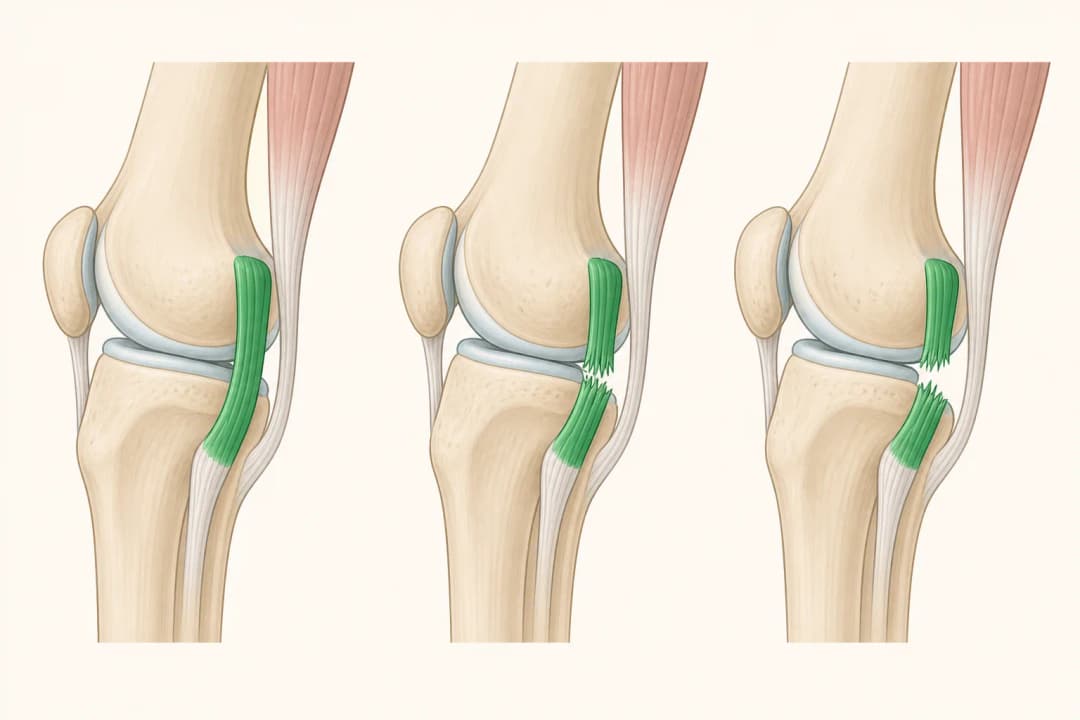
The medial collateral ligament supports the inner side of the knee. Your physiotherapist may check swelling, tenderness, knee movement, walking pattern and the strength of the thigh and hip muscles. The plan depends on the injury and on whether other knee structures are involved.
Early sessions may focus on comfortable movement, reducing stiffness and maintaining strength without stressing the healing ligament. Later work can include balance, controlled changes of direction and tasks that match your work, exercise or sport.
Making progress between sessions
Follow the home programme at the agreed frequency and use discomfort as a guide rather than forcing a movement. Keep appointments informed about swelling, giving-way, locking or a change in walking. Progression is based on control and tolerance, not on a calendar alone.
Ask how to modify stairs, driving, work duties or sport while the knee recovers. Wear any brace or use walking support as instructed, and do not add running, pivoting or contact drills until your clinician says the knee is ready.
When to seek further care
Seek prompt medical assessment if the knee becomes suddenly much more swollen, cannot bear weight, repeatedly gives way, becomes locked, or develops marked redness, warmth or fever. New calf swelling or pain, chest pain or breathlessness needs urgent attention.
Questions to ask
Ask which movements should be limited, what signs show that exercise can progress, whether a brace is appropriate, and when walking, driving or sport can be reviewed.
Find care
General Clinics & Polyclinics in Abu Dhabi
That answer is general. If you want it applied to your own case, these are licensed general clinics & polyclinics listed in Abu Dhabi.
27 Ar Ruwwad St - Shakhbout City - MSH4 - Abu Dhabi - United Arab Emirates
Accepts: Daman, Thiqa, Cigna, MetLife +20 more
Al Ruwais, Al Dhafrah
Accepts: Daman, Thiqa, AXA, Cigna +16 more
Al Bahyah - Al Bahyah Old - Abu Dhabi - United Arab Emirates
Accepts: Daman, Thiqa, Cigna, Allianz Care +18 more
Abu Dhabi
Accepts: Daman, Thiqa, AXA, Cigna +27 more
Ordered by verification status and how complete each clinic's public record is, then alphabetically. This is a directory listing, not a ranking — Zavis does not rate or recommend providers.
A factual listing drawn from the DHA, DOH and MOHAP licence registers. It is not a referral, an endorsement, or advice that any of these providers is right for you.
Questions people ask
Will physiotherapy hurt?
Some exercises may cause mild, short-lived effort or stretching discomfort, but sharp or escalating pain should be reported so the plan can be adjusted.
When can you return to sport?
Return is usually gradual and depends on knee stability, strength, movement control and the demands of your sport.
Related
Related reading
Keep reading
Medical disclaimer. This page is general health information, not medical advice, and it cannot diagnose you. Always consult a licensed healthcare provider about your own symptoms and treatment. In an emergency in the UAE, call 998 for an ambulance.