
What to expect from chemotherapy before surgery for inflammatory breast cancer
Short answer
Expect chemotherapy to begin before surgery, with regular assessments of breast changes, blood tests and side effects, followed by surgery when the team judges it appropriate.
This answers one question. It is not a diagnosis and does not replace an assessment by a licensed doctor.
At a glance
- Treatment order
- Chemotherapy before surgery
- Monitoring
- Blood tests, examination and imaging when needed
Why treatment starts with medicine
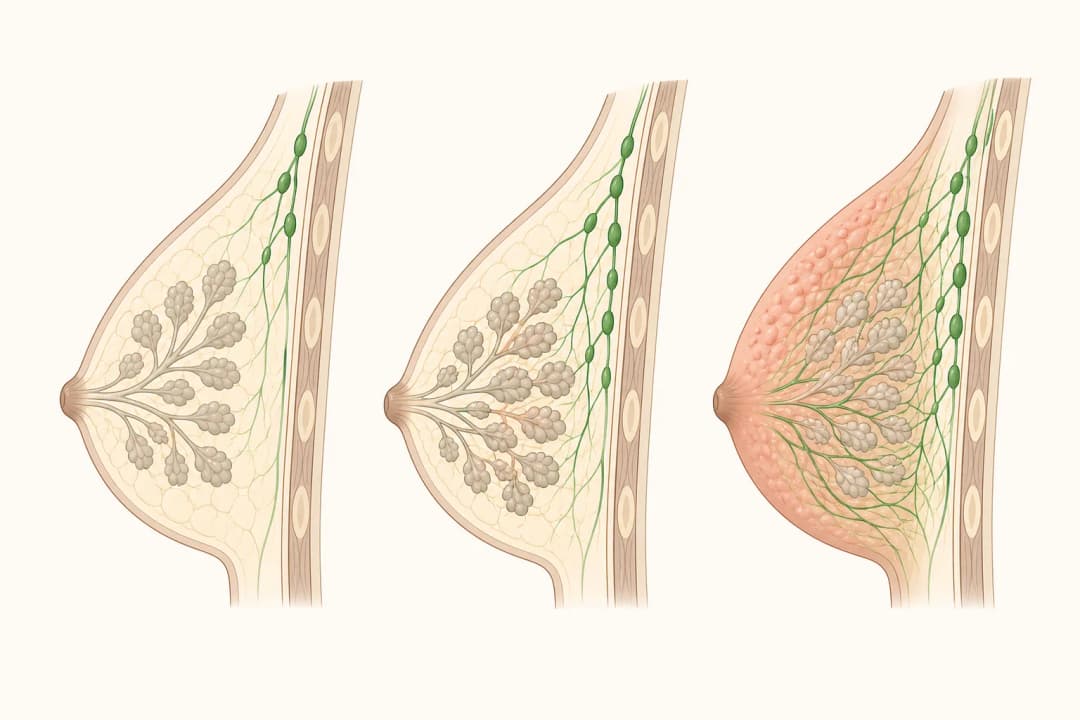
Inflammatory breast cancer can cause rapid breast swelling, redness, warmth or skin thickening. Chemotherapy before surgery treats cancer throughout the body and aims to reduce disease in the breast and nearby tissues before an operation. The team may also use other medicines according to tumour features. The breast appearance can change during treatment, and examination or imaging helps assess response.
Preparing between treatments
Keep a record of temperature, breast changes, pain, medicines and any new symptoms. Attend blood tests and treatment reviews even when you feel well. Arrange help with transport and daily tasks, eat what you can tolerate, drink enough for your care plan and protect irritated skin as advised. Tell the team promptly about infection exposure, pregnancy possibility or a treatment delay.
When to seek care
Call your oncology unit urgently for fever or chills, sudden worsening redness or swelling, severe pain, persistent vomiting, diarrhoea, inability to drink, or a painful red line around a port or cannula. Emergency symptoms include severe breathlessness, chest pain, fainting or confusion. A new breast change should be reported rather than waiting for the next appointment.
Questions for your doctor
Ask which medicines are planned, how breast response will be measured, when surgery is expected to be considered, which symptoms require immediate contact, and whether reconstruction discussions should happen before treatment begins.
Questions people ask
Will the breast redness disappear immediately?
Changes may improve gradually, remain for a time or fluctuate. Tell the team about any change so it can be assessed in context.
Why are blood tests repeated?
They help the team check blood-cell levels and organ function before deciding whether treatment can continue as planned.
Related
Related reading
Keep reading
Cancer care in the UAE
Hospitals & Medical Centers in Abu Dhabi
Most UAE cancer care is delivered inside hospital services rather than by standalone oncology clinics, so these are licensed hospitals & medical centers listed in Abu Dhabi. Confirm the specific cancer service exists before you travel, and know that asking for a second opinion is routine.
Ahalia Hospital Musaffah Building - Musaffah - Musaffah Industrial - Abu Dhabi - United Arab Emirates
Accepts: Daman, Thiqa, AXA, Cigna +26 more
Al Ruwais Industrial City - Abu Dhabi - United Arab Emirates
Accepts: Daman, Thiqa, AXA, Cigna +30 more
Abu Dhabi, Abu Dhabi
Accepts: Daman, Thiqa, AXA, Cigna +30 more
Second opinions are routine in cancer care and asking for one does not affect your treatment. How to arrange a second opinion in the UAE.
Ordered by verification status and how complete each clinic's public record is, then alphabetically. This is a directory listing, not a ranking — Zavis does not rate or recommend providers.
A factual listing drawn from the DHA, DOH and MOHAP licence registers. It is not a referral, an endorsement, or advice that any of these providers is right for you.
Medical disclaimer. This page is general health information, not medical advice, and it cannot diagnose you. Always consult a licensed healthcare provider about your own symptoms and treatment. In an emergency in the UAE, call 998 for an ambulance.