
What to expect from laparoscopic ovarian cystectomy for ovarian torsion
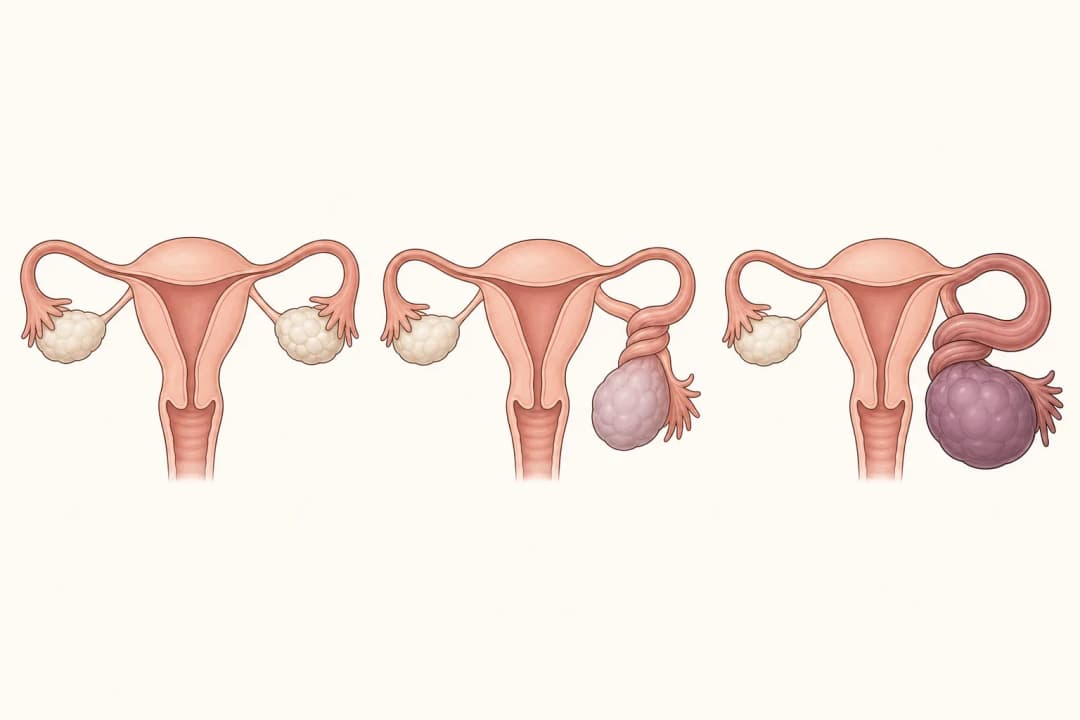
Short answer
Expect keyhole surgery under anaesthesia to untwist the ovary and remove the cyst when possible, followed by monitoring for pain, bleeding and ovarian recovery.
This answers one question. It is not a diagnosis and does not replace an assessment by a licensed doctor.
At a glance
- Approach
- Keyhole abdominal surgery
- Main aim
- Untwist the ovary and remove the cyst when possible
- Aftercare
- Wound, pain and ovarian follow-up
What the operation involves
Ovarian torsion happens when an ovary twists around its supporting tissues and can reduce its blood supply. Laparoscopy uses small abdominal openings for a camera and instruments. The surgeon first assesses the ovary, untwists it, and examines the cyst. Cystectomy removes the cyst while preserving ovarian tissue when this is safe and feasible. The ovary may look swollen or discoloured at first, so the surgical plan can depend on how it responds after untwisting.
After surgery, you may have abdominal tenderness, shoulder-tip discomfort from the gas used during laparoscopy, tiredness and light vaginal bleeding. The team checks your observations, pain control, ability to drink and urinate, and the incision sites before discharge or continued observation.
Preparing and recovering
Follow the fasting and medicine instructions from the surgical team, and arrange an adult to take you home if discharge is planned. During recovery, keep the small wounds clean and follow advice about bathing, driving, lifting and sex. Gentle walking can help you regain movement, but build activity gradually. Attend the follow-up appointment so the pathology result and any plan for ovarian or fertility care can be discussed.
When to seek urgent help
Contact your surgical team promptly for worsening rather than settling pain, repeated vomiting, fever, increasing redness or discharge from a wound, heavy vaginal bleeding, faintness, chest pain or difficulty breathing. Sudden severe pelvic pain after treatment needs urgent assessment because torsion can recur or another pelvic problem may develop.
Questions to ask
Ask whether the ovary was preserved, what was found during surgery, when the pathology result will be available, and which symptoms should trigger emergency review. You can also ask when to return to work or exercise and whether future cyst monitoring is needed.
Find care
General Clinics & Polyclinics in Abu Dhabi
That answer is general. If you want it applied to your own case, these are licensed general clinics & polyclinics listed in Abu Dhabi.
27 Ar Ruwwad St - Shakhbout City - MSH4 - Abu Dhabi - United Arab Emirates
Accepts: Daman, Thiqa, Cigna, MetLife +20 more
Al Ruwais, Al Dhafrah
Accepts: Daman, Thiqa, AXA, Cigna +16 more
Al Bahyah - Al Bahyah Old - Abu Dhabi - United Arab Emirates
Accepts: Daman, Thiqa, Cigna, Allianz Care +18 more
Abu Dhabi
Accepts: Daman, Thiqa, AXA, Cigna +27 more
Ordered by verification status and how complete each clinic's public record is, then alphabetically. This is a directory listing, not a ranking — Zavis does not rate or recommend providers.
A factual listing drawn from the DHA, DOH and MOHAP licence registers. It is not a referral, an endorsement, or advice that any of these providers is right for you.
Questions people ask
Will the cyst always be removed?
The surgeon removes it when its position and the condition of the ovary make this safe and practical; the findings at surgery guide that decision.
Can torsion happen again?
It can recur, particularly if another cyst or ovarian enlargement develops, so ask about follow-up and symptoms that need urgent review.
Related
Related reading
Keep reading
Medical disclaimer. This page is general health information, not medical advice, and it cannot diagnose you. Always consult a licensed healthcare provider about your own symptoms and treatment. In an emergency in the UAE, call 998 for an ambulance.