
What to expect from IUI for male factor infertility
Short answer
IUI for male factor infertility usually includes semen assessment, laboratory preparation of a sperm sample, timed insemination around ovulation, and follow-up pregnancy testing.
This answers one question. It is not a diagnosis and does not replace an assessment by a licensed doctor.
At a glance
- Sample preparation
- The laboratory concentrates suitable moving sperm
- Timing
- Insemination is coordinated with ovulation
- Possible sensations
- Pressure, mild cramps, or light spotting
Why IUI may be considered
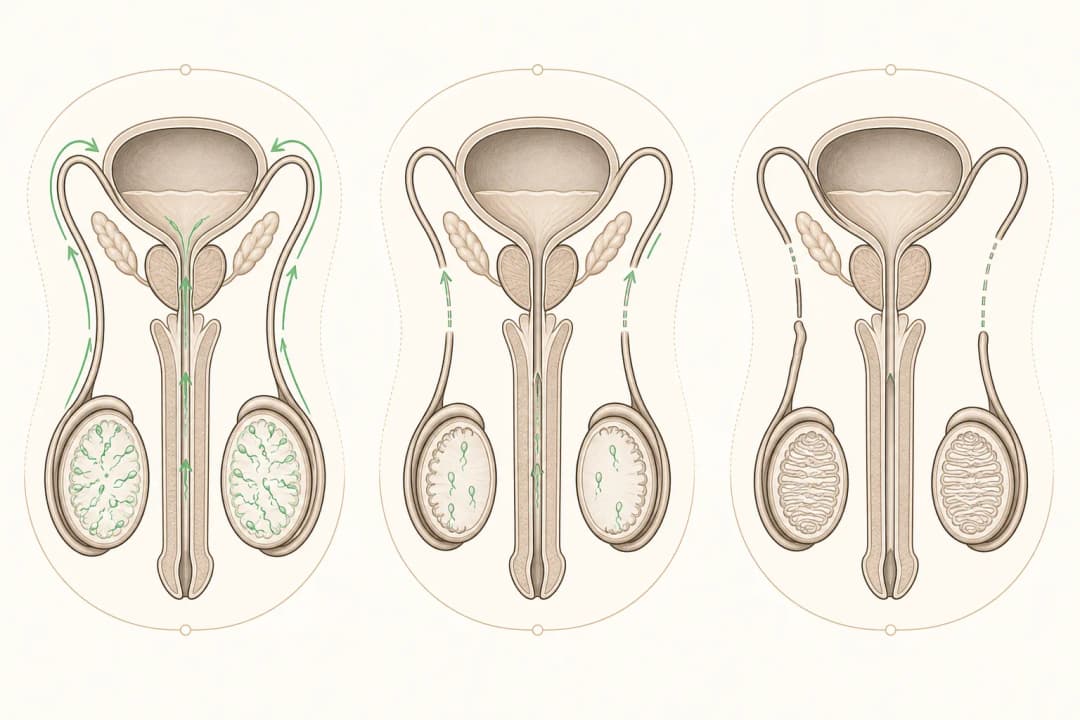
Male factor infertility may involve sperm number, movement, shape, ejaculation, or sperm delivery. The fertility team usually reviews semen analysis results and may repeat testing because results can vary. IUI uses a processed sample in which the laboratory concentrates suitable moving sperm, then places it inside the uterus near ovulation. This can help when the main challenge is getting enough moving sperm close to the egg.
The female partner's ovulation and reproductive health are assessed as well. The cycle may be natural or supported with medicine and ultrasound monitoring. IUI is not suitable for every sperm or tubal finding, so the team will explain whether another treatment would give a more appropriate route to conception.
What happens on the day
The sperm provider follows the clinic's instructions for producing and delivering the sample, including its collection container and timing. The laboratory prepares the sample before insemination. A clinician inserts a speculum and guides a thin catheter through the cervix into the uterus. The procedure is usually brief; pressure, mild cramps, or light spotting can happen afterwards. Follow the clinic's advice about medicines and the pregnancy-test date.
Symptoms that need attention
Contact the fertility clinic for significant pelvic pain, heavy bleeding, fever, foul-smelling discharge, or feeling unwell after IUI. If ovulation medicine was used, report severe bloating, worsening abdominal pain, repeated vomiting, or breathlessness promptly. Emergency care is needed for collapse, severe breathlessness, or sudden intense pain.
Questions to ask before IUI
Ask what the semen results show, whether the sample should be collected at home or at the clinic, what happens if the sample cannot be produced that day, whether ovulation medicine is recommended, how many monitoring visits are expected, and when to discuss IVF or another approach if IUI is not suitable.
Find care
General Clinics & Polyclinics in Abu Dhabi
That answer is general. If you want it applied to your own case, these are licensed general clinics & polyclinics listed in Abu Dhabi.
27 Ar Ruwwad St - Shakhbout City - MSH4 - Abu Dhabi - United Arab Emirates
Accepts: Daman, Thiqa, Cigna, MetLife +20 more
Al Ruwais, Al Dhafrah
Accepts: Daman, Thiqa, AXA, Cigna +16 more
Al Bahyah - Al Bahyah Old - Abu Dhabi - United Arab Emirates
Accepts: Daman, Thiqa, Cigna, Allianz Care +18 more
Abu Dhabi
Accepts: Daman, Thiqa, AXA, Cigna +27 more
Ordered by verification status and how complete each clinic's public record is, then alphabetically. This is a directory listing, not a ranking — Zavis does not rate or recommend providers.
A factual listing drawn from the DHA, DOH and MOHAP licence registers. It is not a referral, an endorsement, or advice that any of these providers is right for you.
Questions people ask
What if the sperm sample is difficult to produce?
Tell the clinic promptly; they can explain collection options and whether the cycle plan needs to change.
Does IUI treat every male fertility problem?
No. Its suitability depends on semen findings, ovulation, the fallopian tubes, and the wider fertility assessment.
Related
Related reading
Keep reading
Medical disclaimer. This page is general health information, not medical advice, and it cannot diagnose you. Always consult a licensed healthcare provider about your own symptoms and treatment. In an emergency in the UAE, call 998 for an ambulance.