
What to expect from inhaler therapy for COPD
Short answer
Expect an inhaler plan based on your breathing symptoms, device technique teaching, regular review, and advice about daily use and flare-up symptoms.
This answers one question. It is not a diagnosis and does not replace an assessment by a licensed doctor.
At a glance
- Routine treatment
- Long-acting inhalers are often scheduled regularly
- Device choice
- Technique depends on the inhaler type
- Review focus
- Breathing, activity, flare-ups and technique
How treatment helps
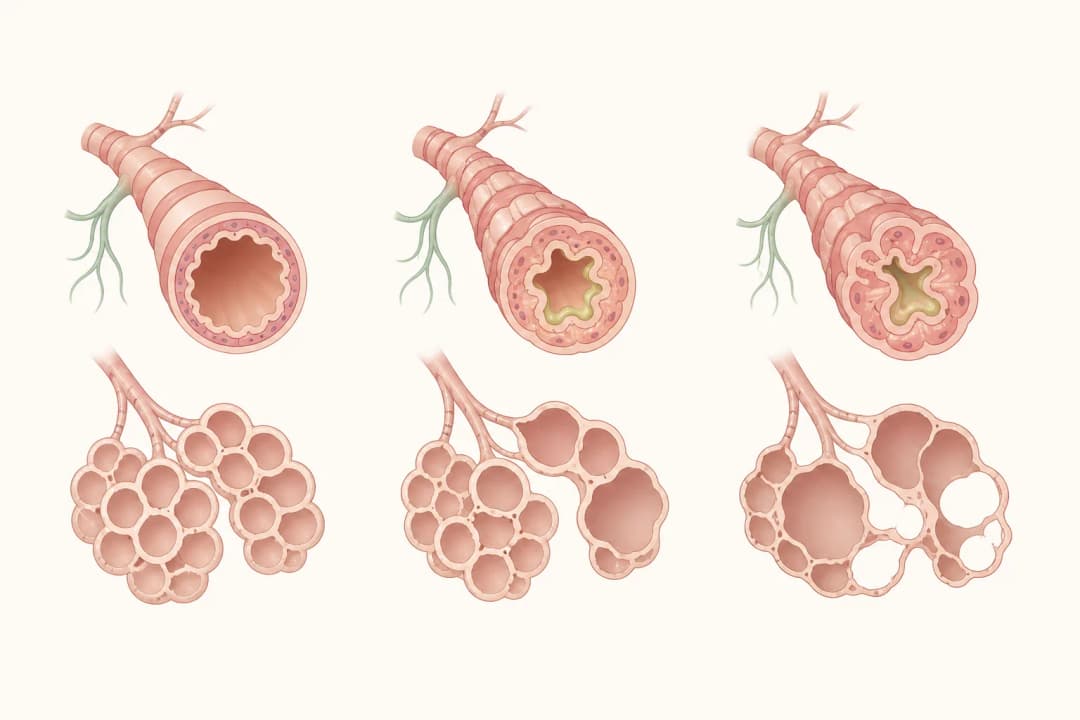
COPD inhalers can relax airway muscles, reduce breathlessness and make it easier to move air. Long-acting inhalers are taken on a routine schedule. Short-acting relievers may be prescribed for episodes of increased symptoms. Some people need more than one medicine or device, depending on symptoms, exacerbations and other health conditions.
The device matters: a dry-powder inhaler needs a strong, quick breath, while a pressurised inhaler needs coordinated pressing and breathing. A spacer may help with some devices. Your clinician should demonstrate the exact inhaler you have.
Making inhalers work well
Use maintenance inhalers consistently and do not stop them because breathing improves unless the prescriber changes the plan. Practise the technique during reviews, keep the device dry when required, and track remaining doses. Ask for a written plan for flare-ups, including when to call the clinic and when to seek urgent help.
Avoid smoke and other triggers where possible, stay active within your abilities, and discuss vaccinations and pulmonary rehabilitation with your care team. Report tremor, palpitations, dry mouth or oral soreness so the regimen can be assessed.
When to seek urgent care
Get urgent help for severe breathlessness at rest, blue or grey lips, new confusion, marked drowsiness, chest pain, or inability to speak in full sentences. Contact your clinician when sputum changes with worsening cough or breathlessness, usual activities become harder, or the reliever is needed more often than directed.
Questions for your doctor
Ask what each inhaler does, the correct breathing technique, whether a spacer fits your device, how to recognise a flare-up, and how often your inhaler plan needs checking.
Find care
General Clinics & Polyclinics in Abu Dhabi
That answer is general. If you want it applied to your own case, these are licensed general clinics & polyclinics listed in Abu Dhabi.
27 Ar Ruwwad St - Shakhbout City - MSH4 - Abu Dhabi - United Arab Emirates
Accepts: Daman, Thiqa, Cigna, MetLife +20 more
Al Ruwais, Al Dhafrah
Accepts: Daman, Thiqa, AXA, Cigna +16 more
Al Bahyah - Al Bahyah Old - Abu Dhabi - United Arab Emirates
Accepts: Daman, Thiqa, Cigna, Allianz Care +18 more
Abu Dhabi
Accepts: Daman, Thiqa, AXA, Cigna +27 more
Ordered by verification status and how complete each clinic's public record is, then alphabetically. This is a directory listing, not a ranking — Zavis does not rate or recommend providers.
A factual listing drawn from the DHA, DOH and MOHAP licence registers. It is not a referral, an endorsement, or advice that any of these providers is right for you.
Questions people ask
Why does inhaler technique need checking?
The medicine may not reach the airways properly if the breathing steps do not match the device.
Can COPD inhalers cure the condition?
They manage airway symptoms and support breathing, but they do not reverse the underlying lung damage.
Related
Related reading
Keep reading
Medical disclaimer. This page is general health information, not medical advice, and it cannot diagnose you. Always consult a licensed healthcare provider about your own symptoms and treatment. In an emergency in the UAE, call 998 for an ambulance.