
What to expect from a growth scan for polyhydramnios
Short answer
A growth scan for polyhydramnios checks your baby's growth, movement, position, wellbeing, and the amount of amniotic fluid.
This answers one question. It is not a diagnosis and does not replace an assessment by a licensed doctor.
At a glance
- Method
- Abdominal ultrasound
- Focus
- Growth, fetal wellbeing, position, and fluid
- Follow-up
- Based on the scan and your symptoms
What the ultrasound assesses
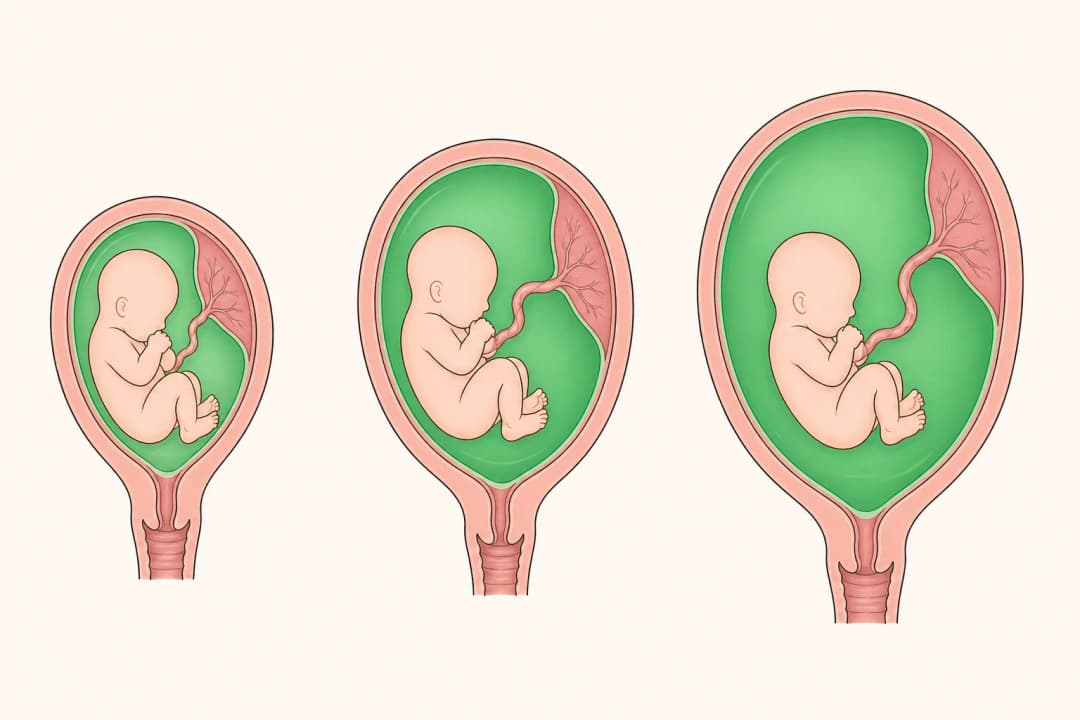
During the scan, gel and an abdominal probe are used to create images. The sonographer measures parts of your baby's body, checks the heartbeat and movement, and estimates fluid using several pockets seen on ultrasound. They may also look at the placenta and baby's position. The results help your obstetric team consider whether the fluid level is changing and whether additional monitoring or tests are needed.
Preparing for follow-up
Ask whether you need a full bladder; later-pregnancy scans often use different instructions. Take your maternity records and note changes in movement, discomfort, or breathing. Attend the review appointment so the findings can be explained in context. Your care plan may include repeat scans, checks for causes of increased fluid, and discussion of timing and place of birth.
Symptoms that need prompt advice
Call your maternity team urgently if your waters break, you develop regular contractions, significant abdominal pain, vaginal bleeding, or a sudden increase in breathlessness. Contact them immediately for reduced or changed fetal movement. Sudden fluid loss or labour symptoms can need assessment even when a recent scan was reassuring.
Useful questions
Ask what the fluid measurement means, whether your baby's growth and anatomy were seen clearly, and what monitoring is planned next. Clarify which symptoms should bring you to hospital, whether you need to check blood glucose or other causes, and how polyhydramnios may affect labour planning.
Find care
General Clinics & Polyclinics in Abu Dhabi
That answer is general. If you want it applied to your own case, these are licensed general clinics & polyclinics listed in Abu Dhabi.
27 Ar Ruwwad St - Shakhbout City - MSH4 - Abu Dhabi - United Arab Emirates
Accepts: Daman, Thiqa, Cigna, MetLife +20 more
Al Ruwais, Al Dhafrah
Accepts: Daman, Thiqa, AXA, Cigna +16 more
Al Bahyah - Al Bahyah Old - Abu Dhabi - United Arab Emirates
Accepts: Daman, Thiqa, Cigna, Allianz Care +18 more
Abu Dhabi
Accepts: Daman, Thiqa, AXA, Cigna +27 more
Ordered by verification status and how complete each clinic's public record is, then alphabetically. This is a directory listing, not a ranking — Zavis does not rate or recommend providers.
A factual listing drawn from the DHA, DOH and MOHAP licence registers. It is not a referral, an endorsement, or advice that any of these providers is right for you.
Questions people ask
Does polyhydramnios always affect the baby's growth?
Not necessarily. The scan measures growth directly and lets your team interpret it alongside the fluid level and other findings.
What if fetal movement changes after the scan?
Contact your maternity team immediately for advice. Do not rely on the scan to explain a new reduction or change in movement.
Related
Related reading
Keep reading
Medical disclaimer. This page is general health information, not medical advice, and it cannot diagnose you. Always consult a licensed healthcare provider about your own symptoms and treatment. In an emergency in the UAE, call 998 for an ambulance.