
What to expect from a GP consultation for prostatitis
Short answer
A GP consultation for prostatitis covers urinary and pelvic symptoms, a focused examination, urine testing and treatment planning, with urgent referral when infection is severe.
This answers one question. It is not a diagnosis and does not replace an assessment by a licensed doctor.
At a glance
- Symptoms discussed
- Urinary, pelvic, fever and sexual symptoms
- Common sample
- Urine testing
- Examination
- Abdomen and, when appropriate, prostate assessment
How the GP assesses prostatitis
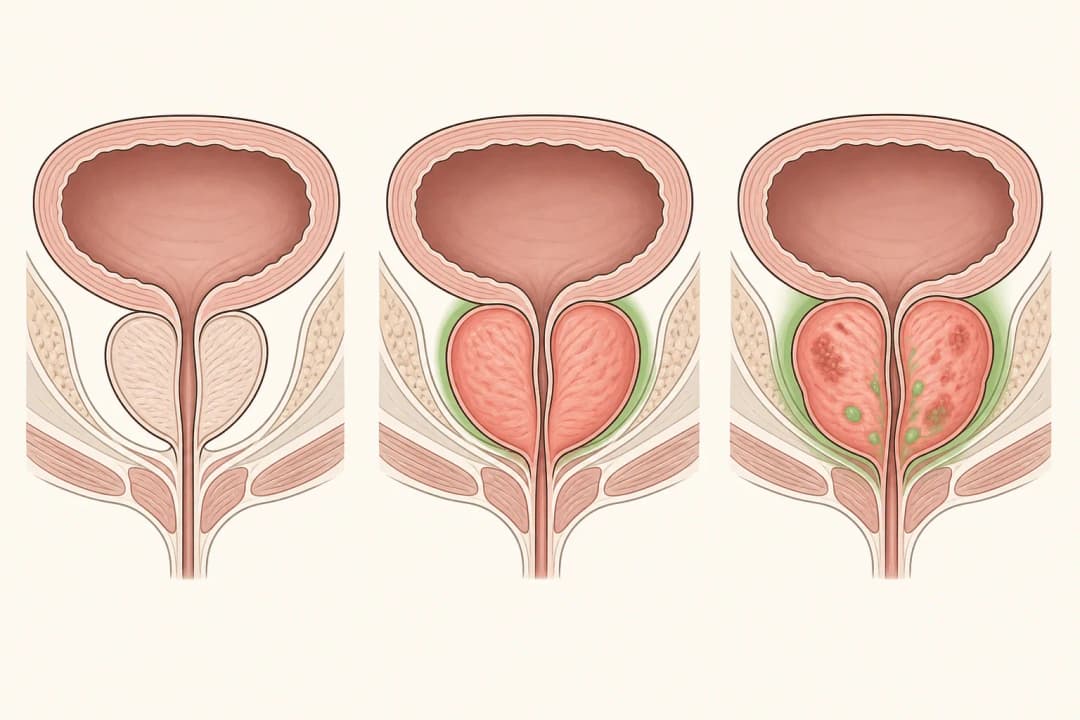
The GP may ask about burning or difficulty when passing urine, frequency, urgency, weak flow, pelvic or lower-back pain, pain with ejaculation, fever and chills. They may ask when symptoms began, whether they recur, recent procedures, sexual-health concerns and medicines. Examination can include your abdomen, temperature and general condition. A urine sample is commonly used to look for infection, and other tests may be considered based on your symptoms. A gentle rectal examination may be offered to assess the prostate; the clinician should explain it first and respect your consent. Prostatitis has different forms, so symptoms and test results guide treatment.
Preparing for the visit
Note changes in urine, pain, fever and sexual symptoms, including when they occur. Bring a medicine list and mention antibiotics taken recently, urinary procedures and allergies. You may be asked to provide a urine sample, so ask whether to arrive with a comfortably full bladder. Take prescribed treatment exactly as directed and ask when improvement should be reviewed. Do not start leftover antibiotics, because the choice and duration depend on the suspected cause. Drink according to your clinician’s advice and avoid activities or drinks that clearly worsen discomfort.
When to seek urgent help
Seek urgent medical care if you cannot pass urine, have high fever with shaking chills, become confused or very weak, or develop severe worsening pelvic, abdominal or back pain. Vomiting that prevents fluids or medicine, fainting, or a rapidly deteriorating condition also needs prompt assessment. Acute infection can require hospital treatment, so do not wait for a routine follow-up when these signs appear.
Questions for your GP
Ask which tests are needed, whether treatment is aimed at infection or symptom control, when to expect improvement, whether sexual-health testing is relevant, and what to do if urine flow worsens.
Find care
General Clinics & Polyclinics in Abu Dhabi
That answer is general. If you want it applied to your own case, these are licensed general clinics & polyclinics listed in Abu Dhabi.
27 Ar Ruwwad St - Shakhbout City - MSH4 - Abu Dhabi - United Arab Emirates
Accepts: Daman, Thiqa, Cigna, MetLife +20 more
Al Ruwais, Al Dhafrah
Accepts: Daman, Thiqa, AXA, Cigna +16 more
Al Bahyah - Al Bahyah Old - Abu Dhabi - United Arab Emirates
Accepts: Daman, Thiqa, Cigna, Allianz Care +18 more
Abu Dhabi
Accepts: Daman, Thiqa, AXA, Cigna +27 more
Ordered by verification status and how complete each clinic's public record is, then alphabetically. This is a directory listing, not a ranking — Zavis does not rate or recommend providers.
A factual listing drawn from the DHA, DOH and MOHAP licence registers. It is not a referral, an endorsement, or advice that any of these providers is right for you.
Questions people ask
Will a prostate examination always be needed?
Not always. The GP decides whether it would add useful information and should explain the examination and obtain your consent.
Can prostatitis make it impossible to urinate?
It can be associated with urinary retention. Inability to pass urine is urgent and should be assessed immediately.
Related
Related reading
Keep reading
Medical disclaimer. This page is general health information, not medical advice, and it cannot diagnose you. Always consult a licensed healthcare provider about your own symptoms and treatment. In an emergency in the UAE, call 998 for an ambulance.