
What to expect from a GP consultation for head lice
Short answer
Expect the GP to inspect the scalp and hair, confirm whether live lice are present, discuss treatment choices, and explain household steps.
This answers one question. It is not a diagnosis and does not replace an assessment by a licensed doctor.
At a glance
- Diagnosis
- Live lice are more useful for confirmation than flakes alone.
- Treatment
- Correct product use and timing matter.
- Household care
- Close contacts and shared hair items may need attention.
What the GP checks
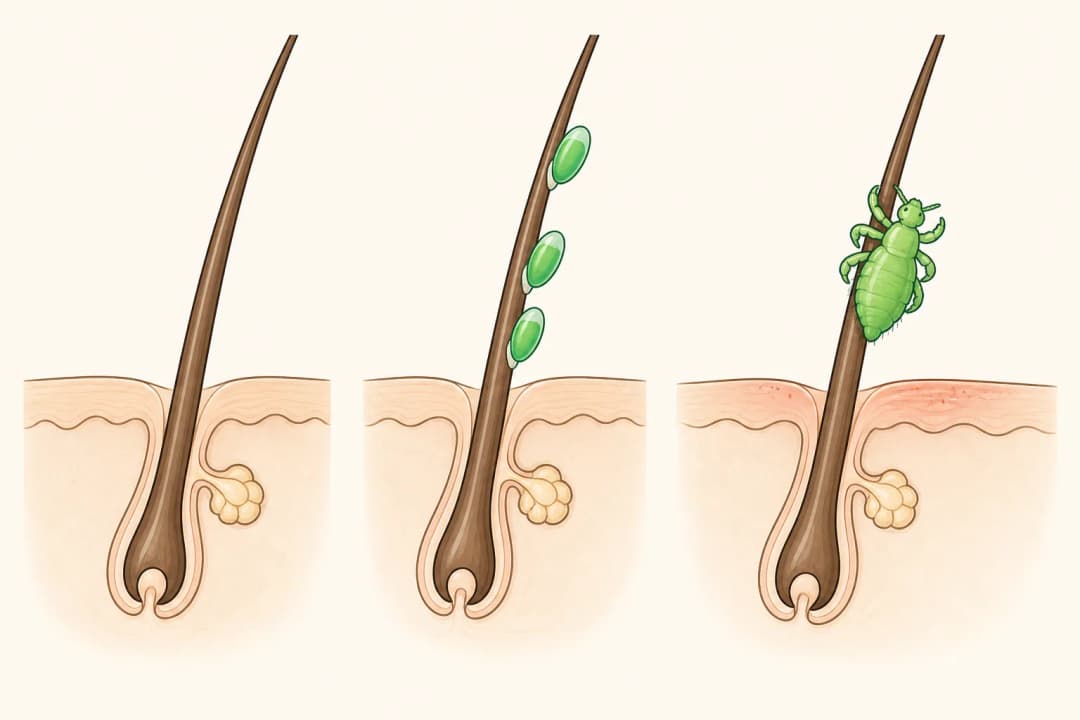
The GP may ask about itching, when it started, close contacts, and anything already applied to the hair. They may examine the scalp, hair roots, and behind the ears or neck. Live crawling lice support the diagnosis; flakes and empty egg cases can look similar, so the examination helps avoid treating the wrong problem.
Advice may cover wet combing, medicated products, correct application, and whether household members should be checked. Persistent itching after treatment does not always mean live lice remain, because the scalp can stay irritated for a while.
What to bring and do next
Tell the GP which products were used, when they were applied, and whether the instructions were followed. Mention allergies, scalp disease, pregnancy, age, and medicines. If possible, bring the product packaging or a clear description of it. Check close household contacts in the way the clinician recommends.
Follow the treatment schedule carefully and repeat it only as directed. Use a fine-toothed comb as advised, clean combs and brushes, and avoid sharing hats, brushes, pillows, or hair accessories. Do not keep applying products because itching alone continues.
When the scalp needs review
Arrange medical review if the scalp becomes increasingly painful, swollen, hot, or weepy, or if scratching causes open sores. Seek advice when live lice remain after correctly following treatment, when the diagnosis is uncertain, or when a child is too young for a product you are considering. Severe allergic symptoms after a product require urgent help.
Questions worth asking
Ask how live lice were identified, which treatment suits the person’s age and scalp, when combing or treatment should be repeated, and how to check household contacts. Clarify when school or work attendance is acceptable and how to recognise a secondary skin infection.
Find care
General Clinics & Polyclinics in Abu Dhabi
That answer is general. If you want it applied to your own case, these are licensed general clinics & polyclinics listed in Abu Dhabi.
27 Ar Ruwwad St - Shakhbout City - MSH4 - Abu Dhabi - United Arab Emirates
Accepts: Daman, Thiqa, Cigna, MetLife +20 more
Al Ruwais, Al Dhafrah
Accepts: Daman, Thiqa, AXA, Cigna +16 more
Al Bahyah - Al Bahyah Old - Abu Dhabi - United Arab Emirates
Accepts: Daman, Thiqa, Cigna, Allianz Care +18 more
Abu Dhabi
Accepts: Daman, Thiqa, AXA, Cigna +27 more
Ordered by verification status and how complete each clinic's public record is, then alphabetically. This is a directory listing, not a ranking — Zavis does not rate or recommend providers.
A factual listing drawn from the DHA, DOH and MOHAP licence registers. It is not a referral, an endorsement, or advice that any of these providers is right for you.
Questions people ask
Does itching prove that head lice are still present?
No. The scalp may remain itchy after treatment, so the hair should be checked for live lice as advised.
Should everyone at home use lice treatment?
Check household members and treat only those for whom live lice are found or whose clinician recommends treatment.
Related
Related reading
Keep reading
Medical disclaimer. This page is general health information, not medical advice, and it cannot diagnose you. Always consult a licensed healthcare provider about your own symptoms and treatment. In an emergency in the UAE, call 998 for an ambulance.