
What to expect from fetal heart monitoring for fetal growth restriction
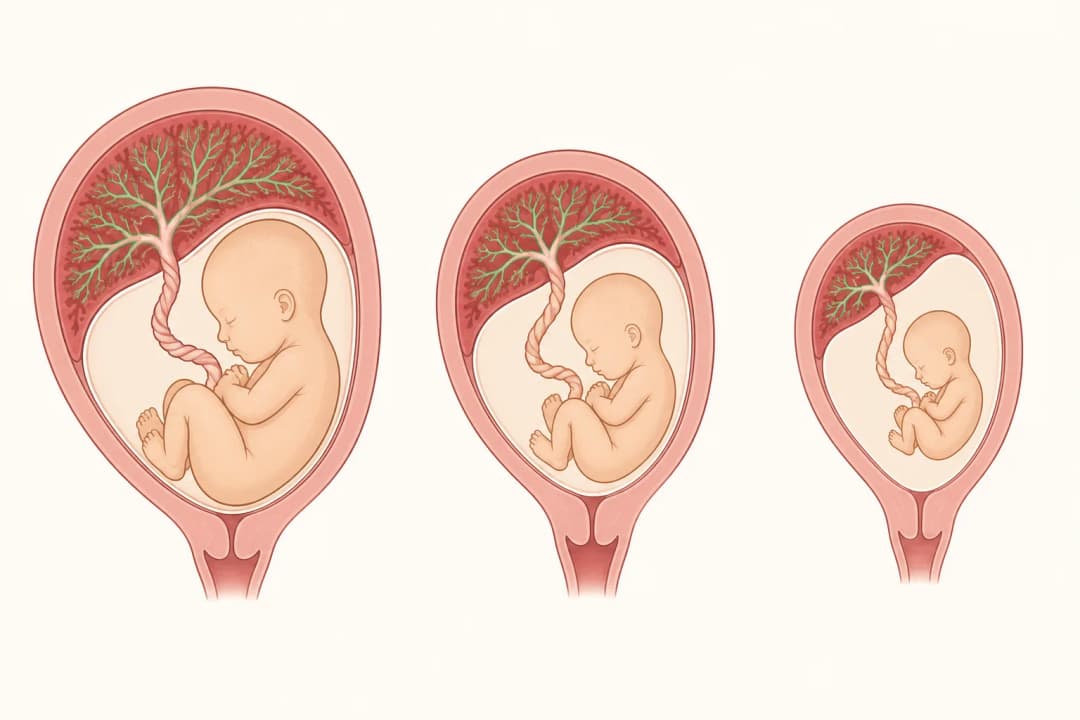
Short answer
Expect sensors on your abdomen to record the baby's heart rate and movements while your maternity team checks for reassuring changes.
This answers one question. It is not a diagnosis and does not replace an assessment by a licensed doctor.
At a glance
- Position
- Seated or reclined
- Equipment
- Abdominal heart-rate and contraction sensors
- Purpose
- Assess fetal wellbeing over time
What the tracing shows
Fetal heart monitoring tracks the baby's heart rate over time and looks at its response to movement or uterine activity. With fetal growth restriction, the team may use the tracing as part of ongoing surveillance of placental function and fetal wellbeing. A belt or adhesive sensor is placed over your abdomen; another sensor may record contractions. The pattern is reviewed with ultrasound findings, fluid levels, blood-flow studies, gestational age, and your symptoms. One tracing is a snapshot, so repeat monitoring may be arranged.
During the appointment
Wear clothing that allows access to your abdomen and take your usual medicines unless your maternity team says otherwise. You may sit or recline while the monitor records. Tell the staff if you feel uncomfortable, need to change position, or notice reduced movement. The session may be extended if the baby is asleep or the signal is difficult to obtain. Keep scheduled antenatal visits, because decisions about timing of delivery depend on the whole clinical picture rather than the monitor alone.
When to seek care
Contact your maternity unit urgently if your baby's movements are reduced or changed, or if you have vaginal bleeding, leaking fluid, regular painful contractions, severe abdominal pain, severe headache, vision changes, or sudden swelling. Do not wait for a planned monitoring appointment when these symptoms occur. The team may advise immediate assessment, which can include monitoring and ultrasound.
Questions for your doctor
How often will monitoring be repeated? What findings would change the plan? Will I also need ultrasound or blood-flow assessment? How should I respond if movements decrease at home?
Find care
General Clinics & Polyclinics in Abu Dhabi
That answer is general. If you want it applied to your own case, these are licensed general clinics & polyclinics listed in Abu Dhabi.
27 Ar Ruwwad St - Shakhbout City - MSH4 - Abu Dhabi - United Arab Emirates
Accepts: Daman, Thiqa, Cigna, MetLife +20 more
Al Ruwais, Al Dhafrah
Accepts: Daman, Thiqa, AXA, Cigna +16 more
Al Bahyah - Al Bahyah Old - Abu Dhabi - United Arab Emirates
Accepts: Daman, Thiqa, Cigna, Allianz Care +18 more
Abu Dhabi
Accepts: Daman, Thiqa, AXA, Cigna +27 more
Ordered by verification status and how complete each clinic's public record is, then alphabetically. This is a directory listing, not a ranking — Zavis does not rate or recommend providers.
A factual listing drawn from the DHA, DOH and MOHAP licence registers. It is not a referral, an endorsement, or advice that any of these providers is right for you.
Questions people ask
Is fetal heart monitoring painful?
The sensors rest on the abdomen, so the monitoring itself is generally comfortable.
Can a normal tracing end all follow-up?
No. Ongoing care depends on growth, blood flow, fluid, gestational age, and symptoms.
Related
Related reading
Keep reading
Medical disclaimer. This page is general health information, not medical advice, and it cannot diagnose you. Always consult a licensed healthcare provider about your own symptoms and treatment. In an emergency in the UAE, call 998 for an ambulance.