
What to expect from emollient therapy for irritant contact dermatitis
Short answer
Emollient therapy for irritant contact dermatitis moisturises damaged skin, reduces tightness and supports barrier repair while you avoid the substance causing irritation.
This answers one question. It is not a diagnosis and does not replace an assessment by a licensed doctor.
At a glance
- Purpose
- Moisturise and support barrier repair
- Key step
- Avoid the trigger that caused irritation
- Use
- Reapply after washing and when skin feels tight
What treatment does
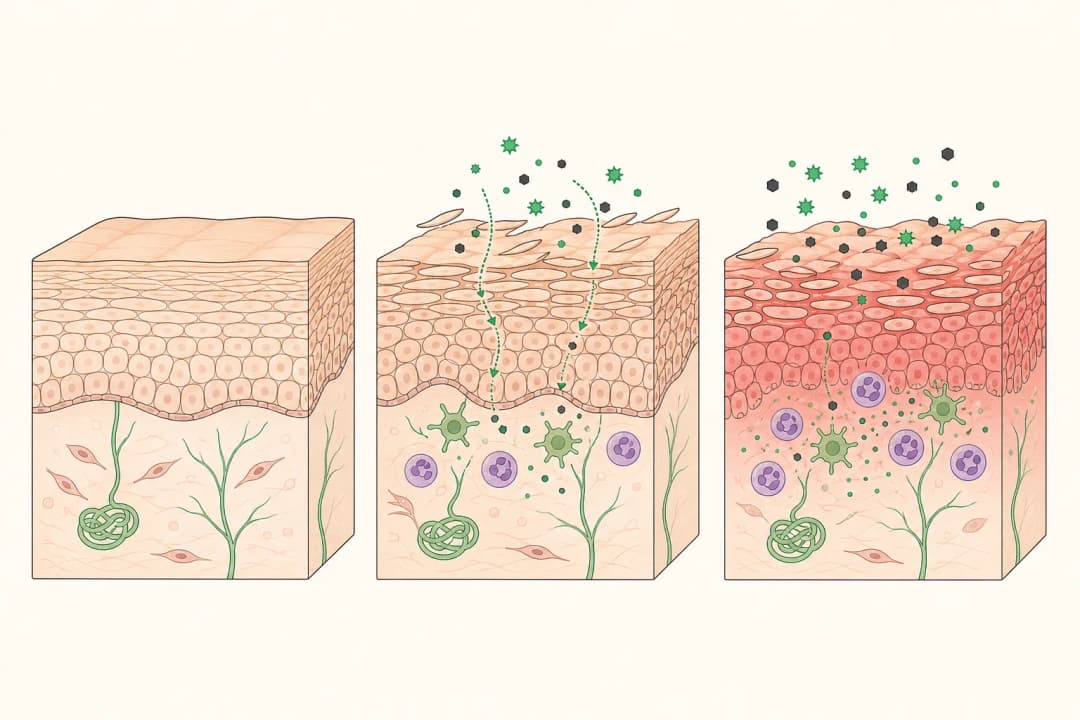
Irritant contact dermatitis develops when repeated or intense contact with substances such as cleansers, solvents, wet work or friction disrupts the skin barrier. Emollients add a protective layer and help reduce water loss. Dryness, stinging and tightness may settle gradually, but the skin can remain sensitive while it repairs.
An emollient supports recovery; it does not remove the irritant or replace treatment for a severe reaction. A fragrance-free product is often easier for compromised skin to tolerate. If several products sting, a clinician can help distinguish a product reaction from the original dermatitis.
Practical steps
Wash with lukewarm water and a gentle, non-fragranced cleanser only where needed. Pat dry and apply emollient promptly, covering the affected area without vigorous rubbing. Reapply after handwashing or whenever the skin feels dry. If work or household tasks trigger symptoms, use suitable protective measures and take breaks from wet or chemical exposure.
Do not scratch, peel flakes or use strong exfoliants on the rash. Keep the container clean, and avoid sharing products during an active rash. Tell a clinician about the exact task or product that preceded the irritation, because removing that trigger is central to improvement.
When to seek care
Seek medical advice if the rash spreads, becomes very painful, forms blisters, cracks deeply, weeps or develops yellow crusting. Prompt assessment is appropriate for facial or eye-area swelling, breathing difficulty or a rapidly worsening reaction. Arrange review if symptoms continue despite avoiding the suspected irritant, because allergy, infection or another skin condition may need different care.
Questions for your doctor
Ask which ingredients to avoid, whether your work requires barrier protection, how often to reapply, and whether the pattern suggests allergy testing or another treatment.
Find care
General Clinics & Polyclinics in Abu Dhabi
That answer is general. If you want it applied to your own case, these are licensed general clinics & polyclinics listed in Abu Dhabi.
27 Ar Ruwwad St - Shakhbout City - MSH4 - Abu Dhabi - United Arab Emirates
Accepts: Daman, Thiqa, Cigna, MetLife +20 more
Al Ruwais, Al Dhafrah
Accepts: Daman, Thiqa, AXA, Cigna +16 more
Al Bahyah - Al Bahyah Old - Abu Dhabi - United Arab Emirates
Accepts: Daman, Thiqa, Cigna, Allianz Care +18 more
Abu Dhabi
Accepts: Daman, Thiqa, AXA, Cigna +27 more
Ordered by verification status and how complete each clinic's public record is, then alphabetically. This is a directory listing, not a ranking — Zavis does not rate or recommend providers.
A factual listing drawn from the DHA, DOH and MOHAP licence registers. It is not a referral, an endorsement, or advice that any of these providers is right for you.
Questions people ask
Can emollient therapy remove the cause of irritant dermatitis?
No. It supports the barrier, while avoiding the irritating exposure addresses the cause.
What if the emollient stings?
Stop and seek advice if burning is marked or persistent; another formulation may be more suitable.
Related
Related reading
Keep reading
Medical disclaimer. This page is general health information, not medical advice, and it cannot diagnose you. Always consult a licensed healthcare provider about your own symptoms and treatment. In an emergency in the UAE, call 998 for an ambulance.