
What to expect from chemotherapy for small cell lung cancer
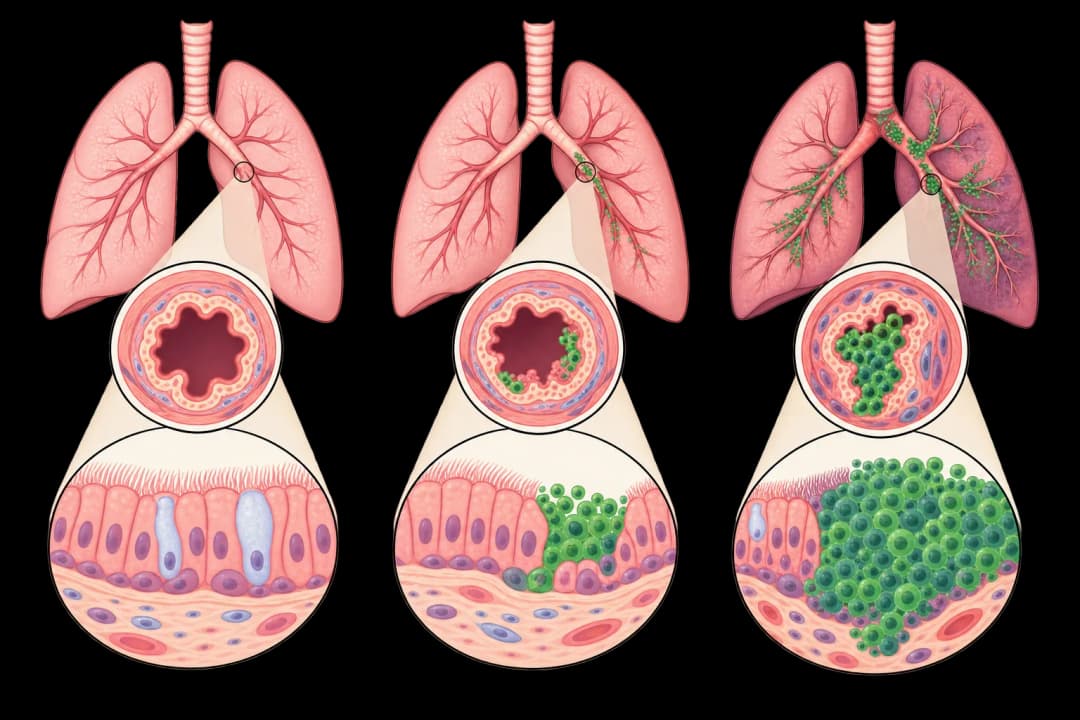
Short answer
Chemotherapy for small cell lung cancer is given in planned treatment cycles, with scans, blood tests and symptom support used to guide the next step.
This answers one question. It is not a diagnosis and does not replace an assessment by a licensed doctor.
At a glance
- Treatment pattern
- Planned cycles with review before further treatment
- Checks
- Blood tests, scans and breathing assessment
- Support
- Anti-sickness treatment and symptom control are part of care
How the plan is made
Your oncologist chooses medicines according to whether the cancer is contained in the chest or has spread, your breathing, and your general health. Treatment may be combined with radiotherapy or another medicine. It can be given through a vein, and a longer-term access device may be offered when repeated infusions are expected.
Between treatments, the team checks blood counts, breathing symptoms, weight and how well you are managing daily activities. Possible effects include fatigue, nausea, appetite changes, hair loss, mouth soreness and a reduced ability to fight infection. Not everyone experiences every effect, and early reporting lets the team adjust supportive medicines or timing.
Getting ready for each cycle
Write down breathlessness, cough, pain, appetite, bowel changes and any temperature readings. Take prescribed medicines exactly as directed and ask before starting supplements or non-prescription remedies. Eat little and often if large meals are difficult, drink regularly, and pace activity with rest. If you smoke, ask for support to stop; tell the team about oxygen use, travel plans and anyone at home who may need help.
Warning signs that need prompt help
Call the cancer team urgently for the fever limit they gave you, chills, sudden or worsening breathlessness, chest pain, confusion, blue lips, uncontrolled bleeding, or repeated vomiting. New swelling of the face or neck, difficulty swallowing, or a rapidly worsening cough also needs prompt assessment. If breathing becomes severe, seek emergency care.
Questions for your doctor
Ask what each cycle is intended to achieve, how scans will be used, whether radiotherapy or another medicine is planned, and which effects are expected at home. Ask for written fever instructions, an out-of-hours number, advice about work and driving, and whether a port or other access device would help.
Questions people ask
Will chemotherapy make breathing worse?
Breathing can change because of the cancer, infection or treatment effects. Report new or worsening breathlessness promptly so the cause can be assessed.
Can I continue normal activities?
Many people adjust activity around tiredness and appointments. Your team can tailor advice to your breathing, blood counts and daily responsibilities.
Related
Related reading
Keep reading
Cancer care in the UAE
Hospitals & Medical Centers in Abu Dhabi
Most UAE cancer care is delivered inside hospital services rather than by standalone oncology clinics, so these are licensed hospitals & medical centers listed in Abu Dhabi. Confirm the specific cancer service exists before you travel, and know that asking for a second opinion is routine.
Ahalia Hospital Musaffah Building - Musaffah - Musaffah Industrial - Abu Dhabi - United Arab Emirates
Accepts: Daman, Thiqa, AXA, Cigna +26 more
Al Ruwais Industrial City - Abu Dhabi - United Arab Emirates
Accepts: Daman, Thiqa, AXA, Cigna +30 more
Abu Dhabi, Abu Dhabi
Accepts: Daman, Thiqa, AXA, Cigna +30 more
Second opinions are routine in cancer care and asking for one does not affect your treatment. How to arrange a second opinion in the UAE.
Ordered by verification status and how complete each clinic's public record is, then alphabetically. This is a directory listing, not a ranking — Zavis does not rate or recommend providers.
A factual listing drawn from the DHA, DOH and MOHAP licence registers. It is not a referral, an endorsement, or advice that any of these providers is right for you.
Medical disclaimer. This page is general health information, not medical advice, and it cannot diagnose you. Always consult a licensed healthcare provider about your own symptoms and treatment. In an emergency in the UAE, call 998 for an ambulance.