
What to expect from chemotherapy for metastatic cancer
Short answer
Chemotherapy for metastatic cancer is given through a personalised cycle plan, with regular reviews to balance cancer control, symptoms, and treatment effects.
This answers one question. It is not a diagnosis and does not replace an assessment by a licensed doctor.
At a glance
- Treatment format
- Chemotherapy may be delivered by infusion, tablets, or both.
- Follow-up
- Reviews help assess cancer control and unwanted effects.
- Personalisation
- The plan reflects the cancer’s origin, spread, prior treatment, and your goals.
Understanding the plan
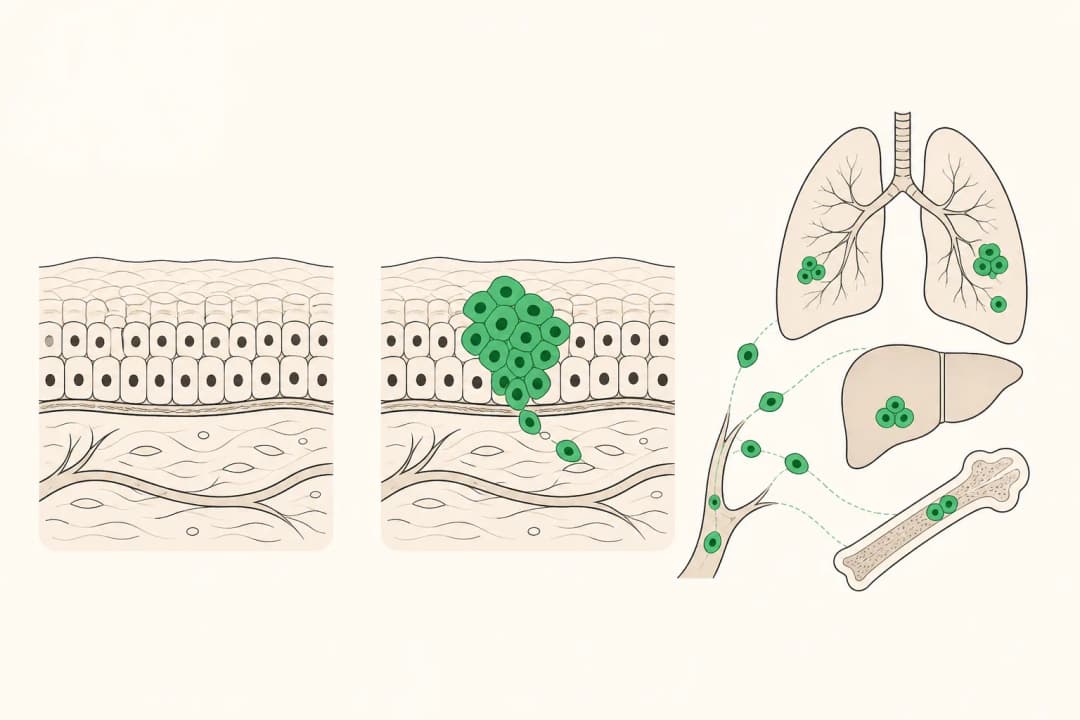
Metastatic cancer means that cancer has travelled from its original site to another part of the body. Because chemotherapy moves through the bloodstream, it can treat cancer in more than one location. The medicines and schedule depend on the original cancer, where it has spread, previous treatment, organ function, and your priorities. Treatment may be an infusion, tablets, or a combination.
A cycle commonly includes a treatment visit followed by time for your body to recover. Reviews may include examination, blood tests, symptom discussion, or imaging. Effects can include fatigue, nausea, appetite or taste changes, mouth soreness, bowel changes, hair changes, and lowered blood counts. Supportive care can address many of these problems.
Preparing for each cycle
Bring a complete medicine and supplement list and tell the team about allergies, infections, dental work, new pain, or changes in breathing. Keep notes on symptoms and their timing. Arrange help with transport, meals, children, or work when needed. Take prescribed supportive medicines as instructed, eat and drink according to your care plan, and ask before taking a new remedy or vaccine.
When to contact your team
Call promptly for fever, chills, a new cough, worsening breathlessness, persistent vomiting, severe diarrhoea, confusion, unusual bleeding, or rapidly increasing pain. Seek emergency care for severe breathing difficulty, fainting, chest pressure, or sudden swelling of the face or throat. Keep your treatment unit’s contact details accessible.
Questions worth asking
What is the purpose of this regimen and how will you assess it? What should I expect on treatment day and during recovery? Which symptoms need immediate advice? How can we protect my comfort, independence, and daily priorities?
Questions people ask
Does metastatic cancer always require chemotherapy?
Not always; treatment depends on the cancer type, its features, previous treatment, symptoms, and your preferences.
What should I bring to an oncology visit?
Bring your medicine list, symptom notes, questions, and any information your unit requested.
Keep reading
Cancer care in the UAE
Hospitals & Medical Centers in Abu Dhabi
Most UAE cancer care is delivered inside hospital services rather than by standalone oncology clinics, so these are licensed hospitals & medical centers listed in Abu Dhabi. Confirm the specific cancer service exists before you travel, and know that asking for a second opinion is routine.
Ahalia Hospital Musaffah Building - Musaffah - Musaffah Industrial - Abu Dhabi - United Arab Emirates
Accepts: Daman, Thiqa, AXA, Cigna +26 more
Al Ruwais Industrial City - Abu Dhabi - United Arab Emirates
Accepts: Daman, Thiqa, AXA, Cigna +30 more
Abu Dhabi, Abu Dhabi
Accepts: Daman, Thiqa, AXA, Cigna +30 more
Second opinions are routine in cancer care and asking for one does not affect your treatment. How to arrange a second opinion in the UAE.
Ordered by verification status and how complete each clinic's public record is, then alphabetically. This is a directory listing, not a ranking — Zavis does not rate or recommend providers.
A factual listing drawn from the DHA, DOH and MOHAP licence registers. It is not a referral, an endorsement, or advice that any of these providers is right for you.
Medical disclaimer. This page is general health information, not medical advice, and it cannot diagnose you. Always consult a licensed healthcare provider about your own symptoms and treatment. In an emergency in the UAE, call 998 for an ambulance.