
What to expect from calcium supplementation for osteopenia
Short answer
Calcium supplementation for osteopenia is intended to fill dietary gaps while bone health is supported through an individualized exercise and treatment plan.
This answers one question. It is not a diagnosis and does not replace an assessment by a licensed doctor.
At a glance
- Main purpose
- Cover a dietary calcium gap
- Plan partners
- Strength, balance, and weight-bearing activity
- Review first
- Kidney disease, stones, and interacting medicines
How it fits osteopenia care
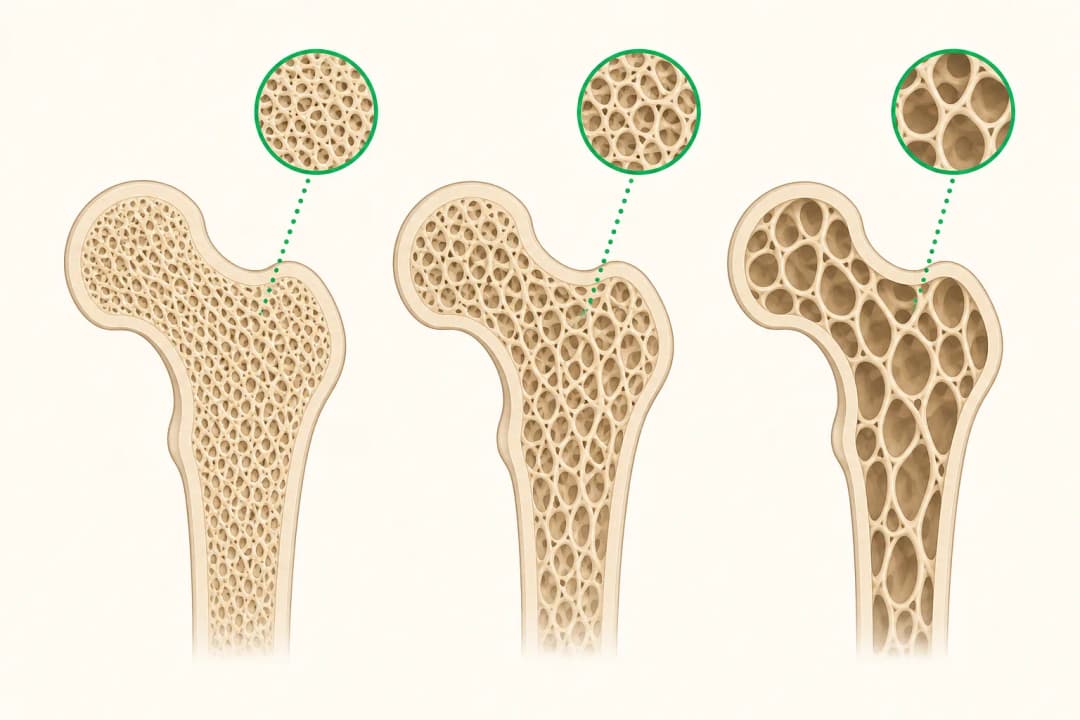
Osteopenia means bone density is lower than expected, but it is not the same as a fracture diagnosis. Calcium is a mineral used in bone structure and body functions. A clinician may review your usual food intake, vitamin status, kidney health, medicines, and fracture risk before suggesting a supplement. The aim is usually to provide what is missing, not to replace meals or other bone-protection measures. Supplements do not rebuild bone immediately, and their role differs from prescription medicines used when fracture risk is higher.
Taking it thoughtfully
Use the product and schedule recommended for you, and tell your clinician about antacids, thyroid medicine, iron, kidney conditions, or previous kidney stones. Some calcium products are taken with food, while others are absorbed differently, so follow the label or prescription instructions. Build calcium-containing foods into meals where suitable, and keep up weight-bearing activity, muscle strengthening, balance work, and fall-prevention habits. Do not add several calcium products together without checking the total amount.
When to seek care
Ask for medical advice if constipation, nausea, abdominal discomfort, or persistent thirst develops after starting the supplement. Seek prompt care for severe flank pain, blood in the urine, confusion, marked weakness, or repeated vomiting. Arrange a review if you cannot tolerate the product or are unsure whether another medicine should be separated from it.
Questions for your doctor
Ask how much calcium you need from food and supplements, whether vitamin D or a bone medicine is relevant, and when your bone-health plan should be reassessed.
Find care
General Clinics & Polyclinics in Abu Dhabi
That answer is general. If you want it applied to your own case, these are licensed general clinics & polyclinics listed in Abu Dhabi.
27 Ar Ruwwad St - Shakhbout City - MSH4 - Abu Dhabi - United Arab Emirates
Accepts: Daman, Thiqa, Cigna, MetLife +20 more
Al Ruwais, Al Dhafrah
Accepts: Daman, Thiqa, AXA, Cigna +16 more
Al Bahyah - Al Bahyah Old - Abu Dhabi - United Arab Emirates
Accepts: Daman, Thiqa, Cigna, Allianz Care +18 more
Abu Dhabi
Accepts: Daman, Thiqa, AXA, Cigna +27 more
Ordered by verification status and how complete each clinic's public record is, then alphabetically. This is a directory listing, not a ranking — Zavis does not rate or recommend providers.
A factual listing drawn from the DHA, DOH and MOHAP licence registers. It is not a referral, an endorsement, or advice that any of these providers is right for you.
Questions people ask
Does calcium supplementation cure osteopenia?
It can support mineral intake, but osteopenia care usually also considers exercise, vitamin status, falls, fractures, and overall risk.
Can you take calcium with every medicine?
No. Calcium can interfere with absorption of some medicines, so ask about timing for each product you use.
Related
Related reading
Keep reading
Medical disclaimer. This page is general health information, not medical advice, and it cannot diagnose you. Always consult a licensed healthcare provider about your own symptoms and treatment. In an emergency in the UAE, call 998 for an ambulance.