
What Is the First Treatment for Irritant Contact Dermatitis?
Short answer
The first treatment tried for irritant contact dermatitis is stopping the irritant and applying an emollient to restore and protect the skin barrier.
This answers one question. It is not a diagnosis and does not replace an assessment by a licensed doctor.
At a glance
- First action
- Remove the irritant
- Barrier care
- Use a plain emollient
- Possible next treatment
- A clinician may prescribe a topical corticosteroid
What this means
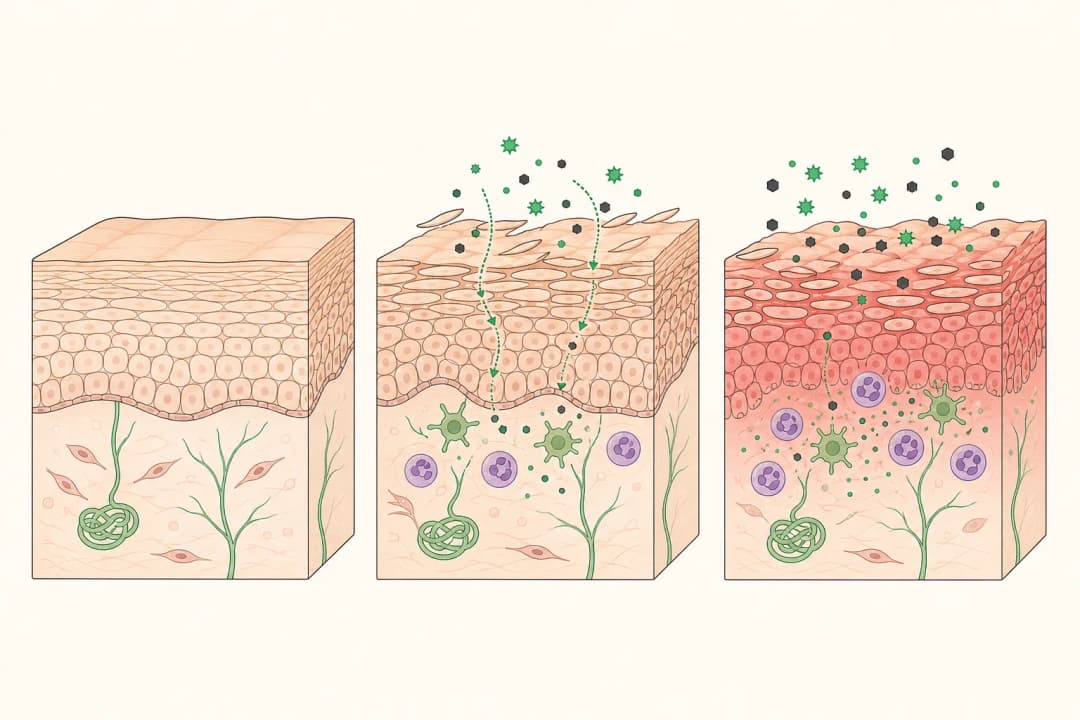
Irritant contact dermatitis develops when repeated or intense exposure to something such as soap, detergent, solvents, sweat, or frequent wet work damages the outer skin barrier. The skin may feel burning, stinging, dry, tight, cracked, or itchy. An emollient is a moisturising product that fills gaps in the barrier and reduces water loss. If inflammation remains strong after exposure has stopped, a clinician may prescribe a topical corticosteroid for a limited course.
Steps that help
Identify and avoid the suspected irritant, including products used at work or during cleaning. Wear protective gloves suited to the task, and keep wet cotton clothing away from the skin. Rinse exposed skin with lukewarm water and pat dry. Apply a plain, fragrance-free emollient often, especially after washing; ointments can be useful for very dry cracks, while creams may feel lighter during the day. Do not apply a steroid product to the face, folds, or broken skin unless a clinician has advised it.
When to seek care
Book an assessment if the rash persists after the suspected irritant is removed, spreads beyond the exposure area, or repeatedly returns. Seek prompt care for extensive blistering, severe pain, pus, facial swelling, breathing difficulty, or fever. A clinician may need to distinguish irritant dermatitis from allergy, infection, or another eczema pattern.
Questions for your doctor
Ask which ingredient or activity is most likely responsible, how often to apply the emollient, and whether a topical corticosteroid is appropriate for the affected site. Ask how to protect your hands or other exposed areas at work.
Find care
General Clinics & Polyclinics in Abu Dhabi
That answer is general. If you want it applied to your own case, these are licensed general clinics & polyclinics listed in Abu Dhabi.
27 Ar Ruwwad St - Shakhbout City - MSH4 - Abu Dhabi - United Arab Emirates
Accepts: Daman, Thiqa, Cigna, MetLife +20 more
Al Ruwais, Al Dhafrah
Accepts: Daman, Thiqa, AXA, Cigna +16 more
Al Bahyah - Al Bahyah Old - Abu Dhabi - United Arab Emirates
Accepts: Daman, Thiqa, Cigna, Allianz Care +18 more
Abu Dhabi
Accepts: Daman, Thiqa, AXA, Cigna +27 more
Ordered by verification status and how complete each clinic's public record is, then alphabetically. This is a directory listing, not a ranking — Zavis does not rate or recommend providers.
A factual listing drawn from the DHA, DOH and MOHAP licence registers. It is not a referral, an endorsement, or advice that any of these providers is right for you.
Questions people ask
Is irritant contact dermatitis contagious?
No. It results from skin damage caused by an irritant and does not spread from person to person.
How long should I use an emollient?
Use it regularly while the skin is dry or irritated, following product directions or your clinician's advice.
Related
Related reading
Keep reading
Medical disclaimer. This page is general health information, not medical advice, and it cannot diagnose you. Always consult a licensed healthcare provider about your own symptoms and treatment. In an emergency in the UAE, call 998 for an ambulance.