
What is the first treatment for COPD?
Short answer
The first treatment tried for COPD is usually an assessment followed by inhaler therapy and help to stop smoking when relevant.
This answers one question. It is not a diagnosis and does not replace an assessment by a licensed doctor.
At a glance
- First focus
- Assessment and an individual breathing plan
- Common medicine approach
- Inhaler therapy when clinically appropriate
- Helpful support
- Smoking cessation if you smoke
What this means
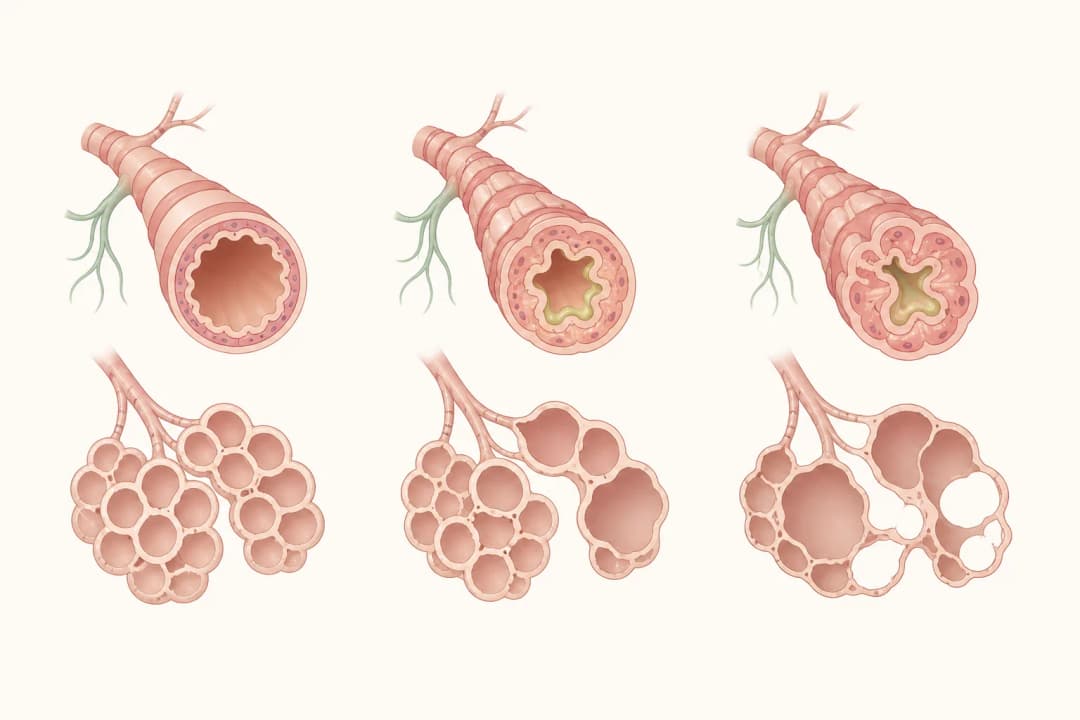
COPD is a long-term condition affecting airflow. A clinician first reviews symptoms, smoking or exposure history, medicines, and how breathing affects daily activities. Spirometry may help confirm airflow limitation and distinguish COPD from other causes of breathlessness. The treatment plan is adjusted to symptoms, examination findings, and flare-up history rather than chosen from the diagnosis name alone.
Inhalers can relax tightened airway muscles or reduce airway inflammation, making breathing easier for some people. Correct technique matters because medicine that stays in the mouth or throat may not reach the lungs effectively.
What to do next
Arrange a chronic disease review or clinical assessment if COPD is suspected or your breathing has changed. Take every inhaler and medicine list to the appointment. Ask the clinician to watch your inhaler technique and explain when each device should be used.
If you smoke, support from a smoking cessation programme can make stopping more manageable. Avoid smoke and other known irritants, keep active within your limits, and follow the written plan for worsening symptoms. Do not start, stop, or share inhalers without medical advice.
When to seek care
Seek urgent medical help for severe or rapidly worsening breathlessness, blue or grey lips, new confusion, fainting, or difficulty speaking because of breathing. Contact a clinician promptly if a change in cough, sputum, wheeze, fever, or exercise tolerance is not settling. A sudden decline may need assessment for an exacerbation or another problem.
Questions for your doctor
Ask which test supports the diagnosis, which inhaler is being recommended and why, how to use and clean the device, what side effects to watch for, and what action plan to follow during a flare-up.
Find care
General Clinics & Polyclinics in Abu Dhabi
That answer is general. If you want it applied to your own case, these are licensed general clinics & polyclinics listed in Abu Dhabi.
27 Ar Ruwwad St - Shakhbout City - MSH4 - Abu Dhabi - United Arab Emirates
Accepts: Daman, Thiqa, Cigna, MetLife +20 more
Al Ruwais, Al Dhafrah
Accepts: Daman, Thiqa, AXA, Cigna +16 more
Al Bahyah - Al Bahyah Old - Abu Dhabi - United Arab Emirates
Accepts: Daman, Thiqa, Cigna, Allianz Care +18 more
Abu Dhabi
Accepts: Daman, Thiqa, AXA, Cigna +27 more
Ordered by verification status and how complete each clinic's public record is, then alphabetically. This is a directory listing, not a ranking — Zavis does not rate or recommend providers.
A factual listing drawn from the DHA, DOH and MOHAP licence registers. It is not a referral, an endorsement, or advice that any of these providers is right for you.
Questions people ask
Is an inhaler always the first treatment for COPD?
An inhaler is often considered, but the choice depends on symptoms, examination, diagnosis, and other health conditions.
Can COPD treatment cure the condition?
Treatment does not reverse established COPD, but it can ease symptoms, support activity, and reduce the effect of flare-ups.
Related
Related reading
Keep reading
Medical disclaimer. This page is general health information, not medical advice, and it cannot diagnose you. Always consult a licensed healthcare provider about your own symptoms and treatment. In an emergency in the UAE, call 998 for an ambulance.