
What is the first treatment for benign prostatic hyperplasia?
Short answer
The first treatment tried for benign prostatic hyperplasia is often symptom assessment and practical bladder measures, with medicine considered when symptoms are troublesome.
This answers one question. It is not a diagnosis and does not replace an assessment by a licensed doctor.
At a glance
- Starting point
- Review symptoms and their effect on daily life
- Helpful record
- Drinks, urinary frequency, urgency, and night waking
How first-line care works
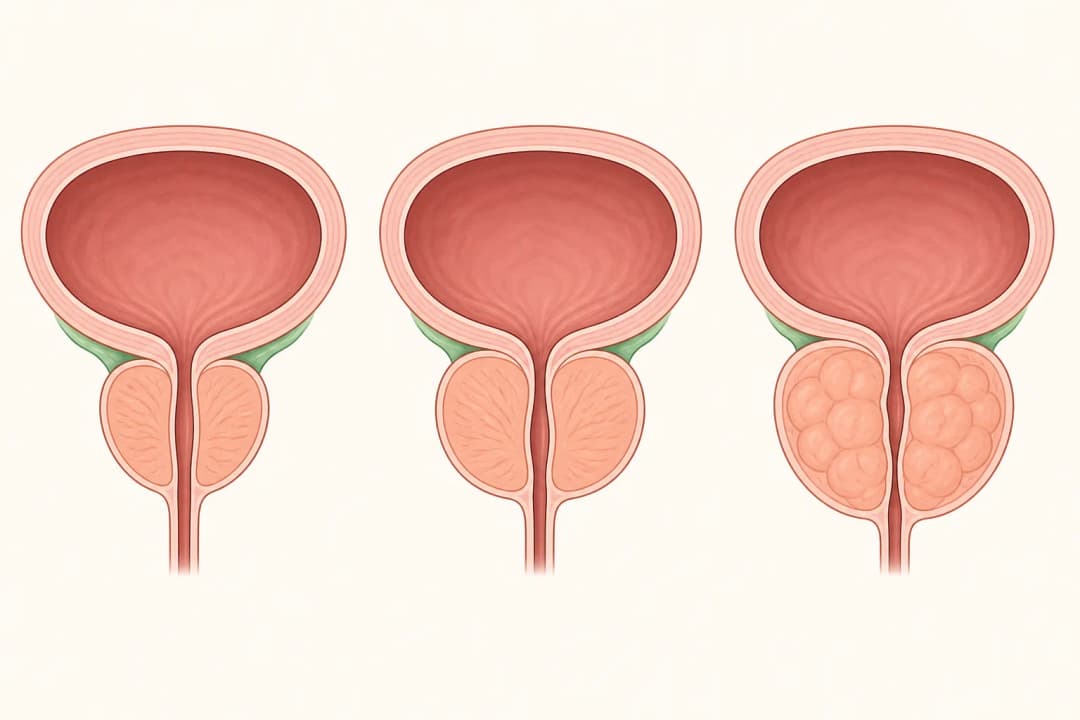
Benign prostatic hyperplasia is non-cancerous enlargement of the prostate that can narrow the urine channel. This may cause a slower stream, hesitancy, dribbling, frequent night-time urination, or a sudden urge. A clinician considers how much symptoms affect sleep and daily life, checks medicines and health conditions, and may examine the abdomen and prostate. Symptoms can also come from infection or another urinary problem, so assessment matters before choosing treatment.
Steps that may help
Keep a short record of drinks, toilet visits, urgency, and night waking. Reducing evening fluids, limiting caffeine and alcohol, and taking time to empty the bladder may reduce bother for some people. Do not stop prescribed medicines without advice. A GP Consultation can decide whether monitoring is reasonable or whether an alpha blocker or another medicine should be discussed. A Urine Test may help look for infection, blood, or another explanation for urinary symptoms.
When to seek care urgently
Get urgent help if you cannot pass urine, have severe lower-abdominal pain, fever with urinary symptoms, confusion, or heavy blood in the urine. Arrange prompt medical review for repeated infections, worsening leakage, pain when urinating, or symptoms that are rapidly changing. These signs need assessment rather than being assumed to be prostate enlargement.
Questions for your doctor
Ask what may be causing your symptoms, whether a urine sample or other checks are needed, how long monitoring should continue, and which medicine effects to watch for. It is also useful to ask how prostate symptoms could affect sleep, sexual function, or other treatments you take.
Find care
General Clinics & Polyclinics in Abu Dhabi
That answer is general. If you want it applied to your own case, these are licensed general clinics & polyclinics listed in Abu Dhabi.
27 Ar Ruwwad St - Shakhbout City - MSH4 - Abu Dhabi - United Arab Emirates
Accepts: Daman, Thiqa, Cigna, MetLife +20 more
Al Ruwais, Al Dhafrah
Accepts: Daman, Thiqa, AXA, Cigna +16 more
Al Bahyah - Al Bahyah Old - Abu Dhabi - United Arab Emirates
Accepts: Daman, Thiqa, Cigna, Allianz Care +18 more
Abu Dhabi
Accepts: Daman, Thiqa, AXA, Cigna +27 more
Ordered by verification status and how complete each clinic's public record is, then alphabetically. This is a directory listing, not a ranking — Zavis does not rate or recommend providers.
A factual listing drawn from the DHA, DOH and MOHAP licence registers. It is not a referral, an endorsement, or advice that any of these providers is right for you.
Questions people ask
Does every enlarged prostate need treatment?
No. Mild symptoms may be monitored with practical measures when they are not causing significant trouble.
Why might I need a urine test?
A urine test can help identify infection, blood, or another cause that can resemble prostate-related urinary symptoms.
Related
Related reading
Keep reading
Medical disclaimer. This page is general health information, not medical advice, and it cannot diagnose you. Always consult a licensed healthcare provider about your own symptoms and treatment. In an emergency in the UAE, call 998 for an ambulance.