
What is diabetes medication management done with?
Short answer
Diabetes medication management is done with prescribed medicines, glucose monitoring, and regular review of response and safety.
This answers one question. It is not a diagnosis and does not replace an assessment by a licensed doctor.
At a glance
- May include
- Tablets, injections, or insulin
- Monitoring
- Glucose readings and trends
- Review focus
- Response, side effects, and safety
How management is monitored
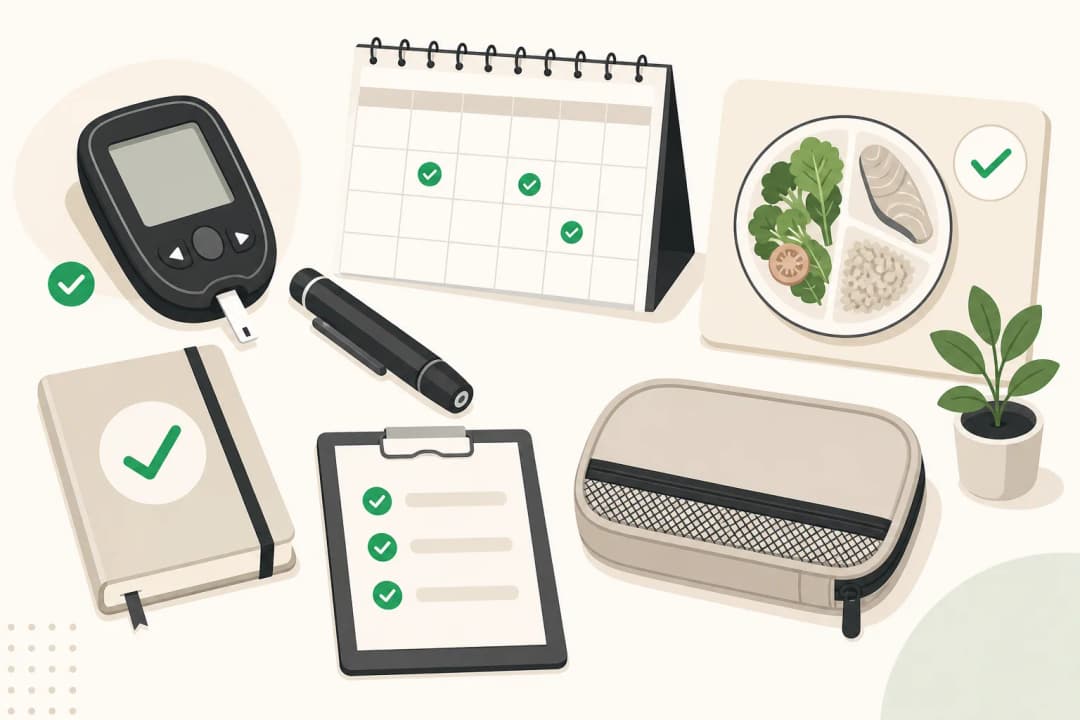
The plan may include tablets, non-insulin injections, insulin, or a combination, depending on the type of diabetes and individual needs. A clinician reviews glucose patterns, meals, activity, other medicines, kidney function, side effects, and episodes of glucose that is too high or too low.
A [Continuous Glucose Monitor](/technology/continuous-glucose-monitor/) can show glucose trends through the day. Finger-prick checks may still be useful in some situations. Monitoring information helps a clinician decide whether a dose, timing, or medicine needs review; do not change prescribed treatment without advice.
Using treatment safely
Take medicines according to the agreed schedule and keep a record of missed doses, readings, meals, symptoms, and physical activity when requested. Carry a source of fast-acting sugar if your clinician has explained that your medicine can cause low glucose. Bring your medicines and monitoring records to reviews.
Learn more about [Diabetes Medication Management](/treatments/medical-management/diabetes-medication-management/) to understand how follow-up fits around daily treatment. Ask before starting non-prescription products because they may affect glucose or medicine safety.
When to seek urgent help
Seek urgent help for severe confusion, seizure, collapse, inability to swallow, repeated vomiting, or difficulty breathing. Get prompt advice for glucose readings that remain outside your agreed range, symptoms of dehydration, or suspected low glucose that does not improve after following your clinician's treatment plan.
Questions for your doctor
Ask what each medicine does, when to take it with meals, how to respond to a missed dose or low reading, which monitoring method suits you, and when kidney or other safety checks are due.
Find care
General Clinics & Polyclinics in Abu Dhabi
That answer is general. If you want it applied to your own case, these are licensed general clinics & polyclinics listed in Abu Dhabi.
27 Ar Ruwwad St - Shakhbout City - MSH4 - Abu Dhabi - United Arab Emirates
Accepts: Daman, Thiqa, Cigna, MetLife +20 more
Al Ruwais, Al Dhafrah
Accepts: Daman, Thiqa, AXA, Cigna +16 more
Al Bahyah - Al Bahyah Old - Abu Dhabi - United Arab Emirates
Accepts: Daman, Thiqa, Cigna, Allianz Care +18 more
Abu Dhabi
Accepts: Daman, Thiqa, AXA, Cigna +27 more
Ordered by verification status and how complete each clinic's public record is, then alphabetically. This is a directory listing, not a ranking — Zavis does not rate or recommend providers.
A factual listing drawn from the DHA, DOH and MOHAP licence registers. It is not a referral, an endorsement, or advice that any of these providers is right for you.
Questions people ask
Can I adjust my diabetes medicine from one reading?
Usually, a single reading is interpreted with symptoms and the wider pattern; ask your clinician for an individual adjustment plan.
Why record symptoms as well as glucose?
Symptoms can help connect a reading with meals, activity, missed doses, or a medicine effect and guide a safer review.
Related
Related reading
Keep reading
Medical disclaimer. This page is general health information, not medical advice, and it cannot diagnose you. Always consult a licensed healthcare provider about your own symptoms and treatment. In an emergency in the UAE, call 998 for an ambulance.