
What happens after a urine test?
Short answer
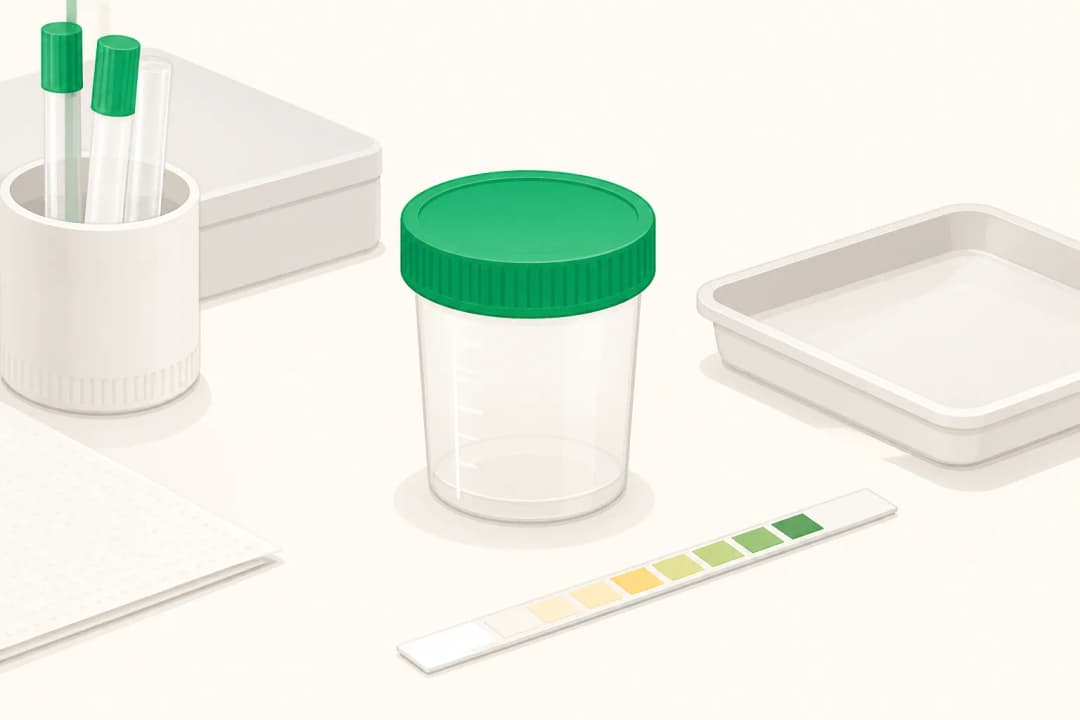
After a urine test, the sample is examined, your clinician reviews the result, and follow-up depends on what it shows.
This answers one question. It is not a diagnosis and does not replace an assessment by a licensed doctor.
At a glance
- Result timing
- Ask the testing service when your result will be available.
- Follow-up
- A repeat sample or additional test may be needed for an unclear finding.
What the result may mean
A urine sample can provide clues about urinary infection, blood, protein, glucose, hydration, or how the kidneys are working. A screening result is not always a diagnosis. Concentrated urine, contamination during collection, medicines, or recent activity can affect what is detected. Your clinician considers the result alongside your symptoms, examination, and medical history.
If infection is suspected, the sample may undergo further testing to identify bacteria and help select treatment. An unexpected finding may lead to a repeat sample or another check rather than immediate treatment.
What to do next
Ask when and how you will receive the result, and check whether you need a follow-up appointment. Take medicines only as prescribed; do not start leftover antibiotics because the right treatment depends on the clinical picture and, when used, the test findings. Drink fluids according to your clinician’s advice, especially if you have been told to restrict fluids because of another condition.
Keep a note of burning, frequent urination, urgency, fever, back pain, visible blood, or changes in urine colour. These details help your clinician interpret a result and decide whether repeat testing or treatment is needed.
When to seek care
Seek prompt medical advice for fever with urinary symptoms, pain in the side or back, vomiting, visible blood in the urine, inability to pass urine, or symptoms that are rapidly worsening. Seek urgent help if you feel severely unwell, confused, faint, or unable to keep fluids down. These warning signs need assessment based on symptoms, not on a urine result alone.
Questions for your doctor
Ask: What did the test show? Could the sample need repeating? Do my symptoms suggest an infection or another cause? When should I expect follow-up? If treatment is advised, how should I take it and what changes should prompt a review?
Find care
General Clinics & Polyclinics in Abu Dhabi
That answer is general. If you want it applied to your own case, these are licensed general clinics & polyclinics listed in Abu Dhabi.
27 Ar Ruwwad St - Shakhbout City - MSH4 - Abu Dhabi - United Arab Emirates
Accepts: Daman, Thiqa, Cigna, MetLife +20 more
Al Ruwais, Al Dhafrah
Accepts: Daman, Thiqa, AXA, Cigna +16 more
Al Bahyah - Al Bahyah Old - Abu Dhabi - United Arab Emirates
Accepts: Daman, Thiqa, Cigna, Allianz Care +18 more
Abu Dhabi
Accepts: Daman, Thiqa, AXA, Cigna +27 more
Ordered by verification status and how complete each clinic's public record is, then alphabetically. This is a directory listing, not a ranking — Zavis does not rate or recommend providers.
A factual listing drawn from the DHA, DOH and MOHAP licence registers. It is not a referral, an endorsement, or advice that any of these providers is right for you.
Questions people ask
Does an abnormal urine test always mean an infection?
No. Several findings have different possible explanations, so symptoms and clinical review are needed.
Should I take antibiotics after a urine test?
Only take antibiotics when a clinician has assessed you and prescribed them for your situation.
Related
Related reading
Keep reading
Medical disclaimer. This page is general health information, not medical advice, and it cannot diagnose you. Always consult a licensed healthcare provider about your own symptoms and treatment. In an emergency in the UAE, call 998 for an ambulance.