
What does a hormonal coil treat?
Short answer
A hormonal coil provides contraception and can reduce heavy menstrual bleeding; clinicians may also use it to manage selected womb-lining conditions.
This answers one question. It is not a diagnosis and does not replace an assessment by a licensed doctor.
At a glance
- Main uses
- Contraception and reduction of heavy menstrual bleeding; selected womb-lining conditions may also be managed.
- Early change
- Spotting or irregular bleeding can occur after fitting before the pattern settles.
How it works
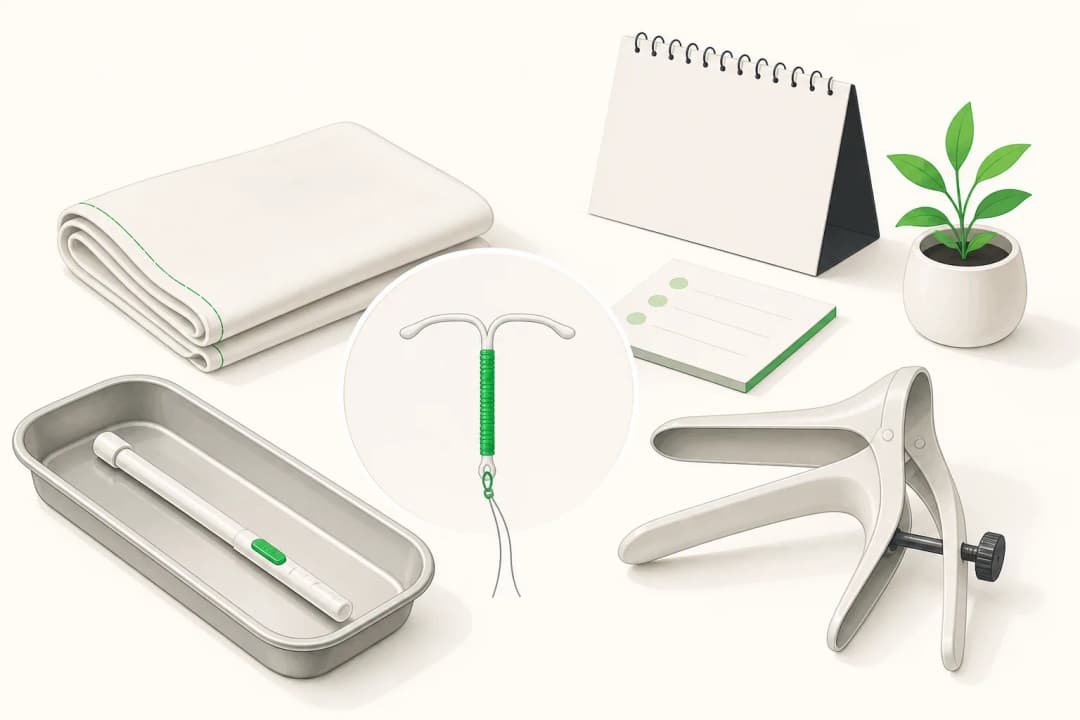
A hormonal coil, also called an intrauterine system, sits inside the womb and releases a progestogen locally. This thickens cervical mucus to help prevent pregnancy and makes the womb lining thinner. As a result, periods may become lighter, shorter, or less painful over time, though spotting and irregular bleeding can happen after fitting.
It may be considered for heavy bleeding associated with conditions such as adenomyosis, endometrial hyperplasia, or endometriosis, depending on the diagnosis and individual circumstances. It does not treat every cause of pelvic pain or bleeding, and it does not protect against sexually transmitted infections.
Before choosing a coil
Tell the clinician about your bleeding pattern, pelvic pain, pregnancy plans, medicines, previous infections, and any known womb or cervical problems. Ask how fitting is performed, what cramping or spotting to expect, how the strings are checked, and when review is needed. Discuss alternatives such as a contraceptive implant, copper coil, or a procedure if they better match your goals.
When to seek help after fitting
Contact a clinician promptly for worsening pelvic pain, fever, unusual-smelling discharge, suspected pregnancy, or bleeding that concerns you after insertion. Urgent care is needed for severe pain, fainting, or heavy bleeding with feeling unwell. If you cannot feel the strings or feel hard plastic, use another contraceptive method until you receive advice.
Questions for your doctor
Is a hormonal coil suitable for my bleeding or diagnosed condition? What benefits and side effects should I expect? Which alternatives are available? How will we check its position and judge whether it is helping?
Find care
General Clinics & Polyclinics in Abu Dhabi
That answer is general. If you want it applied to your own case, these are licensed general clinics & polyclinics listed in Abu Dhabi.
27 Ar Ruwwad St - Shakhbout City - MSH4 - Abu Dhabi - United Arab Emirates
Accepts: Daman, Thiqa, Cigna, MetLife +20 more
Al Ruwais, Al Dhafrah
Accepts: Daman, Thiqa, AXA, Cigna +16 more
Al Bahyah - Al Bahyah Old - Abu Dhabi - United Arab Emirates
Accepts: Daman, Thiqa, Cigna, Allianz Care +18 more
Abu Dhabi
Accepts: Daman, Thiqa, AXA, Cigna +27 more
Ordered by verification status and how complete each clinic's public record is, then alphabetically. This is a directory listing, not a ranking — Zavis does not rate or recommend providers.
A factual listing drawn from the DHA, DOH and MOHAP licence registers. It is not a referral, an endorsement, or advice that any of these providers is right for you.
Questions people ask
Does a hormonal coil help heavy periods?
It can reduce menstrual bleeding by thinning the womb lining, although the response and suitability vary by person.
Is a hormonal coil the same as a copper coil?
No. A hormonal coil releases progestogen, while a copper coil uses copper and may make periods heavier or crampier.
Related
Related reading
Keep reading
Medical disclaimer. This page is general health information, not medical advice, and it cannot diagnose you. Always consult a licensed healthcare provider about your own symptoms and treatment. In an emergency in the UAE, call 998 for an ambulance.