
What does cold hands and feet feel like with peripheral arterial disease?
Short answer
Cold Hands and Feet is a common presentation of Peripheral Arterial Disease, especially when blood flow to a limb is reduced.
This answers one question. It is not a diagnosis and does not replace an assessment by a licensed doctor.
At a glance
- Typical pattern
- Coldness may accompany walking-related aching, numbness or colour change.
- Skin care
- Inspect numb feet and avoid direct heat.
- Sudden change
- Rapid coldness, colour loss, pain or weakness needs emergency assessment.
The short answer
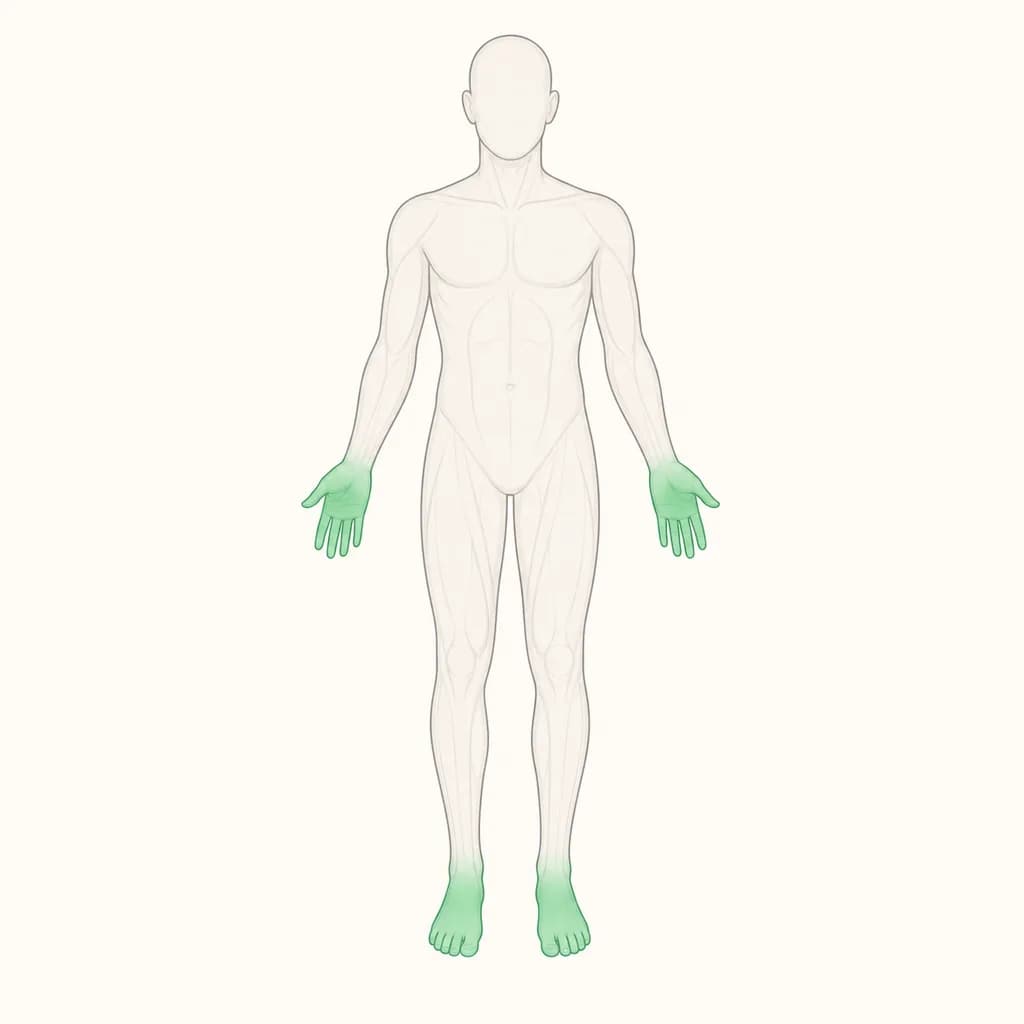
Cold Hands and Feet is a common presentation of Peripheral Arterial Disease, especially when blood flow to a limb is reduced. The skin may feel cooler than the matching area on the other side, while toes or fingers can look pale or bluish and feel numb or tingly. The pattern may be gradual, but a sudden change needs urgent attention.
How reduced blood flow may feel
Peripheral arterial disease narrows arteries supplying the limbs. You may feel aching or cramping in a calf, thigh, foot or buttock during walking that eases with rest, along with coldness, weakness or pins and needles. Hair loss on the lower leg, shiny skin, slow-growing toenails, or a sore that heals slowly can also occur. These signs do not establish a diagnosis by themselves; a clinician may compare pulses, skin temperature and blood pressure at different limb sites.
Practical next steps
Book a medical review for recurring coldness, walking-related leg pain, numbness, skin colour changes, or wounds on the feet that are slow to heal. Bring a list of medicines and mention smoking, diabetes, high blood pressure, cholesterol problems, or previous vascular disease. Until reviewed, protect feet from injury, check the skin regularly, and avoid direct heat that could burn numb skin. Follow any personalised activity, smoking-cessation or medicine plan given by your clinician.
When it is urgent
Seek emergency help if a limb suddenly becomes cold, pale or blue, severely painful, weak, or unable to move, or if numbness develops quickly. An open sore with spreading redness, fever, discharge or worsening pain also needs prompt care. Do not wait for a routine appointment when blood flow may have changed suddenly.
Useful questions
Could my symptoms reflect reduced arterial blood flow? Which examinations or tests would clarify this? How should I protect my feet and monitor a sore? What activity is suitable for me? Which vascular risk factors should we address first?
Find care
General Clinics & Polyclinics in Abu Dhabi
That answer is general. If you want it applied to your own case, these are licensed general clinics & polyclinics listed in Abu Dhabi.
27 Ar Ruwwad St - Shakhbout City - MSH4 - Abu Dhabi - United Arab Emirates
Accepts: Daman, Thiqa, Cigna, MetLife +20 more
Al Ruwais, Al Dhafrah
Accepts: Daman, Thiqa, AXA, Cigna +16 more
Al Bahyah - Al Bahyah Old - Abu Dhabi - United Arab Emirates
Accepts: Daman, Thiqa, Cigna, Allianz Care +18 more
Abu Dhabi
Accepts: Daman, Thiqa, AXA, Cigna +27 more
Ordered by verification status and how complete each clinic's public record is, then alphabetically. This is a directory listing, not a ranking — Zavis does not rate or recommend providers.
A factual listing drawn from the DHA, DOH and MOHAP licence registers. It is not a referral, an endorsement, or advice that any of these providers is right for you.
Questions people ask
Is one cold foot different from both cold feet?
A one-sided or sudden change is more concerning for an acute circulation problem and needs prompt assessment.
Can peripheral arterial disease cause numbness?
Reduced blood flow may be accompanied by numbness or tingling, although other nerve-related causes are also possible.
Related
Related reading
Keep reading
Medical disclaimer. This page is general health information, not medical advice, and it cannot diagnose you. Always consult a licensed healthcare provider about your own symptoms and treatment. In an emergency in the UAE, call 998 for an ambulance.