
What causes steroid acne?
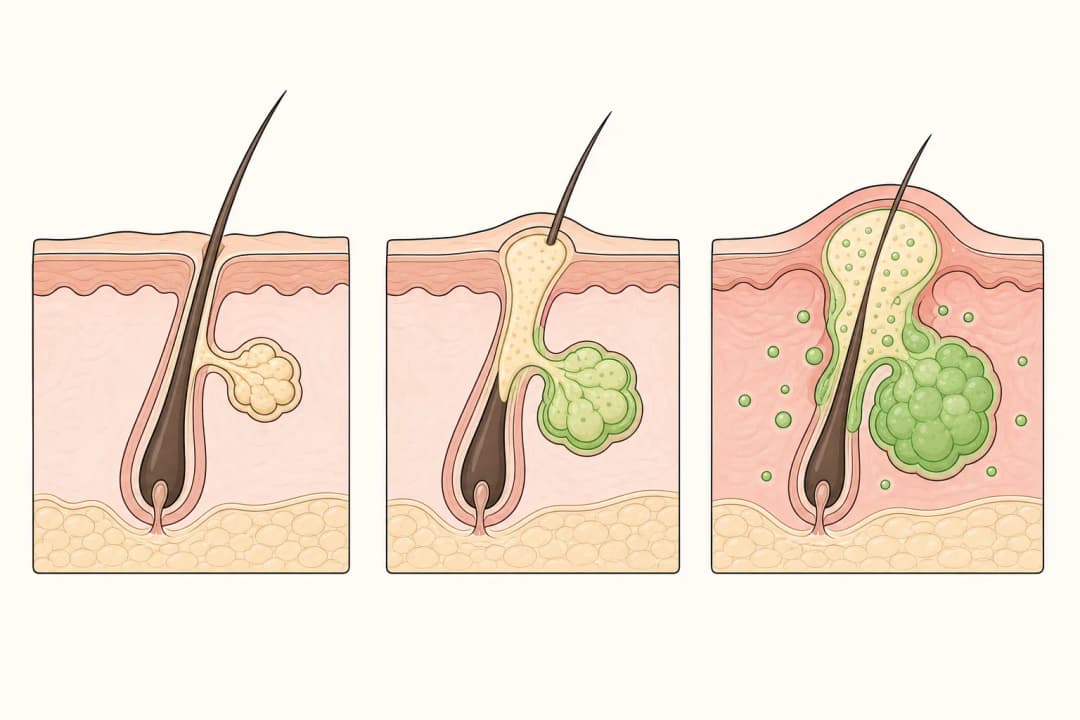
Short answer
Steroid acne develops when corticosteroids alter skin immune activity and oil-follicle behaviour, producing a fairly uniform outbreak of acne-like bumps or pustules.
This answers one question. It is not a diagnosis and does not replace an assessment by a licensed doctor.
At a glance
- Common appearance
- Similar red bumps or pustules
- Possible sites
- Face, chest, back, or shoulders
- Useful detail
- Record every steroid product and when the eruption began
Why steroids can trigger bumps
Corticosteroids reduce inflammation, but they can also change the local environment around hair follicles. Follicles may become blocked more easily, and the normal balance of skin microbes and immune responses can shift. The eruption often consists of similar-looking red bumps or pus-filled spots rather than a mixture of blackheads, whiteheads, and larger deep pimples. It may affect the face, chest, back, shoulders, or areas repeatedly exposed to a steroid product.
The timing and appearance can help a clinician distinguish steroid acne from ordinary acne, folliculitis, or another rash. The term can describe an eruption after a topical product, while steroids taken by mouth or given in another form may also affect skin.
What to do next
Do not stop a prescribed steroid abruptly without discussing it with the prescriber, particularly if it treats a significant inflammatory condition. Contact the clinician who recommended it and explain when the bumps appeared, where the product was used, and whether the eruption is itchy, tender, or draining.
Use gentle cleansing, avoid scrubs and picking, and choose non-comedogenic moisturiser or sunscreen when needed. A dermatologist may recommend changing the steroid plan or adding acne-directed treatment after confirming the diagnosis. Keep a list of all creams, tablets, inhalers, or injections because exposure from more than one source can matter.
When to seek care promptly
Seek prompt advice if the eruption is rapidly spreading, painful, associated with fever, or leaving deep tender lumps or scars. Urgent help is needed for facial swelling, trouble breathing, blistering, peeling skin, or sores involving the eyes or mouth, as these features may indicate a serious reaction rather than straightforward steroid acne.
Questions for your doctor
Could this be steroid acne, folliculitis, or another eruption? Should I change how I use the steroid? Are any of my other medicines contributing? What treatment is suitable for the affected body area?
Find care
General Clinics & Polyclinics in Abu Dhabi
That answer is general. If you want it applied to your own case, these are licensed general clinics & polyclinics listed in Abu Dhabi.
27 Ar Ruwwad St - Shakhbout City - MSH4 - Abu Dhabi - United Arab Emirates
Accepts: Daman, Thiqa, Cigna, MetLife +20 more
Al Ruwais, Al Dhafrah
Accepts: Daman, Thiqa, AXA, Cigna +16 more
Al Bahyah - Al Bahyah Old - Abu Dhabi - United Arab Emirates
Accepts: Daman, Thiqa, Cigna, Allianz Care +18 more
Abu Dhabi
Accepts: Daman, Thiqa, AXA, Cigna +27 more
Ordered by verification status and how complete each clinic's public record is, then alphabetically. This is a directory listing, not a ranking — Zavis does not rate or recommend providers.
A factual listing drawn from the DHA, DOH and MOHAP licence registers. It is not a referral, an endorsement, or advice that any of these providers is right for you.
Questions people ask
Should I stop the steroid cream?
Ask the prescriber first. Stopping suddenly may worsen the condition being treated, while the regimen may need a supervised adjustment.
Is steroid acne contagious?
No. It results from a medication effect on the skin and is not spread by touch.
Related
Related reading
Keep reading
Medical disclaimer. This page is general health information, not medical advice, and it cannot diagnose you. Always consult a licensed healthcare provider about your own symptoms and treatment. In an emergency in the UAE, call 998 for an ambulance.