
What causes COPD?
Short answer
COPD is mainly caused by long-term exposure to tobacco smoke, although workplace dust, fumes, air pollution and inherited vulnerability can also contribute.
This answers one question. It is not a diagnosis and does not replace an assessment by a licensed doctor.
At a glance
- Main exposure
- Long-term tobacco smoke exposure
- Useful assessment
- Exposure history and spirometry can clarify airflow limitation
How COPD develops
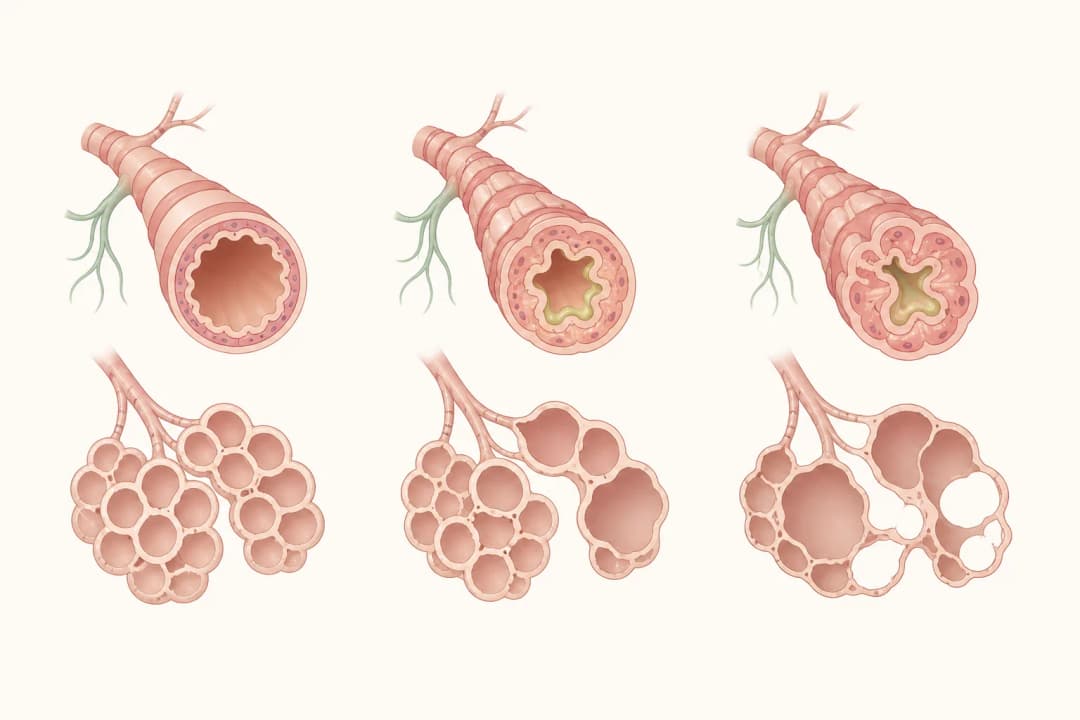
Repeated irritation can inflame and damage the airways and the air sacs that exchange oxygen. The airway walls may become thicker, mucus may increase and damaged lung tissue may lose elasticity. Together, these changes make it harder to move air out, particularly during exertion.
Smoking is a major cause, including exposure to second-hand smoke. Long-term contact with dust, chemical fumes, indoor cooking smoke or outdoor air pollution can also contribute, especially in poorly ventilated settings. Some people develop COPD at a younger age because of an inherited vulnerability or previous lung injury. COPD itself is not caused by a single episode of a cold.
Reducing further lung irritation
Stopping smoking is the most useful step for reducing ongoing smoke exposure. Avoid second-hand smoke, improve ventilation around dust or fumes, and use workplace protection recommended for the specific hazard. Ask a clinician about breathing symptoms rather than assuming they are normal ageing.
Assessment may include a history of exposures, listening to the chest and a breathing test called spirometry. Treatment can include inhaled medicines, pulmonary rehabilitation, vaccinations and an activity plan, depending on symptoms and test results. Early review can also identify asthma or another explanation.
When to seek care
Arrange an appointment for persistent cough, phlegm, wheeze, breathlessness during usual activities or repeated chest infections, particularly after smoke or dust exposure. Seek urgent care for severe breathlessness, blue or grey lips, new confusion, chest pain, coughing blood or a rapid deterioration. A known COPD diagnosis with a sudden change in breathing also warrants prompt advice.
Questions for your doctor
Ask whether spirometry is appropriate, which exposure may be affecting your lungs, and what support is available for stopping smoking or changing workplace conditions. Discuss inhaler technique, an action plan for flare-ups and which symptoms should trigger urgent help.
Find care
General Clinics & Polyclinics in Abu Dhabi
That answer is general. If you want it applied to your own case, these are licensed general clinics & polyclinics listed in Abu Dhabi.
27 Ar Ruwwad St - Shakhbout City - MSH4 - Abu Dhabi - United Arab Emirates
Accepts: Daman, Thiqa, Cigna, MetLife +20 more
Al Ruwais, Al Dhafrah
Accepts: Daman, Thiqa, AXA, Cigna +16 more
Al Bahyah - Al Bahyah Old - Abu Dhabi - United Arab Emirates
Accepts: Daman, Thiqa, Cigna, Allianz Care +18 more
Abu Dhabi
Accepts: Daman, Thiqa, AXA, Cigna +27 more
Ordered by verification status and how complete each clinic's public record is, then alphabetically. This is a directory listing, not a ranking — Zavis does not rate or recommend providers.
A factual listing drawn from the DHA, DOH and MOHAP licence registers. It is not a referral, an endorsement, or advice that any of these providers is right for you.
Questions people ask
Can someone who never smoked develop COPD?
Yes. Workplace dust or fumes, air pollution, second-hand smoke, inherited vulnerability and previous lung injury can contribute.
Does a cough always mean COPD?
No. A cough has many possible causes; persistent cough with breathlessness or wheeze should be assessed.
Related
Related reading
Keep reading
Medical disclaimer. This page is general health information, not medical advice, and it cannot diagnose you. Always consult a licensed healthcare provider about your own symptoms and treatment. In an emergency in the UAE, call 998 for an ambulance.