
What are the treatment options for xanthelasma?
Short answer
Treatment options for xanthelasma include CO2 laser resurfacing and surgical excision, selected according to the deposit's depth and eyelid location.
This answers one question. It is not a diagnosis and does not replace an assessment by a licensed doctor.
At a glance
- Laser option
- CO2 laser resurfacing treats selected superficial deposits
- Surgical option
- Surgical excision removes a defined deposit
- Before treatment
- Consider an assessment of related lipid or metabolic factors
How the options differ
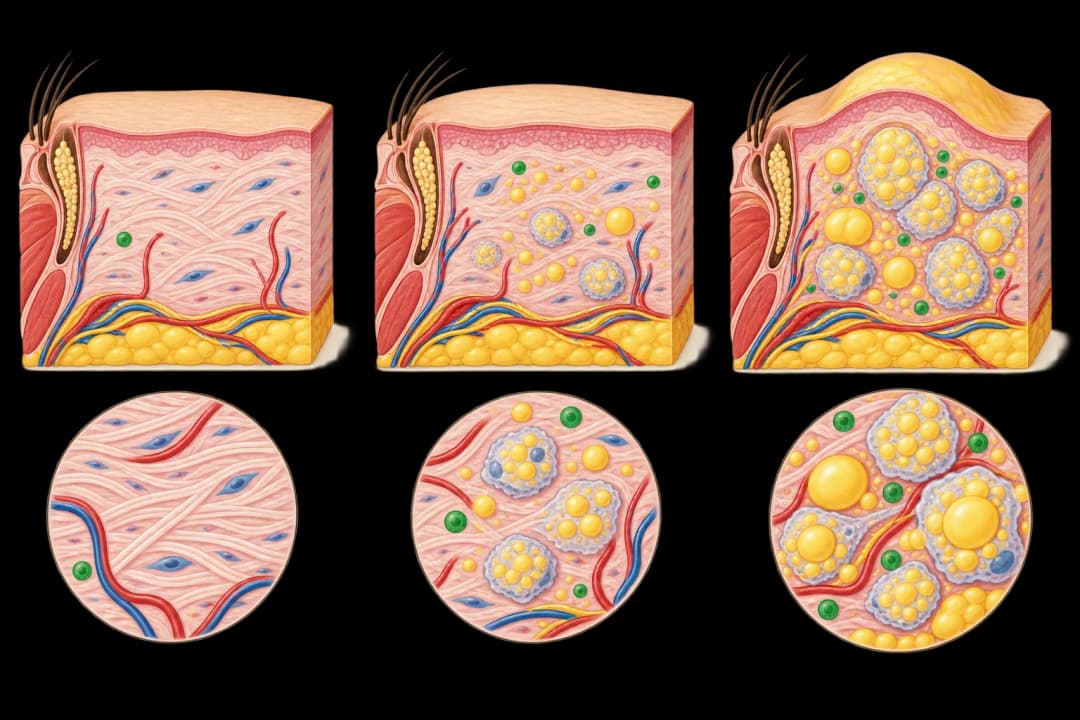
Xanthelasma appears as soft yellowish deposits, usually around the eyelids. A clinician examines the area and may recommend a health review because deposits can occur alongside lipid or metabolic concerns, although the appearance alone does not establish a blood abnormality.
CO2 laser resurfacing uses controlled laser energy to treat superficial tissue and may be considered when the deposit and surrounding skin are suitable. Surgical excision removes the deposit directly and may be chosen for deeper or more defined lesions. Both approaches need careful planning around the delicate eyelid skin.
Planning treatment safely
Have the lesion assessed before arranging cosmetic treatment, especially if it is new, one-sided, changing or close to the eyelid margin. Ask whether a lipid profile or other medical review is appropriate. Treating an underlying health issue may support overall care but does not necessarily remove an existing deposit.
Your clinician should explain eye protection, wound care, expected redness or swelling and the possibility of colour change or scarring. Do not apply acids or attempt to scrape the area at home. Follow instructions about keeping ointment out of the eye and attend the planned review.
When to arrange medical care
Arrange prompt assessment for a deposit that changes rapidly, bleeds, ulcerates, affects vision or is associated with eyelid drooping. A clinician may need to assess another eyelid condition before selecting treatment.
After laser resurfacing or excision, seek urgent help for worsening eye pain, vision change, marked swelling, pus or fever. These symptoms need examination rather than additional home products.
Questions for your doctor
Ask which method fits the depth and position of the deposit, whether the lesion should be tested, what eye protection is used and how recurrence will be monitored. Discuss healing time, pigment changes and the possibility of more than one treatment session.
Find care
General Clinics & Polyclinics in Abu Dhabi
That answer is general. If you want it applied to your own case, these are licensed general clinics & polyclinics listed in Abu Dhabi.
27 Ar Ruwwad St - Shakhbout City - MSH4 - Abu Dhabi - United Arab Emirates
Accepts: Daman, Thiqa, Cigna, MetLife +20 more
Al Ruwais, Al Dhafrah
Accepts: Daman, Thiqa, AXA, Cigna +16 more
Al Bahyah - Al Bahyah Old - Abu Dhabi - United Arab Emirates
Accepts: Daman, Thiqa, Cigna, Allianz Care +18 more
Abu Dhabi
Accepts: Daman, Thiqa, AXA, Cigna +27 more
Ordered by verification status and how complete each clinic's public record is, then alphabetically. This is a directory listing, not a ranking — Zavis does not rate or recommend providers.
A factual listing drawn from the DHA, DOH and MOHAP licence registers. It is not a referral, an endorsement, or advice that any of these providers is right for you.
Questions people ask
Can xanthelasma be treated without surgery?
CO2 laser resurfacing may be an option for suitable superficial deposits; an examination is needed to choose safely.
Can xanthelasma return after removal?
It can recur, so discuss follow-up and whether related health factors need review.
Related
Related reading
Keep reading
Medical disclaimer. This page is general health information, not medical advice, and it cannot diagnose you. Always consult a licensed healthcare provider about your own symptoms and treatment. In an emergency in the UAE, call 998 for an ambulance.