
What are the treatment options for premature rupture of membranes?
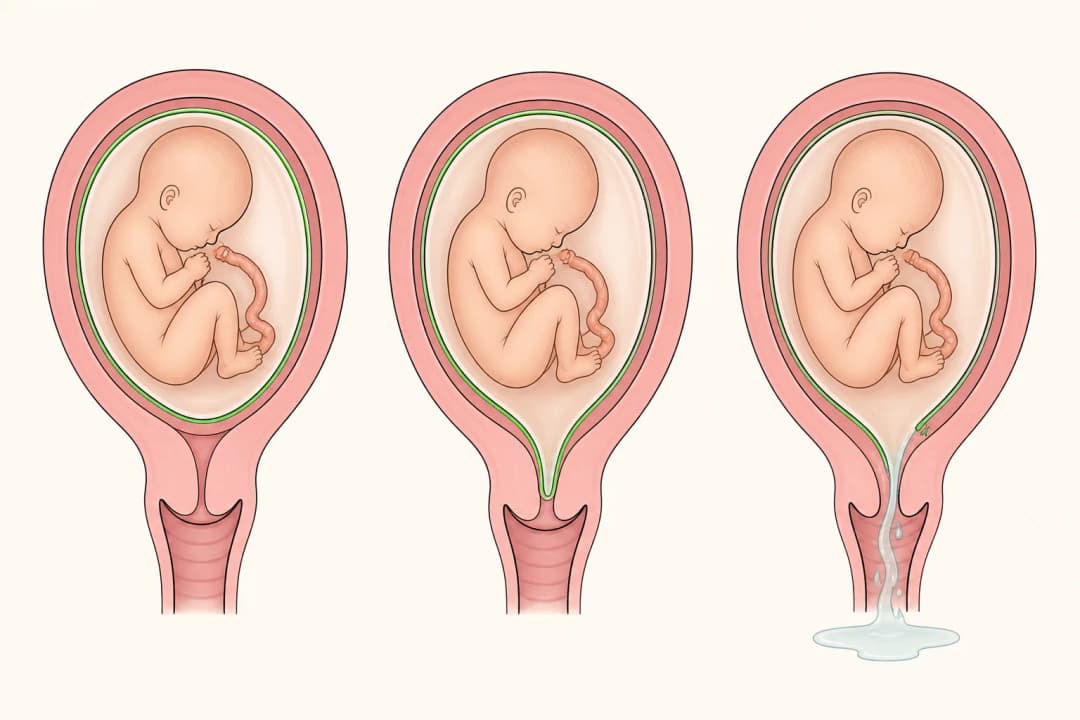
Short answer
Treatment options for premature rupture of membranes include urgent assessment, monitoring for infection, antibiotics when indicated, steroid injections when appropriate, and planned birth if continuing is unsafe.
This answers one question. It is not a diagnosis and does not replace an assessment by a licensed doctor.
At a glance
- First step
- Contact maternity care for examination, even if leaking is small.
- Treatment focus
- Prevent infection, support fetal maturity and choose safe timing of birth.
How clinicians assess it
The team confirms whether fluid is amniotic fluid and checks your temperature, pulse, blood tests, fetal heart rate and signs of labour or infection. Management depends on how many weeks pregnant you are, the baby’s condition, the amount and colour of fluid, and whether the membranes ruptured before labour. If early birth is possible, an antenatal steroid injection may help prepare the baby’s lungs. Antibiotics may be prescribed to reduce infection risk or protect against specific bacteria. The team may recommend hospital observation and regular reviews.
Your care plan
Use a maternity pad rather than inserting anything into the vagina, and note the fluid colour, smell and amount. Avoid sex, tampons and swimming until your maternity team gives different advice. Take prescribed medicines and attend fetal and maternal checks. If you and the baby remain well, clinicians may continue observation to gain safe time while watching closely for infection or fetal concerns. If labour begins, infection is suspected, bleeding occurs, or the baby is not coping, induction of labour or another form of delivery may be recommended.
Seek urgent assessment now
Call your maternity unit immediately for suspected leaking fluid, fever or chills, new abdominal tenderness, foul-smelling or green fluid, vaginal bleeding, regular contractions, or reduced fetal movement. These changes need prompt examination because infection, cord problems or labour may require immediate treatment.
Questions to ask
Ask whether the membranes have definitely ruptured, where monitoring will happen, which medicines are recommended, how infection will be recognised, and what findings would lead to induction or caesarean birth.
Find care
General Clinics & Polyclinics in Abu Dhabi
That answer is general. If you want it applied to your own case, these are licensed general clinics & polyclinics listed in Abu Dhabi.
27 Ar Ruwwad St - Shakhbout City - MSH4 - Abu Dhabi - United Arab Emirates
Accepts: Daman, Thiqa, Cigna, MetLife +20 more
Al Ruwais, Al Dhafrah
Accepts: Daman, Thiqa, AXA, Cigna +16 more
Al Bahyah - Al Bahyah Old - Abu Dhabi - United Arab Emirates
Accepts: Daman, Thiqa, Cigna, Allianz Care +18 more
Abu Dhabi
Accepts: Daman, Thiqa, AXA, Cigna +27 more
Ordered by verification status and how complete each clinic's public record is, then alphabetically. This is a directory listing, not a ranking — Zavis does not rate or recommend providers.
A factual listing drawn from the DHA, DOH and MOHAP licence registers. It is not a referral, an endorsement, or advice that any of these providers is right for you.
Questions people ask
Can the waters reseal after they break?
The membranes do not reliably repair themselves, so ongoing fluid leakage and infection monitoring are needed.
Will I need to give birth straight away?
Not always. If you and the baby are stable, observation may be offered, but infection, labour or fetal concerns can change the plan.
Related
Related reading
Keep reading
Medical disclaimer. This page is general health information, not medical advice, and it cannot diagnose you. Always consult a licensed healthcare provider about your own symptoms and treatment. In an emergency in the UAE, call 998 for an ambulance.