
What are the treatment options for irritant contact dermatitis?
Short answer
Treatment options for irritant contact dermatitis include avoiding the trigger, restoring the skin barrier with emollients, and using clinician-advised anti-inflammatory treatment.
This answers one question. It is not a diagnosis and does not replace an assessment by a licensed doctor.
At a glance
- Priority
- Remove or reduce the irritant and rebuild the skin barrier.
- Useful protection
- Appropriate gloves and fragrance-free emollients can limit repeated damage.
What irritant contact dermatitis involves
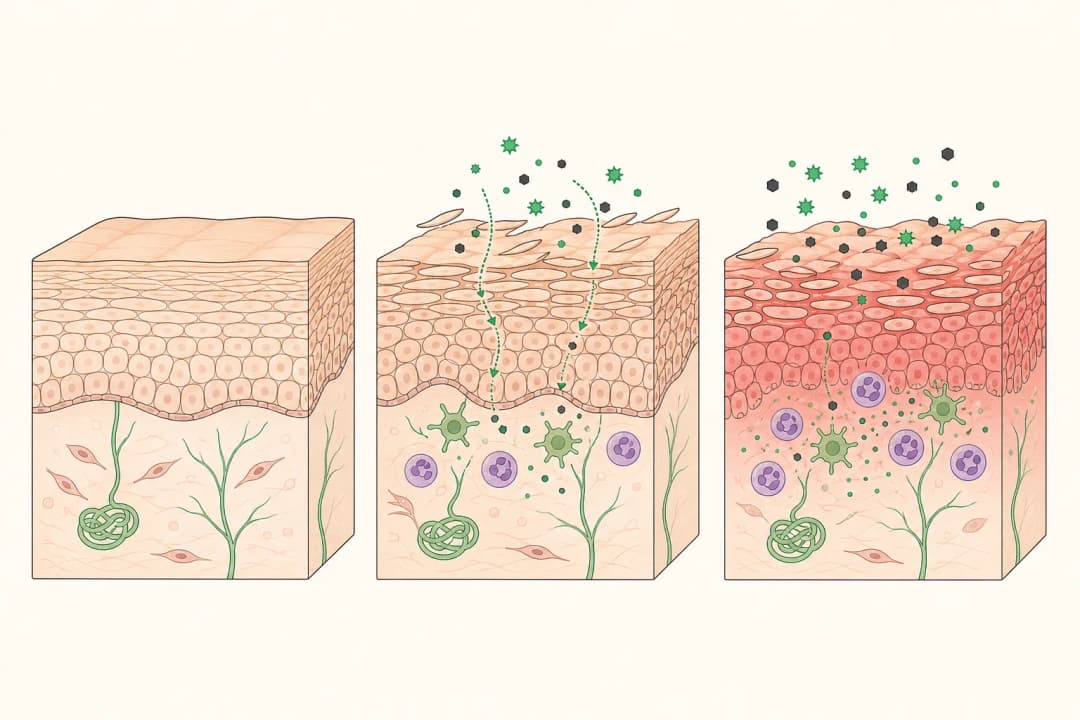
Irritant contact dermatitis is inflammation caused by direct damage from a substance or repeated exposure, rather than an allergy being required. Water, soaps, cleaning products, solvents, friction, and frequent hand washing can strip protective oils from the skin. Redness, dryness, cracking, stinging, and soreness may appear where contact occurs, often on the hands.
Steps that help the skin recover
Identify and reduce contact with the suspected irritant, using suitable gloves or other protection when exposure cannot be avoided. Rinse residue gently, pat dry, and apply an emollient regularly, especially after washing. Choose fragrance-free products and lukewarm water. A clinician may prescribe a topical corticosteroid for significant inflammation and explain where and how long to use it. Do not apply products that sting to cracked skin without advice.
When to seek medical care
Arrange assessment if the rash is spreading, painful, deeply cracked, blistered, oozing, or interfering with work or sleep. Seek prompt care for warmth, pus, fever, or rapidly worsening swelling, which may indicate infection. Review is also worthwhile when symptoms continue despite avoiding a suspected irritant, since allergic contact dermatitis, eczema, or infection may need a different plan.
Questions for your doctor
Which exposure is most likely damaging my skin? What barrier routine fits my work and hand-washing needs? How should I use an anti-inflammatory cream safely?
Find care
General Clinics & Polyclinics in Abu Dhabi
That answer is general. If you want it applied to your own case, these are licensed general clinics & polyclinics listed in Abu Dhabi.
27 Ar Ruwwad St - Shakhbout City - MSH4 - Abu Dhabi - United Arab Emirates
Accepts: Daman, Thiqa, Cigna, MetLife +20 more
Al Ruwais, Al Dhafrah
Accepts: Daman, Thiqa, AXA, Cigna +16 more
Al Bahyah - Al Bahyah Old - Abu Dhabi - United Arab Emirates
Accepts: Daman, Thiqa, Cigna, Allianz Care +18 more
Abu Dhabi
Accepts: Daman, Thiqa, AXA, Cigna +27 more
Ordered by verification status and how complete each clinic's public record is, then alphabetically. This is a directory listing, not a ranking — Zavis does not rate or recommend providers.
A factual listing drawn from the DHA, DOH and MOHAP licence registers. It is not a referral, an endorsement, or advice that any of these providers is right for you.
Questions people ask
Can irritant contact dermatitis spread?
It can extend when exposure continues or when irritated skin is rubbed, but new areas may also reflect separate contact or another diagnosis.
What if moisturiser stings?
Stop a product that causes strong or persistent burning and ask a clinician or pharmacist about a simpler barrier product.
Related
Related reading
Keep reading
Medical disclaimer. This page is general health information, not medical advice, and it cannot diagnose you. Always consult a licensed healthcare provider about your own symptoms and treatment. In an emergency in the UAE, call 998 for an ambulance.