
What are the treatment options for COPD?
Short answer
COPD treatment can combine inhaler therapy, stopping smoking, breathing and activity support, vaccinations, and regular reviews to control symptoms and reduce flare-up risk.
This answers one question. It is not a diagnosis and does not replace an assessment by a licensed doctor.
At a glance
- Core treatment
- A tailored combination of inhalers and supportive care
- Monitoring
- Symptoms, inhaler technique, activity, and flare-ups
What the plan may involve
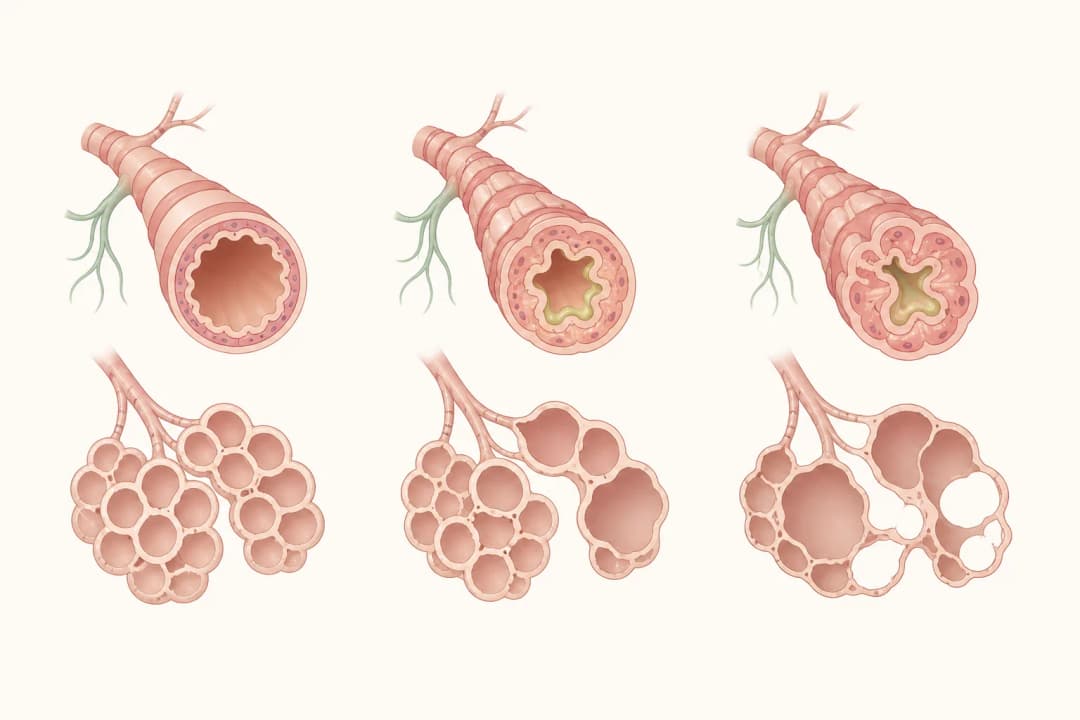
COPD is a long-term condition in which airflow through the lungs is limited. Treatment is personalised according to breathlessness, cough, mucus, flare-ups, other health conditions, and how well you can use an inhaler. [Spirometry](/treatments/diagnostics-and-screening/spirometry/) helps assess airflow and may support diagnosis or monitoring. A plan may include a reliever inhaler, a regular inhaler to relax the airways, or other prescribed medicines.
Steps that support control
Use inhalers exactly as taught and ask for a technique check if the medicine does not seem to help. Keep follow-up appointments so symptoms, inhaler use, activity, and flare-up history can be reviewed. A [Chronic Disease Review](/treatments/consultations-and-assessment/chronic-disease-review/) can bring these checks together. If you smoke, a [Smoking Cessation Programme](/treatments/lifestyle-and-wellness/smoking-cessation-programme/) can provide structured support. Gentle activity, pulmonary rehabilitation when offered, and avoiding known irritants may improve day-to-day function. Do not change prescribed inhalers without advice.
When breathing needs urgent help
Seek urgent care if breathlessness is severe or rapidly worsening, you cannot speak comfortably, your lips look blue or grey, you feel confused or faint, or your usual rescue inhaler is not giving relief. A sudden change from your normal symptoms may be a flare-up requiring prompt assessment.
Useful questions for review
Ask how each inhaler works, when to use it during a flare-up, whether your technique is effective, and which written action plan should guide you if breathing changes.
Find care
General Clinics & Polyclinics in Abu Dhabi
That answer is general. If you want it applied to your own case, these are licensed general clinics & polyclinics listed in Abu Dhabi.
27 Ar Ruwwad St - Shakhbout City - MSH4 - Abu Dhabi - United Arab Emirates
Accepts: Daman, Thiqa, Cigna, MetLife +20 more
Al Ruwais, Al Dhafrah
Accepts: Daman, Thiqa, AXA, Cigna +16 more
Al Bahyah - Al Bahyah Old - Abu Dhabi - United Arab Emirates
Accepts: Daman, Thiqa, Cigna, Allianz Care +18 more
Abu Dhabi
Accepts: Daman, Thiqa, AXA, Cigna +27 more
Ordered by verification status and how complete each clinic's public record is, then alphabetically. This is a directory listing, not a ranking — Zavis does not rate or recommend providers.
A factual listing drawn from the DHA, DOH and MOHAP licence registers. It is not a referral, an endorsement, or advice that any of these providers is right for you.
Questions people ask
Can COPD be treated even if I have smoked?
Yes. Stopping smoking can slow further lung damage, and support is available alongside inhalers and reviews.
Why might spirometry be recommended?
It measures how much and how quickly you can breathe out, helping clinicians assess airflow limitation.
Related
Related reading
Keep reading
Medical disclaimer. This page is general health information, not medical advice, and it cannot diagnose you. Always consult a licensed healthcare provider about your own symptoms and treatment. In an emergency in the UAE, call 998 for an ambulance.