
What are the treatment options for bullous pemphigoid?
Short answer
Treatment options for bullous pemphigoid include topical or oral corticosteroids and other prescribed medicines selected to control inflammation and protect fragile skin.
This answers one question. It is not a diagnosis and does not replace an assessment by a licensed doctor.
At a glance
- Condition type
- Autoimmune blistering skin disease
- Treatment goals
- Calm inflammation and protect broken skin
How treatment works
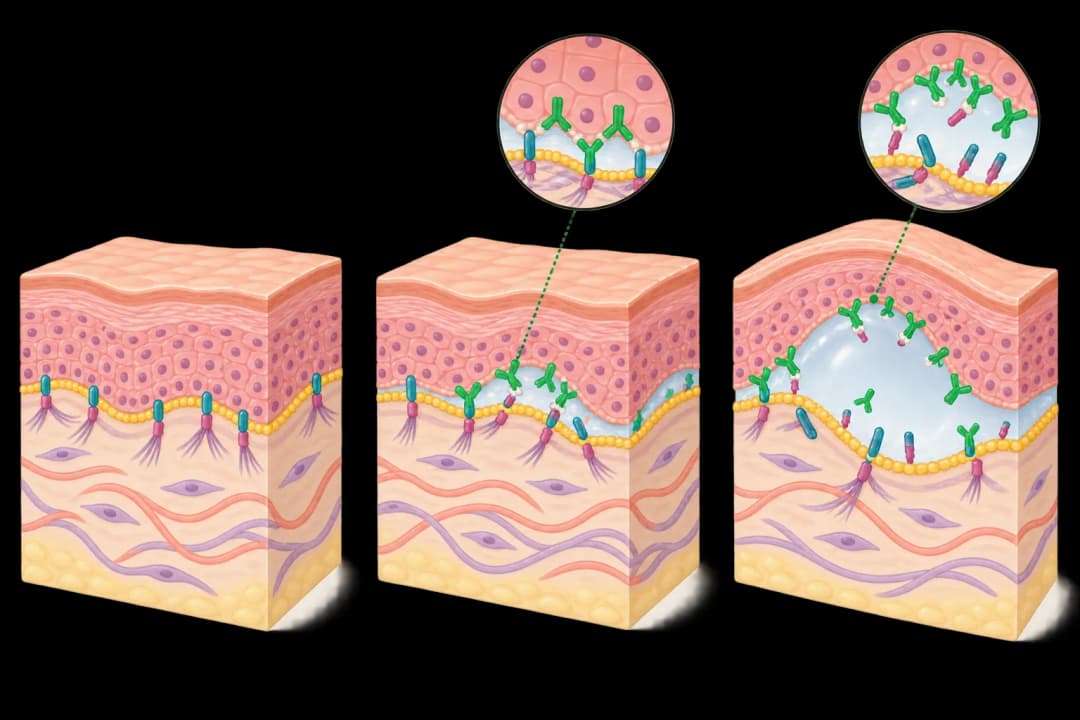
Bullous pemphigoid is an immune reaction that can cause intense itching and tense blisters, often on the trunk or limbs. The mouth or eyes may also be involved. Diagnosis can involve examination, a skin sample and laboratory testing. Because blisters can break and fluid loss can occur, treatment includes both inflammation control and careful wound care.
Topical corticosteroids are applied to affected skin and may suit some patterns of disease. Oral corticosteroid treatment works throughout the body and may be used when widespread blistering needs systemic control. Other prescription medicines, including selected antibiotics with anti-inflammatory effects, may be considered by a specialist as part of an individual plan.
Supporting recovery
Do not deliberately burst blisters. Keep open areas clean and covered as advised, use gentle products, and avoid friction from tight clothing. Take prescribed medicine on schedule and do not stop an oral corticosteroid suddenly without medical guidance. Tell the treating team about diabetes, bone problems, eye symptoms, infections and all other medicines, because monitoring may be needed during treatment.
When to seek review
Seek prompt medical care for fever, spreading redness, increasing warmth, pus, worsening pain or a sudden increase in open blisters. Urgent assessment is needed for trouble breathing or swallowing, eye pain or vision change, confusion, marked weakness or inability to drink. These symptoms can signal complications requiring rapid treatment.
Questions for your doctor
Ask how extensive the condition is, which medicine is the starting treatment, how wounds should be dressed, what monitoring is required, and which symptoms mean you should contact the team immediately.
Find care
General Clinics & Polyclinics in Abu Dhabi
That answer is general. If you want it applied to your own case, these are licensed general clinics & polyclinics listed in Abu Dhabi.
27 Ar Ruwwad St - Shakhbout City - MSH4 - Abu Dhabi - United Arab Emirates
Accepts: Daman, Thiqa, Cigna, MetLife +20 more
Al Ruwais, Al Dhafrah
Accepts: Daman, Thiqa, AXA, Cigna +16 more
Al Bahyah - Al Bahyah Old - Abu Dhabi - United Arab Emirates
Accepts: Daman, Thiqa, Cigna, Allianz Care +18 more
Abu Dhabi
Accepts: Daman, Thiqa, AXA, Cigna +27 more
Ordered by verification status and how complete each clinic's public record is, then alphabetically. This is a directory listing, not a ranking — Zavis does not rate or recommend providers.
A factual listing drawn from the DHA, DOH and MOHAP licence registers. It is not a referral, an endorsement, or advice that any of these providers is right for you.
Questions people ask
Are corticosteroids used for bullous pemphigoid?
Yes. Topical or oral corticosteroids may be prescribed according to the extent of blistering and the person's health needs.
Why is wound care part of treatment?
Open blisters can lose their protective skin barrier, so clean coverings and monitoring help support healing and identify infection early.
Related
Related reading
Keep reading
Medical disclaimer. This page is general health information, not medical advice, and it cannot diagnose you. Always consult a licensed healthcare provider about your own symptoms and treatment. In an emergency in the UAE, call 998 for an ambulance.