
What are the risk factors for recurrent miscarriage?
Short answer
Risk factors for recurrent miscarriage include antiphospholipid syndrome, chromosomal abnormalities, and some uterine differences such as a uterine septum.
This answers one question. It is not a diagnosis and does not replace an assessment by a licensed doctor.
At a glance
- Commonly assessed factors
- Antiphospholipid syndrome, chromosomal abnormalities, and uterine septum
- Possible assessment
- Medical review, blood tests, uterine imaging, and genetic counselling when appropriate
What these risk factors mean
Antiphospholipid syndrome is an immune-related condition that can promote abnormal blood clotting and affect the placenta or developing pregnancy. Chromosomal abnormalities can arise in an embryo or may be linked to a rearrangement in a parent’s chromosomes; this does not mean either parent caused the loss.
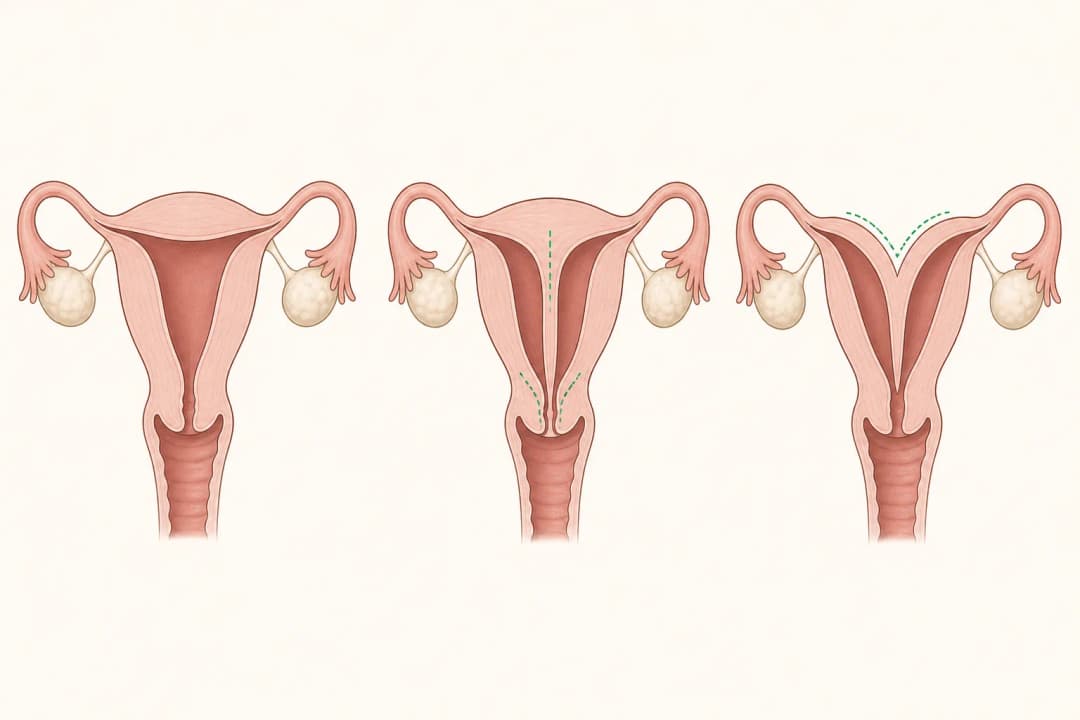
A uterine septum is a partition of tissue inside the uterus. Its shape and size can affect where a pregnancy implants or how the uterus supports pregnancy. Other health conditions, increasing age, and lifestyle exposures may also be considered during an assessment, but a clear cause is not found for every person with recurrent pregnancy loss.
What to do next
Arrange an appointment with an obstetrician, gynaecologist, or fertility specialist to review your pregnancy history and medical background. Assessment may include blood tests for antiphospholipid antibodies, imaging of the uterus, and genetic testing or counselling when appropriate. Bring dates and records from previous pregnancies, including ultrasound or laboratory results if you have them.
Do not start aspirin, heparin, hormones, or other treatment without clinical advice. Treatment depends on the finding: a confirmed immune condition, a uterine septum, and a chromosomal explanation require different discussions. Emotional support or counselling can also help after repeated loss.
When to seek care urgently
During a pregnancy, seek urgent medical care for heavy vaginal bleeding, severe or one-sided abdominal pain, fainting, marked dizziness, fever, or shoulder-tip pain. These symptoms need prompt assessment because miscarriage, ectopic pregnancy, infection, or significant blood loss can require immediate treatment. After a loss, contact a clinician for persistent heavy bleeding, worsening pain, fever, or foul-smelling discharge.
Questions for your doctor
Ask which tests are suitable for your history, whether antiphospholipid syndrome or a uterine septum should be assessed, and whether genetic counselling could clarify a chromosomal finding. You can also ask what symptoms should prompt urgent care in a future pregnancy and which treatments, if any, would be appropriate.
Find care
General Clinics & Polyclinics in Abu Dhabi
That answer is general. If you want it applied to your own case, these are licensed general clinics & polyclinics listed in Abu Dhabi.
27 Ar Ruwwad St - Shakhbout City - MSH4 - Abu Dhabi - United Arab Emirates
Accepts: Daman, Thiqa, Cigna, MetLife +20 more
Al Ruwais, Al Dhafrah
Accepts: Daman, Thiqa, AXA, Cigna +16 more
Al Bahyah - Al Bahyah Old - Abu Dhabi - United Arab Emirates
Accepts: Daman, Thiqa, Cigna, Allianz Care +18 more
Abu Dhabi
Accepts: Daman, Thiqa, AXA, Cigna +27 more
Ordered by verification status and how complete each clinic's public record is, then alphabetically. This is a directory listing, not a ranking — Zavis does not rate or recommend providers.
A factual listing drawn from the DHA, DOH and MOHAP licence registers. It is not a referral, an endorsement, or advice that any of these providers is right for you.
Questions people ask
Does recurrent miscarriage always have an identifiable cause?
No. Assessment may identify an immune, chromosomal, or uterine factor, but some people have no single explanation after evaluation.
Can a uterine septum be treated?
A specialist can explain whether the septum is affecting pregnancy and whether a procedure or another approach is suitable for your anatomy and history.
What should I bring to an assessment?
Bring pregnancy dates, medical conditions, medicines, and any previous ultrasound, pathology, or genetic test results that are available.
Medical disclaimer. This page is general health information, not medical advice, and it cannot diagnose you. Always consult a licensed healthcare provider about your own symptoms and treatment. In an emergency in the UAE, call 998 for an ambulance.