
What are the risk factors for liver cirrhosis?
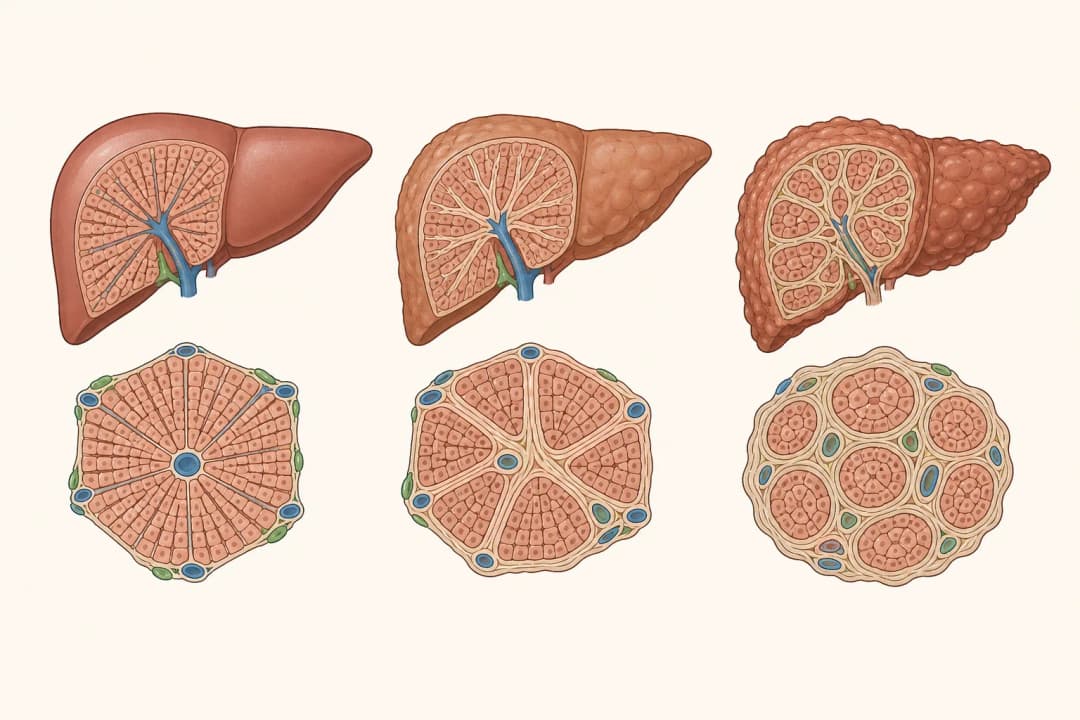
Short answer
Risk factors for liver cirrhosis include long-term hepatitis B or hepatitis C infection, ongoing alcohol-related injury, fatty liver disease, autoimmune liver disease and inherited disorders.
This answers one question. It is not a diagnosis and does not replace an assessment by a licensed doctor.
At a glance
- What changes
- Liver structure and blood flow
- Infectious factors
- Chronic hepatitis B or C
- Possible symptoms
- Swelling, itching or easy bruising
How cirrhosis forms
Cirrhosis is advanced scarring that changes the liver's structure and makes it harder for blood to flow through the organ. Repeated inflammation or injury can drive this scarring. Chronic hepatitis B and hepatitis C, regular heavy alcohol exposure, and metabolic fatty liver disease are common pathways. Autoimmune hepatitis, bile-duct disorders and inherited conditions such as haemochromatosis or Wilson disease can also injure the liver.
Some people have no clear symptoms while scarring develops. Tiredness, itching, easy bruising, ankle swelling or abdominal swelling may appear as liver function changes. Risk is influenced by the cause, its duration and other health conditions, not by a single event alone.
Reducing further liver injury
Ask a clinician to identify the cause rather than assuming alcohol is responsible. Testing may include liver blood tests, viral hepatitis tests and imaging. Follow treatment for hepatitis, diabetes or cholesterol as prescribed. Avoid alcohol when advised, check supplements before using them, and seek help with weight or tobacco changes if relevant. If cirrhosis is diagnosed, keep scheduled monitoring because complications can develop without early warning symptoms.
When to seek urgent care
Get urgent medical help for vomiting blood, black or tar-like stools, severe confusion, fainting, new extreme sleepiness, yellowing that is worsening quickly, fever with abdominal pain, or rapidly increasing abdominal swelling. These symptoms can signal bleeding, infection or a change in liver function and should not wait for a routine appointment.
Questions for your doctor
What is the likely cause of my liver scarring? Do I need hepatitis testing or an ultrasound? Which medicines and supplements should I avoid? How will you monitor liver function and complications? What should my family know about inherited liver conditions?
Questions people ask
Can cirrhosis be caused by conditions other than alcohol?
Yes. Viral hepatitis, fatty liver disease, autoimmune conditions and inherited disorders are among the possible causes.
Can cirrhosis be present without symptoms?
Yes. Early or compensated cirrhosis may be found during tests for another reason, which is why assessment of risk factors matters.
Cancer care in the UAE
Hospitals & Medical Centers in Abu Dhabi
Most UAE cancer care is delivered inside hospital services rather than by standalone oncology clinics, so these are licensed hospitals & medical centers listed in Abu Dhabi. Confirm the specific cancer service exists before you travel, and know that asking for a second opinion is routine.
Ahalia Hospital Musaffah Building - Musaffah - Musaffah Industrial - Abu Dhabi - United Arab Emirates
Accepts: Daman, Thiqa, AXA, Cigna +26 more
Al Ruwais Industrial City - Abu Dhabi - United Arab Emirates
Accepts: Daman, Thiqa, AXA, Cigna +30 more
Abu Dhabi, Abu Dhabi
Accepts: Daman, Thiqa, AXA, Cigna +30 more
Second opinions are routine in cancer care and asking for one does not affect your treatment. How to arrange a second opinion in the UAE.
Ordered by verification status and how complete each clinic's public record is, then alphabetically. This is a directory listing, not a ranking — Zavis does not rate or recommend providers.
A factual listing drawn from the DHA, DOH and MOHAP licence registers. It is not a referral, an endorsement, or advice that any of these providers is right for you.
Medical disclaimer. This page is general health information, not medical advice, and it cannot diagnose you. Always consult a licensed healthcare provider about your own symptoms and treatment. In an emergency in the UAE, call 998 for an ambulance.