
Vitamins for kidney stones: what to know
Short answer
Vitamins do not reliably dissolve kidney stones; hydration and advice based on stone type are more useful.
This answers one question. It is not a diagnosis and does not replace an assessment by a licensed doctor.
At a glance
- First priority
- Regular fluid intake
- Supplement advice
- Depends on stone type and personal risks
- Urgent warning
- Fever with pain or difficulty passing urine
What this means
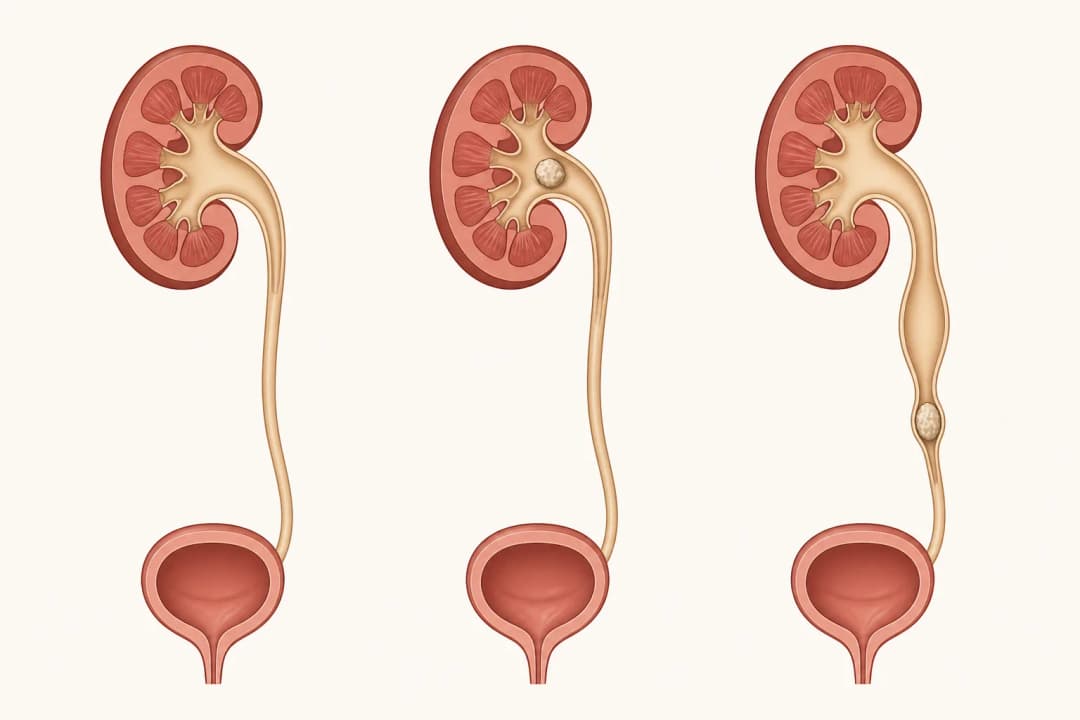
Kidney stones form from minerals that crystallise in urine. Their composition varies, so a supplement that seems helpful for one person may be unsuitable for another. High-dose products, including some vitamin and mineral supplements, can change the amount of stone-forming substances in urine. Vitamin treatment is therefore not a substitute for identifying the stone type, reviewing medicines, or checking diet and fluid intake. Dehydration concentrates urine and can support crystal formation. A past stone, flank pain, abdominal pain, painful urination, or difficulty passing urine each deserves context rather than self-treatment with supplements.
What you can do
Drink fluids regularly unless a clinician has told you to restrict them, and spread intake through the day. Do not start high-dose vitamin C, calcium, or herbal products for stone prevention without advice. Keep any stone you pass for possible analysis and take a list of medicines and supplements to your GP consultation. Your clinician may review urine or blood results and suggest dietary changes suited to the stone type. An abdominal ultrasound can help assess the urinary tract when imaging is needed, but it does not replace a clinical review.
When to seek care
Seek urgent care for severe or persistent flank pain, fever or chills with urinary symptoms, repeated vomiting, visible blood in urine, or difficulty passing urine. A blocked urinary tract with infection can become serious. Arrange medical review for recurring stones, pain that does not settle, or reduced urine output. Do not delay assessment while trying a vitamin regimen, because supplements cannot relieve obstruction or treat infection.
Questions for your doctor
Do I know what type of stone I have? Could any of my supplements or medicines raise stone risk? Should I have urine testing, blood tests, or an abdominal ultrasound?
Find care
General Clinics & Polyclinics in Abu Dhabi
That answer is general. If you want it applied to your own case, these are licensed general clinics & polyclinics listed in Abu Dhabi.
27 Ar Ruwwad St - Shakhbout City - MSH4 - Abu Dhabi - United Arab Emirates
Accepts: Daman, Thiqa, Cigna, MetLife +20 more
Al Ruwais, Al Dhafrah
Accepts: Daman, Thiqa, AXA, Cigna +16 more
Al Bahyah - Al Bahyah Old - Abu Dhabi - United Arab Emirates
Accepts: Daman, Thiqa, Cigna, Allianz Care +18 more
Abu Dhabi
Accepts: Daman, Thiqa, AXA, Cigna +27 more
Ordered by verification status and how complete each clinic's public record is, then alphabetically. This is a directory listing, not a ranking — Zavis does not rate or recommend providers.
A factual listing drawn from the DHA, DOH and MOHAP licence registers. It is not a referral, an endorsement, or advice that any of these providers is right for you.
Questions people ask
Can vitamin C cause kidney stones?
High-dose vitamin C may not suit everyone with a history of stones. Ask a clinician before using it regularly.
Should I take vitamins to break up a stone?
No supplement can be relied on to break up every stone. Treatment depends on its size, position, composition, and symptoms.
Related
Related reading
Keep reading
Medical disclaimer. This page is general health information, not medical advice, and it cannot diagnose you. Always consult a licensed healthcare provider about your own symptoms and treatment. In an emergency in the UAE, call 998 for an ambulance.