
Vitamin D and kidney stones: what should you know?
Short answer
Vitamin D can affect calcium handling, so people with kidney stones should discuss supplements and doses with a clinician.
This answers one question. It is not a diagnosis and does not replace an assessment by a licensed doctor.
At a glance
- Main link
- Vitamin D influences calcium handling
- Risk context
- Stone history, hydration, diet and medicines matter
- Possible imaging
- Abdominal ultrasound may help assess a stone
The short answer
Vitamin D can affect calcium handling, so people with kidney stones should discuss supplements and doses with a clinician. A stone is not diagnosed from a vitamin D result. Personal history, hydration, diet, medicines and calcium measurements help guide a safe plan.
How the concerns connect
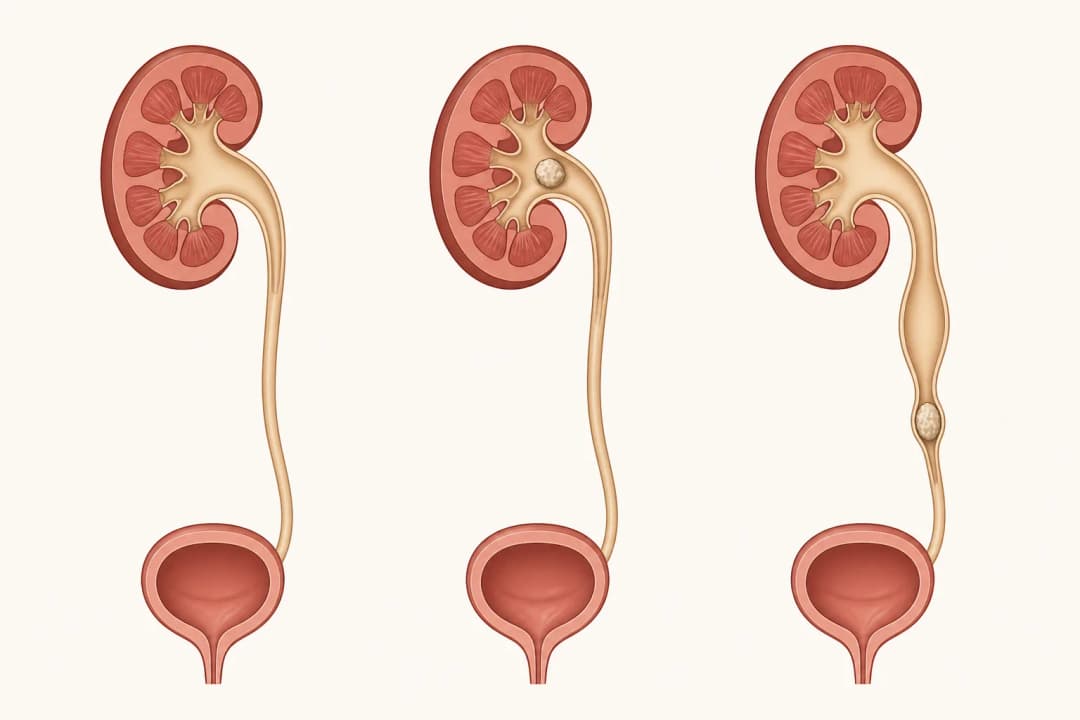
Kidney stones form when minerals crystallise in urine. Vitamin D helps the body absorb calcium, and excessive supplementation may change calcium levels in some people. That does not mean every person taking vitamin D will develop a stone. Dehydration, family history, diet, certain medicines and metabolic conditions can also contribute. A clinician may check blood and urine results to understand the stone type and whether vitamin D treatment is needed.
Safe next steps
Tell the prescriber about previous stones, kidney disease and all supplements before starting or increasing vitamin D. Follow the recommended dose and avoid adding calcium or combination products unless advised. Drink fluids regularly unless a clinician has restricted them, and do not rely on pain relief to postpone assessment. A GP consultation can review symptoms, medicines and test results; an abdominal ultrasound may be used when a stone or blockage needs checking.
When to seek care
Get urgent medical help for severe flank or abdominal pain, fever or chills with urinary symptoms, repeated vomiting, blood in the urine, difficulty passing urine or feeling faint. A blocked or infected urinary system can become serious. Painful urination and persistent symptoms also deserve prompt review, even if the discomfort improves temporarily.
Questions for your doctor
Do I need vitamin D treatment despite my stone history? Should calcium, kidney function or urine be checked? Which supplements should I avoid? How much fluid is suitable for me? What symptoms mean I should seek urgent help?
Find care
General Clinics & Polyclinics in Abu Dhabi
That answer is general. If you want it applied to your own case, these are licensed general clinics & polyclinics listed in Abu Dhabi.
27 Ar Ruwwad St - Shakhbout City - MSH4 - Abu Dhabi - United Arab Emirates
Accepts: Daman, Thiqa, Cigna, MetLife +20 more
Al Ruwais, Al Dhafrah
Accepts: Daman, Thiqa, AXA, Cigna +16 more
Al Bahyah - Al Bahyah Old - Abu Dhabi - United Arab Emirates
Accepts: Daman, Thiqa, Cigna, Allianz Care +18 more
Abu Dhabi
Accepts: Daman, Thiqa, AXA, Cigna +27 more
Ordered by verification status and how complete each clinic's public record is, then alphabetically. This is a directory listing, not a ranking — Zavis does not rate or recommend providers.
A factual listing drawn from the DHA, DOH and MOHAP licence registers. It is not a referral, an endorsement, or advice that any of these providers is right for you.
Questions people ask
Does vitamin D always cause kidney stones?
No. Stone risk depends on several factors, and a clinician should weigh the reason for supplementation against your history and test results.
Should I stop prescribed vitamin D?
Ask the prescriber before changing it, especially if it was given for a documented deficiency or another medical reason.
Related
Related reading
Keep reading
Medical disclaimer. This page is general health information, not medical advice, and it cannot diagnose you. Always consult a licensed healthcare provider about your own symptoms and treatment. In an emergency in the UAE, call 998 for an ambulance.