
What should you know about urticaria due to cold and heat?
Short answer
Cold- or heat-triggered hives are physical urticaria reactions that need trigger planning and attention to swelling or breathing symptoms.
This answers one question. It is not a diagnosis and does not replace an assessment by a licensed doctor.
At a glance
- Cold triggers
- Cold air, water, objects or rapid rewarming
- Heat triggers
- Overheating, sweating, hot water or exertion
- Safety priority
- Avoid unsupervised exposure testing
How temperature can trigger hives
Cold urticaria may produce itchy welts where cold air, water, objects or a sudden temperature change touches the skin. Heat-related hives may follow overheating, sweating, hot water or exertion. Some people notice symptoms as the skin warms after cold exposure, so the timing is worth recording.
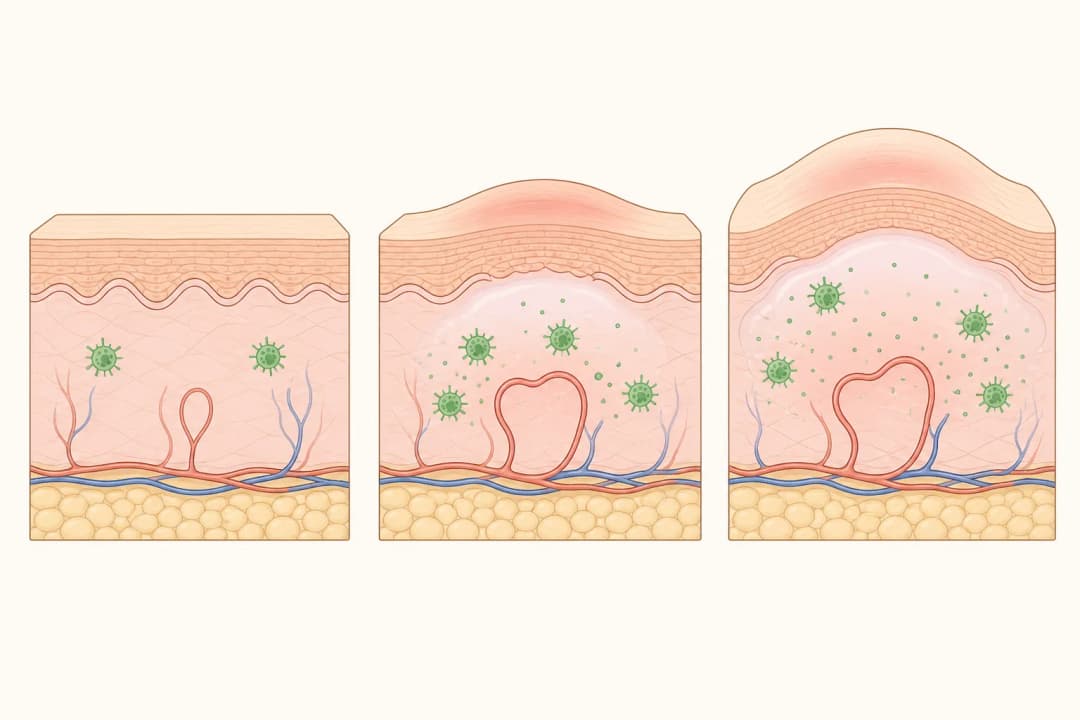
Hives can be raised, itchy and transient, but temperature reactions can affect more than the visible skin. Deeper swelling is called angioedema. A clinician may use the exposure history and, when appropriate, supervised testing to clarify the pattern.
Reducing flare-ups
Protect skin from abrupt temperature changes. Use lukewarm water, layer clothing in cold weather, avoid prolonged cold-water exposure and cool down gradually after exercise. In hot conditions, seek shade, drink fluids and choose breathable clothing. Do not deliberately test a suspected trigger alone.
Keep a record of the exposure, delay before symptoms, affected areas and any swelling. An oral antihistamine may help some people when recommended by a clinician or pharmacist. Ask for an individual plan if cold water, heat or exertion has caused widespread symptoms.
When to seek urgent care
Seek emergency help for throat, tongue or facial swelling, trouble breathing, wheezing, dizziness, faintness or difficulty swallowing after cold or heat exposure. A whole-body reaction can progress quickly, especially after cold-water immersion.
Arrange an appointment if episodes recur, spread beyond the exposed area, disturb sleep or occur without a clear temperature trigger. A clinician can check for other causes and discuss prevention and treatment options.
Questions for your doctor
Ask whether the pattern fits cold or heat urticaria, which exposures to avoid, whether an antihistamine is suitable, and what to do during travel, swimming or exercise. Ask exactly which swelling or breathing symptoms require emergency action.
Find care
General Clinics & Polyclinics in Abu Dhabi
That answer is general. If you want it applied to your own case, these are licensed general clinics & polyclinics listed in Abu Dhabi.
27 Ar Ruwwad St - Shakhbout City - MSH4 - Abu Dhabi - United Arab Emirates
Accepts: Daman, Thiqa, Cigna, MetLife +20 more
Al Ruwais, Al Dhafrah
Accepts: Daman, Thiqa, AXA, Cigna +16 more
Al Bahyah - Al Bahyah Old - Abu Dhabi - United Arab Emirates
Accepts: Daman, Thiqa, Cigna, Allianz Care +18 more
Abu Dhabi
Accepts: Daman, Thiqa, AXA, Cigna +27 more
Ordered by verification status and how complete each clinic's public record is, then alphabetically. This is a directory listing, not a ranking — Zavis does not rate or recommend providers.
A factual listing drawn from the DHA, DOH and MOHAP licence registers. It is not a referral, an endorsement, or advice that any of these providers is right for you.
Questions people ask
Can heat or cold cause hives without an allergy?
Yes. Physical stimuli can activate hives in susceptible skin without a conventional food or medicine allergy.
Should I swim if cold water causes hives?
Discuss this with a clinician first, because widespread cold exposure can cause more than a local skin reaction.
Keep reading
Medical disclaimer. This page is general health information, not medical advice, and it cannot diagnose you. Always consult a licensed healthcare provider about your own symptoms and treatment. In an emergency in the UAE, call 998 for an ambulance.