
Types of precocious puberty
Short answer
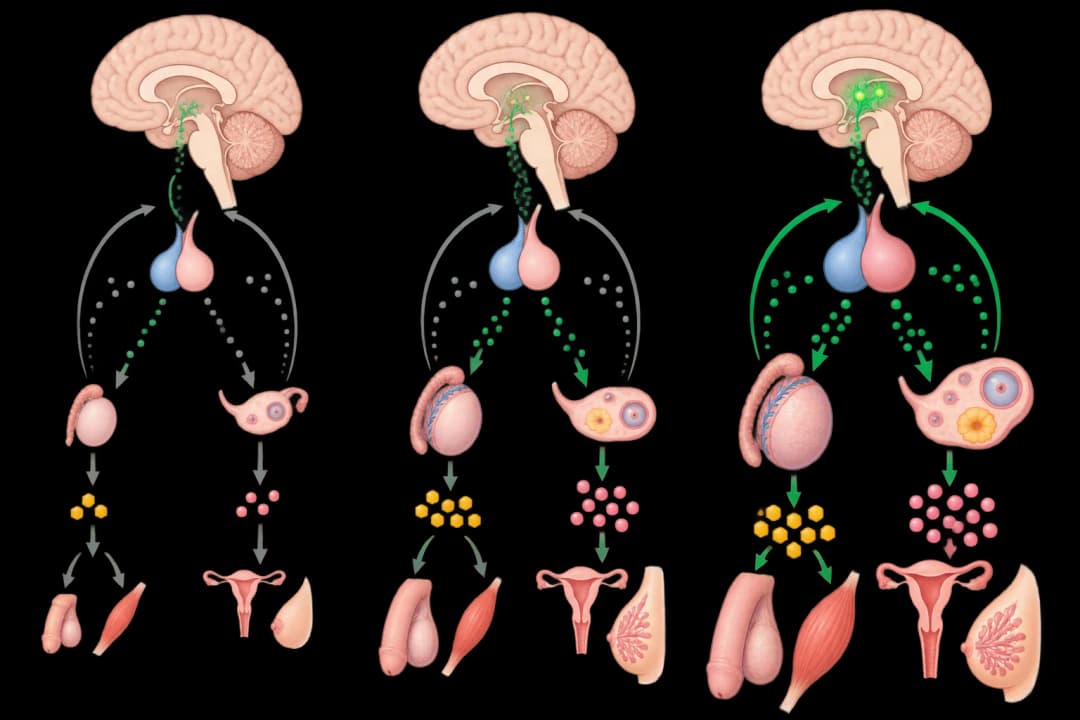
Precocious puberty is broadly central or peripheral: central puberty starts the usual brain hormone pathway early, while peripheral puberty raises sex hormones without that pathway starting first.
This answers one question. It is not a diagnosis and does not replace an assessment by a licensed doctor.
At a glance
- Main types
- Central and peripheral precocious puberty
- Assessment
- Growth, examination and hormone testing may be used
The two main patterns
In central precocious puberty, the hypothalamus and pituitary begin signalling the ovaries or testes earlier than expected. Puberty changes then follow the usual sequence, such as breast development, pubic hair, body odour, growth acceleration or menstrual bleeding. In peripheral precocious puberty, oestrogen or testosterone comes from the ovaries, adrenal glands, a medication exposure or another source without early activation of the central pathway.
Some children show only one early change, such as body odour or pubic hair, without full puberty. This may be an early isolated change rather than progressive precocious puberty, but a clinician should assess the pattern, growth and family history.
Assessment and next steps
Arrange a paediatric assessment when puberty changes appear unusually early, progress quickly or are accompanied by headaches, vision changes or other neurological symptoms. The clinician may review growth, examine physical changes and request hormone tests. A [Female Hormone Blood Panel](/treatments/diagnostics-and-imaging/female-hormone-blood-panel/) may be part of the evaluation, alongside other tests selected for the child.
Write down when changes began, how quickly they developed and any medicines, supplements or hormone-containing products at home. Do not give or stop treatment without specialist advice.
When to seek prompt care
Seek prompt medical advice for rapidly advancing puberty, vaginal bleeding at an unusual age, severe headache, vomiting, seizures, vision changes or a new change in behaviour. These findings do not identify the cause by themselves, but they make timely assessment especially important.
Questions for your doctor
Ask whether the pattern looks central, peripheral or an isolated early change; which hormone tests are needed; whether growth and bone development need monitoring; and what symptoms should trigger faster review. Ask how results will be explained to your child in a supportive, age-appropriate way.
Find care
General Clinics & Polyclinics in Abu Dhabi
That answer is general. If you want it applied to your own case, these are licensed general clinics & polyclinics listed in Abu Dhabi.
27 Ar Ruwwad St - Shakhbout City - MSH4 - Abu Dhabi - United Arab Emirates
Accepts: Daman, Thiqa, Cigna, MetLife +20 more
Al Ruwais, Al Dhafrah
Accepts: Daman, Thiqa, AXA, Cigna +16 more
Al Bahyah - Al Bahyah Old - Abu Dhabi - United Arab Emirates
Accepts: Daman, Thiqa, Cigna, Allianz Care +18 more
Abu Dhabi
Accepts: Daman, Thiqa, AXA, Cigna +27 more
Ordered by verification status and how complete each clinic's public record is, then alphabetically. This is a directory listing, not a ranking — Zavis does not rate or recommend providers.
A factual listing drawn from the DHA, DOH and MOHAP licence registers. It is not a referral, an endorsement, or advice that any of these providers is right for you.
Questions people ask
Does every early puberty sign mean precocious puberty?
No. An isolated change may not represent progressive puberty, but it still merits appropriate assessment.
What distinguishes central from peripheral puberty?
Central puberty follows early activation of the brain hormone pathway; peripheral puberty raises sex hormones without that first step.
Related
Related reading
Keep reading
Medical disclaimer. This page is general health information, not medical advice, and it cannot diagnose you. Always consult a licensed healthcare provider about your own symptoms and treatment. In an emergency in the UAE, call 998 for an ambulance.