
Treatment of preterm premature rupture of membranes
Short answer
Treatment of preterm premature rupture of membranes requires maternity assessment, infection monitoring, fetal surveillance, and a carefully timed plan for medicines or birth.
This answers one question. It is not a diagnosis and does not replace an assessment by a licensed doctor.
At a glance
- Main concern
- Balancing infection prevention, fetal development, and safe timing of birth
- Monitoring
- Maternal symptoms, contractions, fluid, and fetal wellbeing
What PPROM means
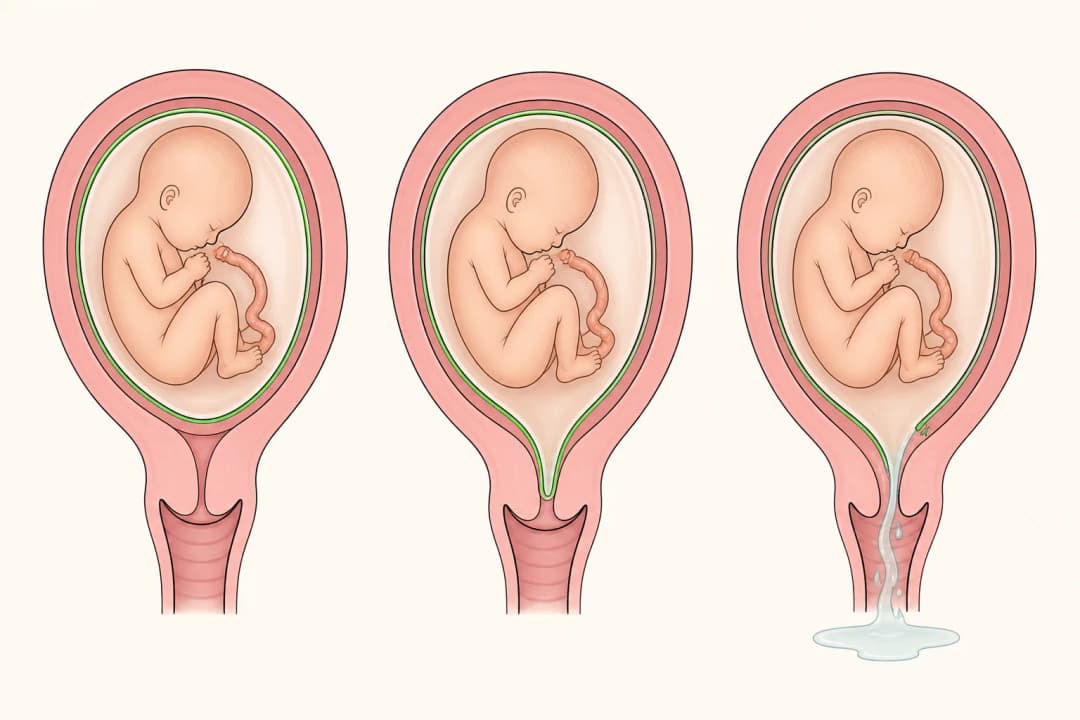
Preterm premature rupture of membranes, or PPROM, is when the amniotic sac breaks before labour and before the pregnancy has reached term. The leak may be a trickle or a larger flow. Because infection and early labour can develop, a maternity team usually confirms the diagnosis and checks temperature, pulse, blood tests, the fluid, contractions, and fetal wellbeing.
When mother and baby are stable and there is no infection, clinicians may recommend close observation to allow more pregnancy time. The plan depends on gestational stage, bleeding, contractions, fluid findings, and fetal monitoring. It is reviewed if any of these change.
How care is planned
Go to the maternity unit promptly after a suspected leak and avoid putting anything into the vagina unless instructed. Use a pad to observe the fluid, record its colour and smell, and notice contractions or changes in fetal movement. The team may offer antibiotics, medicines to support fetal lung preparation, and monitoring in hospital or through carefully arranged follow-up.
An antenatal steroid injection may be considered when early birth is possible. If infection, labour, fetal distress, or another serious concern develops, the team may recommend birth. Induction of labour is one possible approach when vaginal birth is suitable; the method depends on the clinical situation.
Warning signs needing urgent review
Seek immediate maternity help for fever, chills, worsening abdominal pain, foul-smelling fluid, vaginal bleeding, regular contractions, reduced fetal movement, or feeling faint or very unwell. These symptoms can signal infection, labour, or a problem requiring rapid reassessment.
Questions for your doctor
Ask what tests confirmed PPROM, where monitoring will happen, which symptoms require an immediate return, and how steroid treatment, antibiotics, or birth timing fit your individual plan.
Find care
General Clinics & Polyclinics in Abu Dhabi
That answer is general. If you want it applied to your own case, these are licensed general clinics & polyclinics listed in Abu Dhabi.
27 Ar Ruwwad St - Shakhbout City - MSH4 - Abu Dhabi - United Arab Emirates
Accepts: Daman, Thiqa, Cigna, MetLife +20 more
Al Ruwais, Al Dhafrah
Accepts: Daman, Thiqa, AXA, Cigna +16 more
Al Bahyah - Al Bahyah Old - Abu Dhabi - United Arab Emirates
Accepts: Daman, Thiqa, Cigna, Allianz Care +18 more
Abu Dhabi
Accepts: Daman, Thiqa, AXA, Cigna +27 more
Ordered by verification status and how complete each clinic's public record is, then alphabetically. This is a directory listing, not a ranking — Zavis does not rate or recommend providers.
A factual listing drawn from the DHA, DOH and MOHAP licence registers. It is not a referral, an endorsement, or advice that any of these providers is right for you.
Questions people ask
Can PPROM cause labour?
Yes. Membrane rupture can be followed by contractions, and the maternity team will watch for signs of labour.
Why are steroids discussed?
They may be offered when early birth is possible to support fetal lung preparation.
Related
Related reading
Keep reading
Medical disclaimer. This page is general health information, not medical advice, and it cannot diagnose you. Always consult a licensed healthcare provider about your own symptoms and treatment. In an emergency in the UAE, call 998 for an ambulance.