
Tea-Coloured Urine and Rhabdomyolysis
Short answer
Tea-coloured urine after intense exercise can signal rhabdomyolysis, a muscle breakdown problem that needs prompt medical assessment.
This answers one question. It is not a diagnosis and does not replace an assessment by a licensed doctor.
At a glance
- Urine change
- Tea-coloured or brown urine can reflect muscle pigment.
- Next step
- Stop strenuous activity and seek prompt medical assessment.
What it may mean
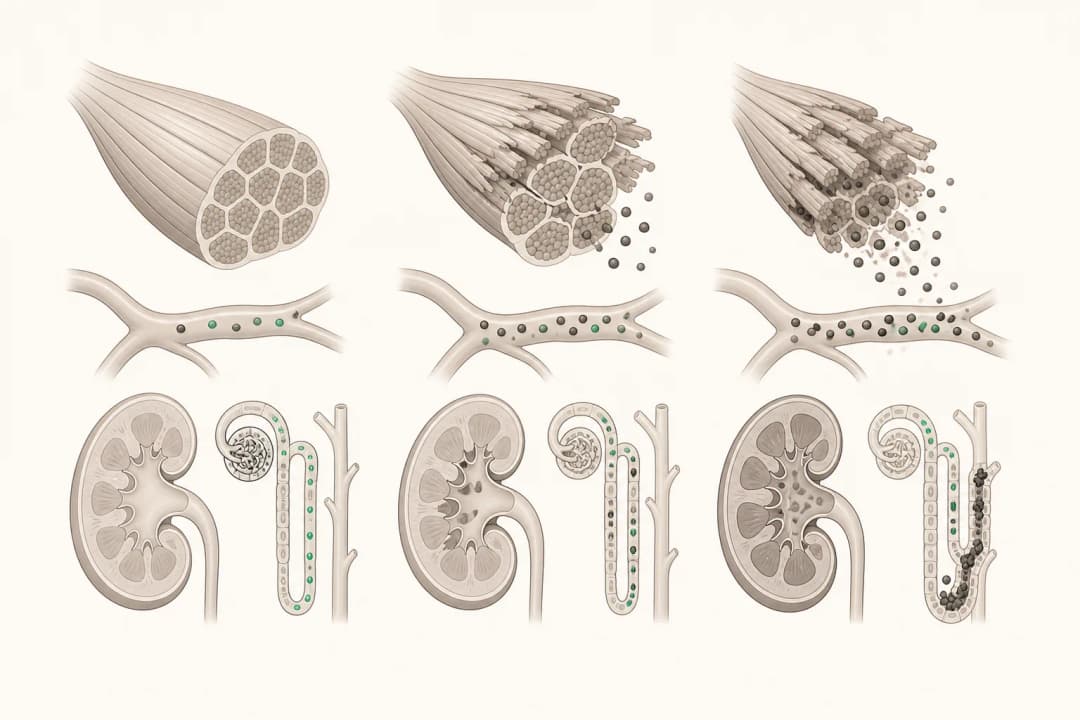
Rhabdomyolysis happens when damaged muscle releases proteins and pigments into the bloodstream. The kidneys must filter these substances, so urine may look tea-coloured, brown or unusually dark. Severe muscle soreness, weakness, tenderness or swelling can occur, but visible urine changes may be the clearest warning. It can follow unfamiliar strenuous exercise, heat exposure, a crush injury, prolonged immobility or another muscle insult. Ordinary muscle soreness after exercise tends to improve with rest; dark urine is a reason to seek assessment rather than assuming it is routine soreness.
What to do now
Stop strenuous activity and arrange urgent medical assessment today, especially if the colour change followed exercise or an injury. Do not try to train through it. Tell the clinician what activity, injury, heat exposure or medicines preceded the change, and when you first noticed it. They may assess muscle injury, hydration and kidney function with an examination and tests. Follow their fluid advice; drinking excessive amounts quickly is not a substitute for care.
When to seek care
Seek emergency help for very little or no urine, worsening weakness, confusion, fainting, severe swelling, chest symptoms or trouble breathing. Prompt assessment is also needed for dark urine with marked muscle pain, repeated vomiting, fever or inability to keep fluids down. These features can accompany complications affecting the kidneys or the body’s chemical balance.
Questions for your doctor
Ask what may have damaged the muscle, whether kidney tests are needed, which activities and medicines to pause, how to replace fluids safely, and when it is reasonable to return to exercise.
Find care
General Clinics & Polyclinics in Abu Dhabi
That answer is general. If you want it applied to your own case, these are licensed general clinics & polyclinics listed in Abu Dhabi.
27 Ar Ruwwad St - Shakhbout City - MSH4 - Abu Dhabi - United Arab Emirates
Accepts: Daman, Thiqa, Cigna, MetLife +20 more
Al Ruwais, Al Dhafrah
Accepts: Daman, Thiqa, AXA, Cigna +16 more
Al Bahyah - Al Bahyah Old - Abu Dhabi - United Arab Emirates
Accepts: Daman, Thiqa, Cigna, Allianz Care +18 more
Abu Dhabi
Accepts: Daman, Thiqa, AXA, Cigna +27 more
Ordered by verification status and how complete each clinic's public record is, then alphabetically. This is a directory listing, not a ranking — Zavis does not rate or recommend providers.
A factual listing drawn from the DHA, DOH and MOHAP licence registers. It is not a referral, an endorsement, or advice that any of these providers is right for you.
Questions people ask
Is tea-coloured urine after exercise normal?
It is not a typical sign of ordinary post-exercise soreness. Contact a clinician promptly because it can reflect rhabdomyolysis.
Can rhabdomyolysis affect the kidneys?
Yes. Muscle breakdown can place strain on the kidneys, which is why dark urine and reduced urination need prompt assessment.
Related
Related reading
Keep reading
Medical disclaimer. This page is general health information, not medical advice, and it cannot diagnose you. Always consult a licensed healthcare provider about your own symptoms and treatment. In an emergency in the UAE, call 998 for an ambulance.