
Symmetrical IUGR Prognosis: What to Know
Short answer
The outlook with symmetrical IUGR depends on the cause, pregnancy stage, placental function, and the baby’s response to monitoring rather than on one scan alone.
This answers one question. It is not a diagnosis and does not replace an assessment by a licensed doctor.
At a glance
- Prognosis depends on
- Cause, pregnancy stage, placenta, and monitoring results
- Key tests
- Growth scans and fetal heart monitoring
- Immediate action
- Report reduced fetal movement to the maternity unit
How clinicians assess prognosis
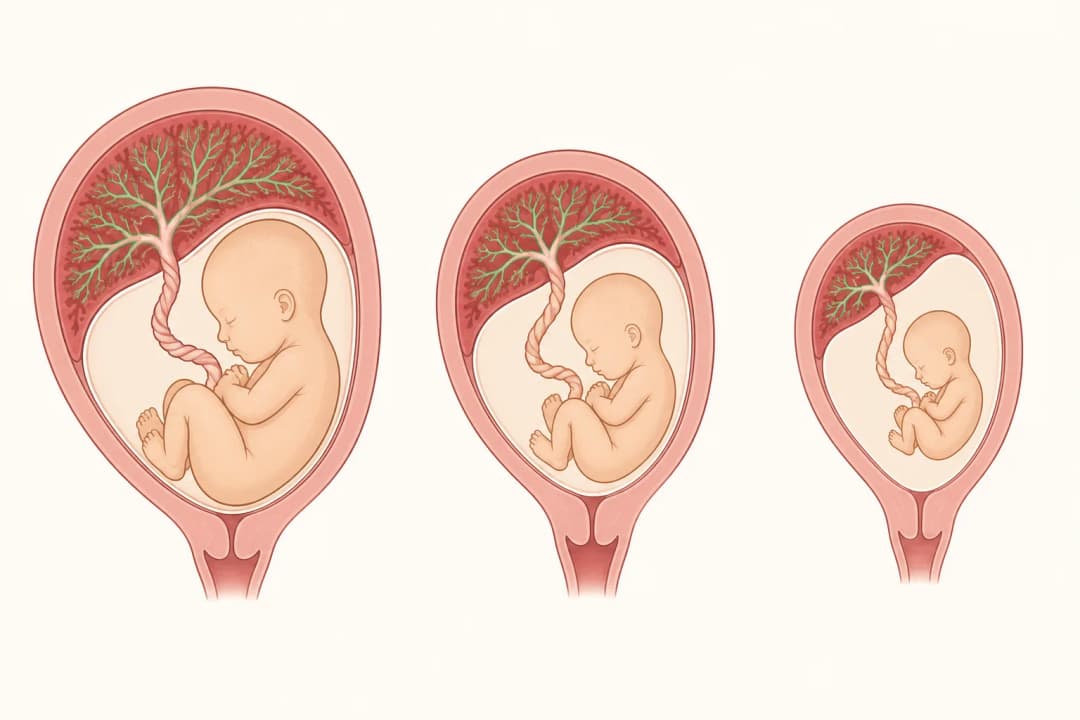
Symmetrical IUGR means several fetal body measurements are smaller than expected. This can reflect an early growth problem, a dating difference, a small but healthy baby, placental concerns, maternal illness, infection, or a genetic or structural condition. The scan pattern is a starting point, not a forecast by itself.
Clinicians look at growth over time, amniotic fluid, blood flow through the placenta and cord, fetal movements, and heart-rate patterns. They also consider gestational age and whether tests remain reassuring. Some babies continue safely with close monitoring; others need birth sooner if the placenta or fetal wellbeing becomes concerning.
How to prepare for follow-up
Attend every growth scan and fetal heart monitoring appointment, and keep a record of your baby’s usual movements. Take prescribed treatment for conditions such as high blood pressure and discuss every medicine or supplement with your maternity team. Ask who to contact outside clinic hours.
A growth scan may be repeated to assess a trend rather than a single estimated weight. If monitoring becomes less reassuring, the team may discuss hospital observation, corticosteroid treatment when appropriate, or induction of labour and other birth options according to the pregnancy stage and findings.
When to seek care
Call your maternity unit immediately if movements are reduced, stop, or feel noticeably different. Seek urgent care for vaginal bleeding, leaking fluid, regular contractions, severe abdominal pain, severe headache, sudden vision changes, or feeling acutely unwell. These symptoms require assessment even when a previous scan was reassuring.
Questions for your doctor
Ask what is known about the cause, which measurements and blood-flow results matter, and whether the pregnancy dates are secure. Ask what the monitoring schedule is, what changes would alter the prognosis, and how the team would decide between continued monitoring and induction.
Find care
General Clinics & Polyclinics in Abu Dhabi
That answer is general. If you want it applied to your own case, these are licensed general clinics & polyclinics listed in Abu Dhabi.
27 Ar Ruwwad St - Shakhbout City - MSH4 - Abu Dhabi - United Arab Emirates
Accepts: Daman, Thiqa, Cigna, MetLife +20 more
Al Ruwais, Al Dhafrah
Accepts: Daman, Thiqa, AXA, Cigna +16 more
Al Bahyah - Al Bahyah Old - Abu Dhabi - United Arab Emirates
Accepts: Daman, Thiqa, Cigna, Allianz Care +18 more
Abu Dhabi
Accepts: Daman, Thiqa, AXA, Cigna +27 more
Ordered by verification status and how complete each clinic's public record is, then alphabetically. This is a directory listing, not a ranking — Zavis does not rate or recommend providers.
A factual listing drawn from the DHA, DOH and MOHAP licence registers. It is not a referral, an endorsement, or advice that any of these providers is right for you.
Questions people ask
Can one ultrasound predict the baby’s future?
No. Ultrasound estimates have limits, and the trend in growth plus fluid, blood-flow, movement, and heart findings gives a more useful picture.
Does symmetrical IUGR always mean an early birth?
No. If monitoring remains reassuring, the team may continue close observation. Earlier birth is considered when the risks of staying pregnant become greater than the risks of delivery.
Related
Related reading
Keep reading
Medical disclaimer. This page is general health information, not medical advice, and it cannot diagnose you. Always consult a licensed healthcare provider about your own symptoms and treatment. In an emergency in the UAE, call 998 for an ambulance.