
Swelling in the thighs during pregnancy
Short answer
Swelling in the thighs during pregnancy may reflect fluid retention or pressure on pelvic veins, while one-sided painful swelling needs urgent assessment for a clot.
This answers one question. It is not a diagnosis and does not replace an assessment by a licensed doctor.
At a glance
- Usually less concerning
- Gradual, similar swelling on both sides without pain or warmth
- Urgent pattern
- One-sided swelling with pain, redness, or warmth
How to interpret thigh swelling
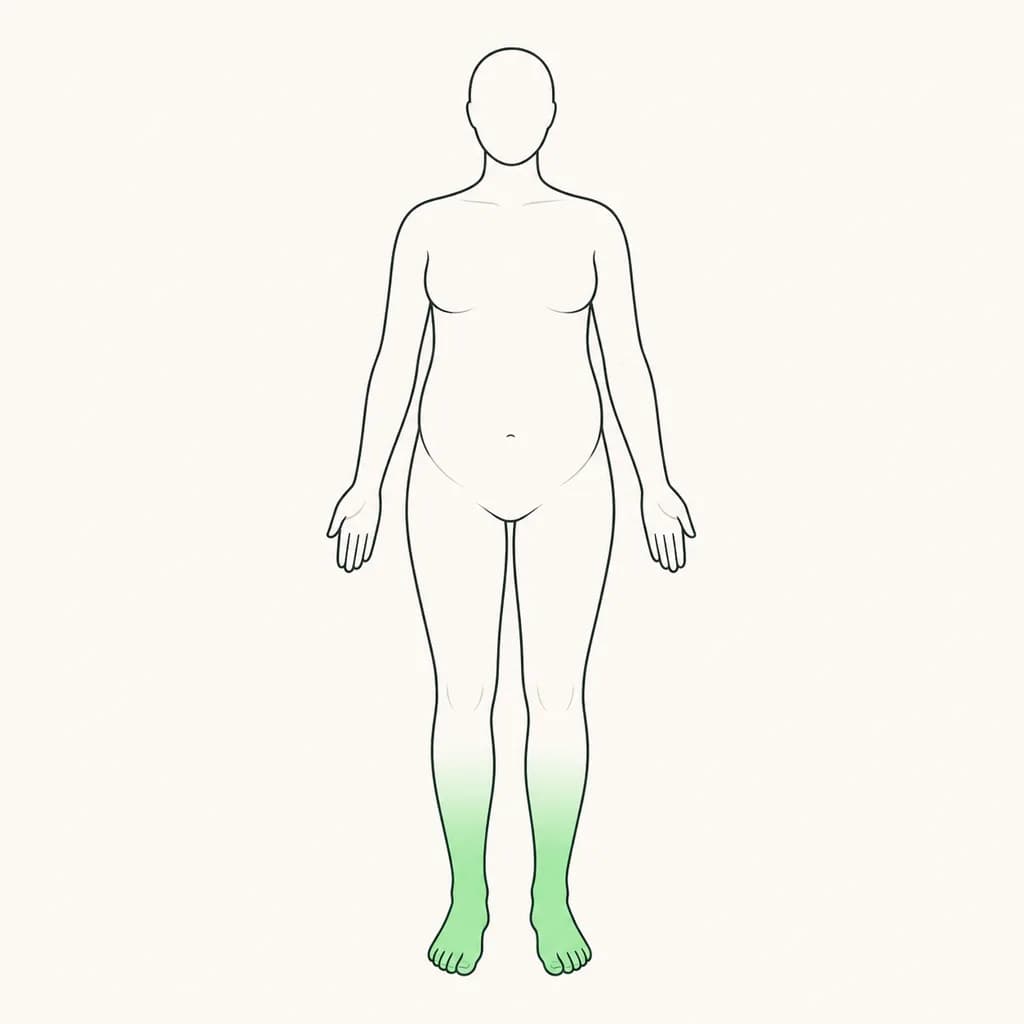
As pregnancy progresses, the growing womb can affect blood flow from the legs. Fluid may then collect around the thighs, groin, or lower legs, particularly after prolonged standing. Both-sided, gradual fullness without pain is more consistent with ordinary pregnancy-related fluid changes.
A clot can cause swelling in one leg, often with warmth, redness, tenderness, or a heavy ache. Thigh swelling with sudden breathlessness or chest pain may indicate that a clot has travelled to the lungs and is an emergency. Swelling with facial or hand changes and headache also warrants maternity review because pre-eclampsia can present with swelling.
Practical steps
Avoid sitting or standing in one position for long stretches. Move your ankles and take gentle walks when comfortable, rest on your side, and raise your legs when sitting. Wear loose clothing around the groin and thighs, and ask your clinician before using compression garments.
Do not massage a painful, warm, or one-sided swollen thigh, and do not start aspirin, anticoagulants, or supplements without medical advice. Compare both legs and record changes in pain, colour, warmth, and size.
When to get medical help
Contact your maternity service urgently if one thigh or leg becomes noticeably more swollen, painful, warm, or red. Go to emergency care for chest pain, sudden difficulty breathing, coughing blood, collapse, or severe weakness.
Also seek prompt pregnancy assessment for rapidly increasing swelling, a severe headache, vision changes, pain under the ribs, vomiting, or feeling very unwell. These findings need checks rather than home monitoring.
Useful questions
Ask whether both thighs are affected in a reassuring pattern, whether you need an ultrasound of a leg, and whether your blood pressure and urine should be checked. Ask which activity and compression options are appropriate for your stage of pregnancy.
Find care
General Clinics & Polyclinics in Abu Dhabi
That answer is general. If you want it applied to your own case, these are licensed general clinics & polyclinics listed in Abu Dhabi.
27 Ar Ruwwad St - Shakhbout City - MSH4 - Abu Dhabi - United Arab Emirates
Accepts: Daman, Thiqa, Cigna, MetLife +20 more
Al Ruwais, Al Dhafrah
Accepts: Daman, Thiqa, AXA, Cigna +16 more
Al Bahyah - Al Bahyah Old - Abu Dhabi - United Arab Emirates
Accepts: Daman, Thiqa, Cigna, Allianz Care +18 more
Abu Dhabi
Accepts: Daman, Thiqa, AXA, Cigna +27 more
Ordered by verification status and how complete each clinic's public record is, then alphabetically. This is a directory listing, not a ranking — Zavis does not rate or recommend providers.
A factual listing drawn from the DHA, DOH and MOHAP licence registers. It is not a referral, an endorsement, or advice that any of these providers is right for you.
Questions people ask
Can pregnancy cause swollen thighs?
Yes. Pressure on pelvic veins and normal fluid shifts can contribute, but new one-sided or painful swelling needs prompt assessment.
Can I rub a swollen thigh?
Avoid massage until a clinician has assessed one-sided, painful, warm, or red swelling.
Related
Related reading
Keep reading
Medical disclaimer. This page is general health information, not medical advice, and it cannot diagnose you. Always consult a licensed healthcare provider about your own symptoms and treatment. In an emergency in the UAE, call 998 for an ambulance.