
Sweaty feet in women: causes and care
Short answer
Sweaty feet in women can fluctuate with hormones, stress, heat, and footwear, while persistent symptoms may need a clinical review.
This answers one question. It is not a diagnosis and does not replace an assessment by a licensed doctor.
At a glance
- Possible influences
- Hormonal shifts, stress, heat, and footwear
- Skin warning
- Itching and peeling need a closer look
- Treatment discussion
- Consider personal health and reproductive stage
Patterns worth noticing
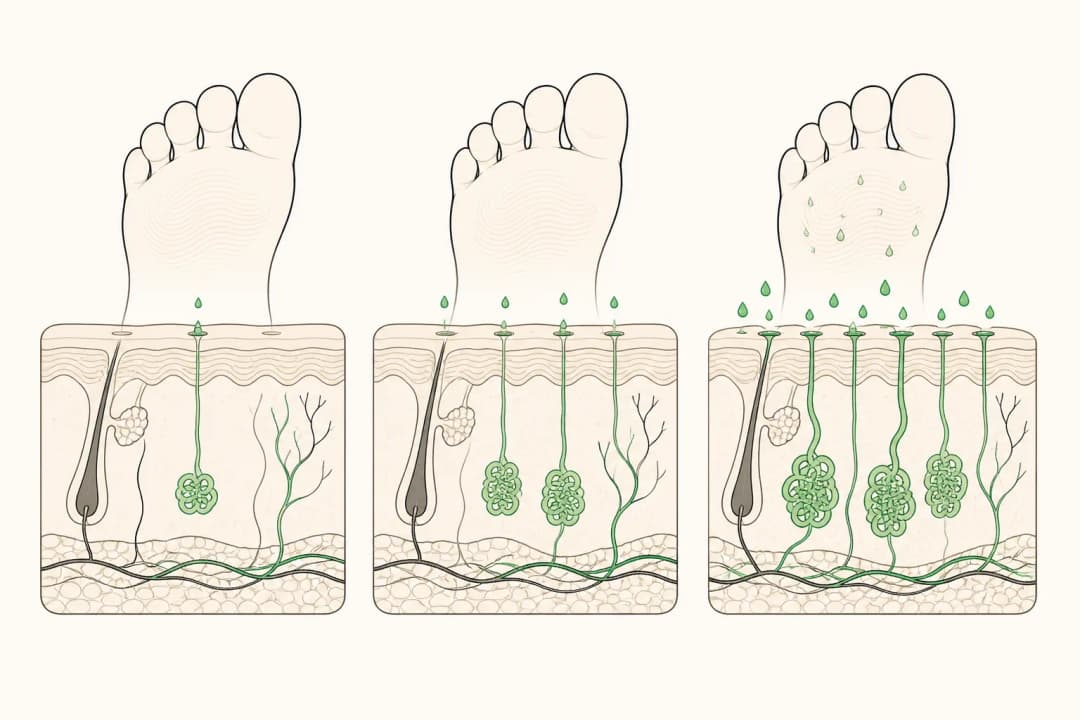
Sweating may vary around menstrual-cycle changes, pregnancy, menopause, emotional stress, exercise, or warm and enclosed shoes. These patterns can coexist with plantar hyperhidrosis, where sweating is excessive for the surrounding conditions and affects daily life. Dampness can cause softened skin, odour, blisters, and small cracks. Itching, peeling, or scaling between the toes can point toward Athlete's Foot rather than sweating alone. Record timing, both feet or one, other sweaty areas, and any medicine or hormone treatment so a clinician can interpret the pattern.
Managing moisture
Dry the feet thoroughly after washing, especially between the toes, and change socks after exercise or whenever they feel wet. Breathable shoes, moisture-wicking socks, and rotating pairs can reduce trapped humidity. Avoid sharing towels or footwear if a rash is present. If sweating remains disruptive, a clinician may discuss Prescription Antiperspirant or Iontophoresis, taking account of sensitive skin, pregnancy, breastfeeding, and other treatments. Do not use a strong product on broken skin unless a professional has advised you how.
When an appointment is worthwhile
Arrange an appointment if sweating repeatedly soaks socks, causes slipping, interrupts sleep, or makes work and social activities difficult. Seek care sooner for a new one-sided change, painful skin, spreading redness, warmth, swelling, pus, or fever. Sweating with palpitations, tremor, unexplained weakness, or feeling faint also deserves medical attention. Mention pregnancy, breastfeeding, menstrual changes, menopause symptoms, and all medicines when discussing treatment.
Questions to bring
Ask whether your symptoms fit plantar hyperhidrosis or Athlete's Foot, whether hormone or medicine changes matter, and which options are suitable for your circumstances. Ask how to apply a Prescription Antiperspirant, what Iontophoresis involves, and how to protect irritated skin during treatment.
Find care
General Clinics & Polyclinics in Abu Dhabi
That answer is general. If you want it applied to your own case, these are licensed general clinics & polyclinics listed in Abu Dhabi.
27 Ar Ruwwad St - Shakhbout City - MSH4 - Abu Dhabi - United Arab Emirates
Accepts: Daman, Thiqa, Cigna, MetLife +20 more
Al Ruwais, Al Dhafrah
Accepts: Daman, Thiqa, AXA, Cigna +16 more
Al Bahyah - Al Bahyah Old - Abu Dhabi - United Arab Emirates
Accepts: Daman, Thiqa, Cigna, Allianz Care +18 more
Abu Dhabi
Accepts: Daman, Thiqa, AXA, Cigna +27 more
Ordered by verification status and how complete each clinic's public record is, then alphabetically. This is a directory listing, not a ranking — Zavis does not rate or recommend providers.
A factual listing drawn from the DHA, DOH and MOHAP licence registers. It is not a referral, an endorsement, or advice that any of these providers is right for you.
Questions people ask
Can hormonal changes affect sweaty feet?
They can change temperature regulation and sweating patterns, but persistent or disruptive symptoms still deserve an assessment.
What if the skin also peels?
Peeling or itching between the toes may indicate Athlete's Foot; keep the area dry and arrange an evaluation if it persists.
Related
Related reading
Keep reading
Medical disclaimer. This page is general health information, not medical advice, and it cannot diagnose you. Always consult a licensed healthcare provider about your own symptoms and treatment. In an emergency in the UAE, call 998 for an ambulance.