
Sweaty Feet in Plastic Shoes: What to Know
Short answer
Sweaty feet in plastic shoes usually reflect trapped heat and moisture, but persistent sweating can need assessment and treatment.
This answers one question. It is not a diagnosis and does not replace an assessment by a licensed doctor.
At a glance
- Common trigger
- Heat and limited evaporation inside non-breathable footwear
- Watch for
- Itching, peeling, cracks, redness, or pain
Why plastic shoes feel clammy
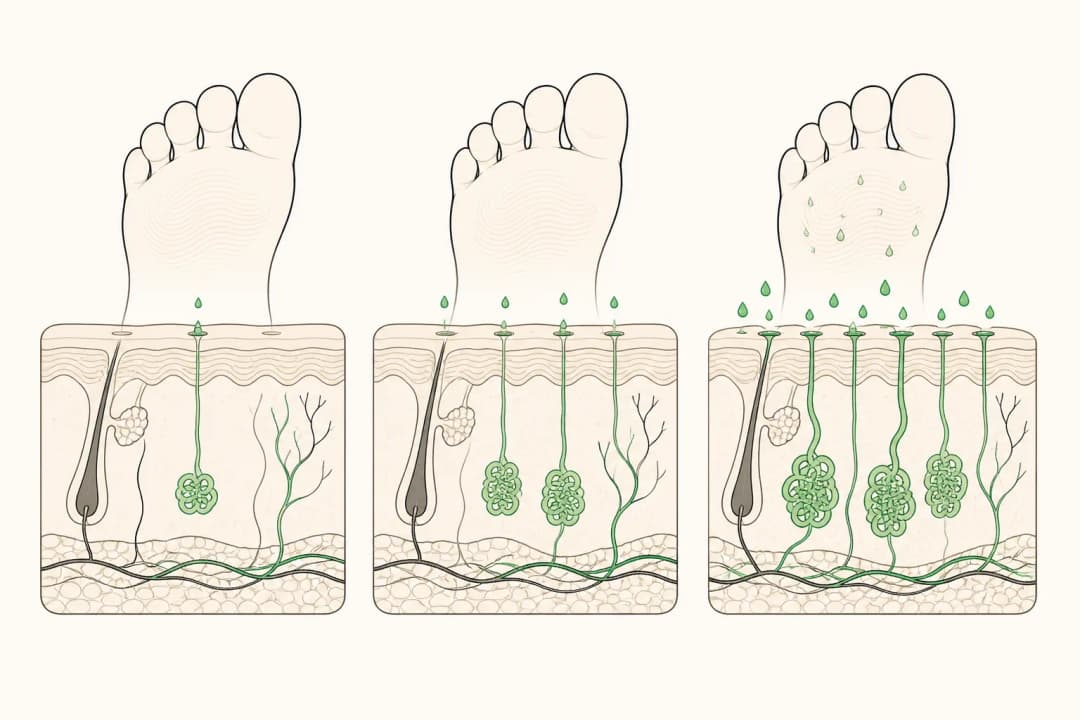
Plastic and other non-breathable materials limit evaporation. Warmth, friction, and damp socks can leave skin soft and more prone to irritation. Some people also have plantar hyperhidrosis, in which the sweat glands of the soles produce more sweat than the situation requires. Foot sweating can occur even when the weather is cool.
Moisture between the toes may allow fungal infection to develop. Itching, peeling, scaling, or cracking can fit Athlete's Foot, while sweating without a rash may fit Excessive Sweating. These patterns overlap, so the appearance and timing matter.
Steps that can make shoes more comfortable
Choose breathable footwear when possible and rotate pairs so each pair can dry fully before it is worn again. Change damp socks promptly; moisture-wicking fabric may feel more comfortable than thick cotton. Wash the feet, dry carefully between the toes, and avoid sealing already-wet skin inside plastic shoes.
A clinician may suggest an antiperspirant made for the feet, often applied to dry skin according to directions. If topical care is not enough, Iontophoresis is one treatment option for excessive sweating. Do not put fragranced products or strong chemicals on cracked skin without advice.
When a check-up is sensible
Arrange medical advice if sweating continues despite changing footwear, interferes with daily activities, or began suddenly. Seek prompt assessment for spreading redness, warmth, swelling, pus, marked pain, or a wound that is not healing. Peeling or itching between the toes also deserves attention because fungal infection may need specific treatment.
Questions to take with you
Ask whether the pattern fits plantar hyperhidrosis or a skin infection, which foot antiperspirant is suitable, and whether Iontophoresis is appropriate. Mention when the sweating started, whether both feet are affected, and any medicines or skin products you use.
Find care
General Clinics & Polyclinics in Abu Dhabi
That answer is general. If you want it applied to your own case, these are licensed general clinics & polyclinics listed in Abu Dhabi.
27 Ar Ruwwad St - Shakhbout City - MSH4 - Abu Dhabi - United Arab Emirates
Accepts: Daman, Thiqa, Cigna, MetLife +20 more
Al Ruwais, Al Dhafrah
Accepts: Daman, Thiqa, AXA, Cigna +16 more
Al Bahyah - Al Bahyah Old - Abu Dhabi - United Arab Emirates
Accepts: Daman, Thiqa, Cigna, Allianz Care +18 more
Abu Dhabi
Accepts: Daman, Thiqa, AXA, Cigna +27 more
Ordered by verification status and how complete each clinic's public record is, then alphabetically. This is a directory listing, not a ranking — Zavis does not rate or recommend providers.
A factual listing drawn from the DHA, DOH and MOHAP licence registers. It is not a referral, an endorsement, or advice that any of these providers is right for you.
Questions people ask
Can plastic shoes cause sweaty feet?
They can make sweating feel worse by holding heat and moisture close to the skin, although some people also have an underlying tendency to sweat heavily.
Should I use antiperspirant on sweaty feet?
A foot antiperspirant may help when used on intact, dry skin as directed; a clinician can recommend a suitable strength if ordinary products are not enough.
Related
Related reading
Keep reading
Medical disclaimer. This page is general health information, not medical advice, and it cannot diagnose you. Always consult a licensed healthcare provider about your own symptoms and treatment. In an emergency in the UAE, call 998 for an ambulance.