
Small Cell Lung Cancer Research: What Patients Should Know
Short answer
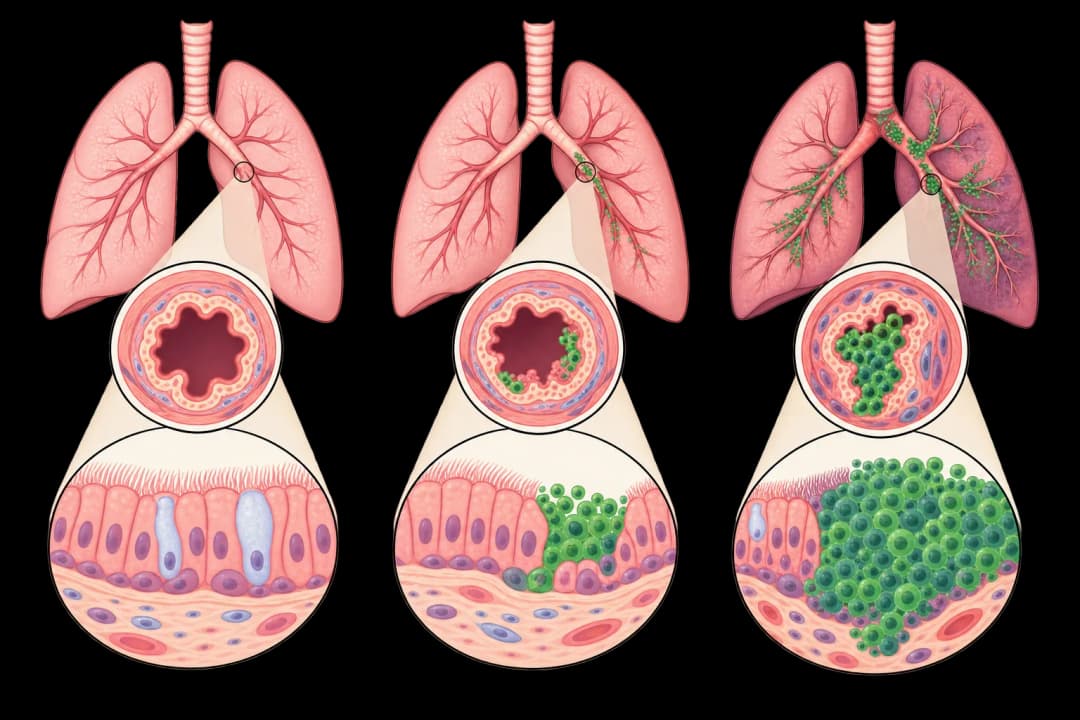
Small cell lung cancer research investigates earlier detection, better treatment combinations, resistance, recurrence, symptoms, and ways to personalise care.
This answers one question. It is not a diagnosis and does not replace an assessment by a licensed doctor.
At a glance
- Research areas
- Treatment, resistance, recurrence, diagnosis, and supportive care
- Before joining
- Understand purpose, visits, risks, alternatives, and withdrawal
What research can involve
Research may test a medicine, compare treatment approaches, study tumour biology, examine scans or blood samples, or improve symptom and supportive care. Some projects are interventional, while others observe people receiving routine care. Eligibility can depend on stage, previous treatment, test results, general health, and practical factors.
A research study is not a substitute for understanding the standard options. The team should explain its purpose, possible burdens, alternatives, follow-up, and what happens if you choose not to join.
How to explore an option safely
Tell your oncologist that you want to hear about suitable studies and ask who oversees screening. Request the study name, visit schedule, tests, treatment changes, known risks, uncertain benefits, and withdrawal process in language you understand. Keep your pathology report, scan summaries, medicine list, and treatment dates together.
Routine care may include Chemotherapy, Immunotherapy, or Radiotherapy. A study might add to, compare with, or alter that plan; Whole Brain Radiotherapy can be relevant when the protocol or clinical situation involves the brain.
When to contact the care team
Whether or not you join a study, report fever, severe breathlessness, chest pain, uncontrolled vomiting, confusion, a seizure, or sudden weakness urgently. Ask the study team for its specific after-hours number and the symptoms that require immediate assessment.
Questions about research
What question is this study trying to answer? Am I eligible? What would change in my care? What are the alternatives? Which costs, visits, tests, and follow-up should I expect? Who can I contact with concerns?
Questions people ask
Does joining research guarantee a better treatment?
No. A study may offer a possible benefit, but its outcome is uncertain and must be weighed against alternatives and burdens.
Can I leave a research study?
Ask the study team about its withdrawal process; participation discussions should cover what happens if you stop.
Related
Related reading
Keep reading
Cancer care in the UAE
Hospitals & Medical Centers in Abu Dhabi
Most UAE cancer care is delivered inside hospital services rather than by standalone oncology clinics, so these are licensed hospitals & medical centers listed in Abu Dhabi. Confirm the specific cancer service exists before you travel, and know that asking for a second opinion is routine.
Ahalia Hospital Musaffah Building - Musaffah - Musaffah Industrial - Abu Dhabi - United Arab Emirates
Accepts: Daman, Thiqa, AXA, Cigna +26 more
Al Ruwais Industrial City - Abu Dhabi - United Arab Emirates
Accepts: Daman, Thiqa, AXA, Cigna +30 more
Abu Dhabi, Abu Dhabi
Accepts: Daman, Thiqa, AXA, Cigna +30 more
Second opinions are routine in cancer care and asking for one does not affect your treatment. How to arrange a second opinion in the UAE.
Ordered by verification status and how complete each clinic's public record is, then alphabetically. This is a directory listing, not a ranking — Zavis does not rate or recommend providers.
A factual listing drawn from the DHA, DOH and MOHAP licence registers. It is not a referral, an endorsement, or advice that any of these providers is right for you.
Medical disclaimer. This page is general health information, not medical advice, and it cannot diagnose you. Always consult a licensed healthcare provider about your own symptoms and treatment. In an emergency in the UAE, call 998 for an ambulance.