
Small cell lung cancer immunohistochemistry: what to know
Short answer
Small cell lung cancer immunohistochemistry uses tissue stains to support the diagnosis and distinguish tumour cells from other lung cancer types.
This answers one question. It is not a diagnosis and does not replace an assessment by a licensed doctor.
At a glance
- Sample used
- Cells or tissue from a biopsy
- Purpose
- Support classification of the tumour
- Interpretation
- Combined with microscopy and imaging
What the test means
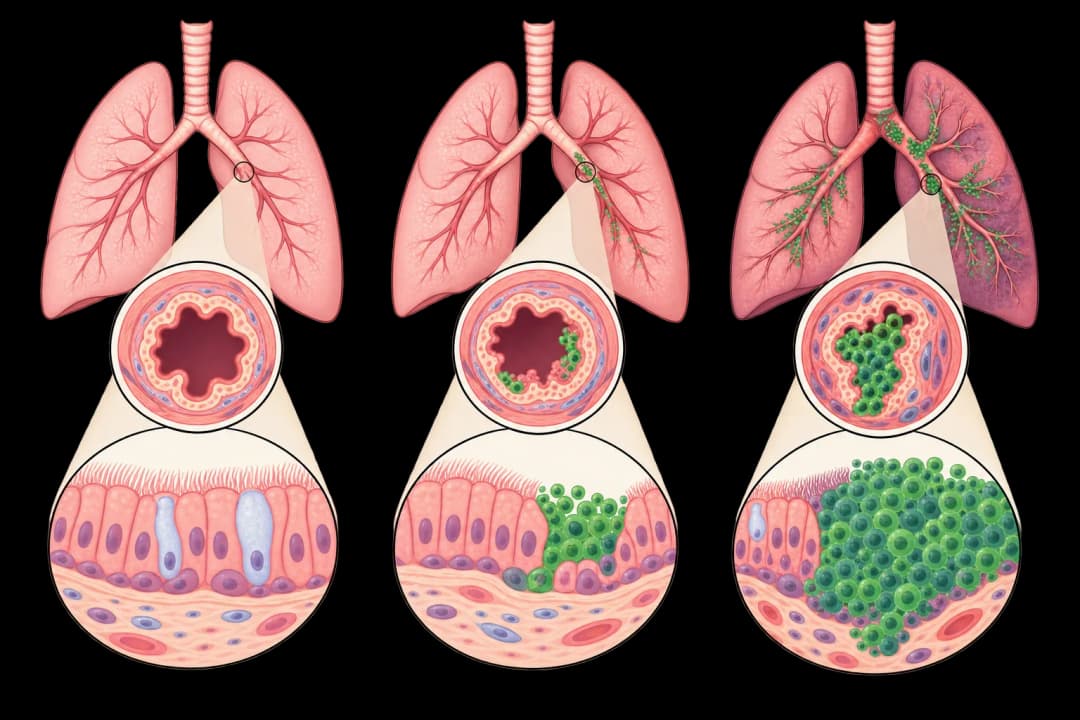
A pathologist applies selected antibodies to cells from a biopsy. When an antibody attaches to a matching protein, a visible stain appears. The pattern is interpreted alongside the cell shape, the biopsy appearance and your scans; no single stain is considered in isolation.
The report may describe markers that support a neuroendocrine pattern, which is characteristic of small cell lung cancer, and may include markers used to exclude other diagnoses. Results can be limited when the sample is very small, crushed or affected by treatment.
What happens next
Ask which markers were tested, whether the findings support small cell lung cancer, and whether more tissue is needed. Your team may combine the pathology report with chest and body imaging before discussing treatment. Depending on the overall assessment, care can involve Chemotherapy, Immunotherapy or Radiotherapy.
Keep a copy of the pathology report and ask whether another specialist will review it. Tell the team about medicines, previous biopsies and any new symptoms before treatment planning.
When to contact your care team
Contact your oncology team promptly if breathing becomes harder, coughing produces blood, chest pain is new or severe, or you cannot keep fluids down. Seek urgent help for sudden confusion, fainting, severe weakness or a seizure; these symptoms need assessment regardless of what the stain report shows.
Questions to ask
Which biopsy sample was stained? Which findings support the diagnosis? Could another tumour type look similar? Is there enough tissue for additional testing? How will the pathology result change the treatment discussion?
Questions people ask
Does immunohistochemistry alone confirm the diagnosis?
It supports classification, but the pathologist interprets the stain pattern with cell appearance, biopsy quality and clinical imaging.
Will the test delay treatment?
Your team balances the need for a clear diagnosis with the need to begin appropriate care; ask when the report is expected.
Related
Related reading
Keep reading
Cancer care in the UAE
Hospitals & Medical Centers in Abu Dhabi
Most UAE cancer care is delivered inside hospital services rather than by standalone oncology clinics, so these are licensed hospitals & medical centers listed in Abu Dhabi. Confirm the specific cancer service exists before you travel, and know that asking for a second opinion is routine.
Ahalia Hospital Musaffah Building - Musaffah - Musaffah Industrial - Abu Dhabi - United Arab Emirates
Accepts: Daman, Thiqa, AXA, Cigna +26 more
Al Ruwais Industrial City - Abu Dhabi - United Arab Emirates
Accepts: Daman, Thiqa, AXA, Cigna +30 more
Abu Dhabi, Abu Dhabi
Accepts: Daman, Thiqa, AXA, Cigna +30 more
Second opinions are routine in cancer care and asking for one does not affect your treatment. How to arrange a second opinion in the UAE.
Ordered by verification status and how complete each clinic's public record is, then alphabetically. This is a directory listing, not a ranking — Zavis does not rate or recommend providers.
A factual listing drawn from the DHA, DOH and MOHAP licence registers. It is not a referral, an endorsement, or advice that any of these providers is right for you.
Medical disclaimer. This page is general health information, not medical advice, and it cannot diagnose you. Always consult a licensed healthcare provider about your own symptoms and treatment. In an emergency in the UAE, call 998 for an ambulance.