
What should you know about severe rhabdomyolysis recovery?
Short answer
Severe rhabdomyolysis recovery should be supervised medically, with monitoring of kidney function, hydration, symptoms, and a gradual return to activity.
This answers one question. It is not a diagnosis and does not replace an assessment by a licensed doctor.
At a glance
- Return to exercise
- Wait for clinical clearance and progress through stages rather than testing maximum effort.
- Watch for
- Reduced urine, dark urine, renewed weakness, swelling, or severe muscle pain.
What recovery involves
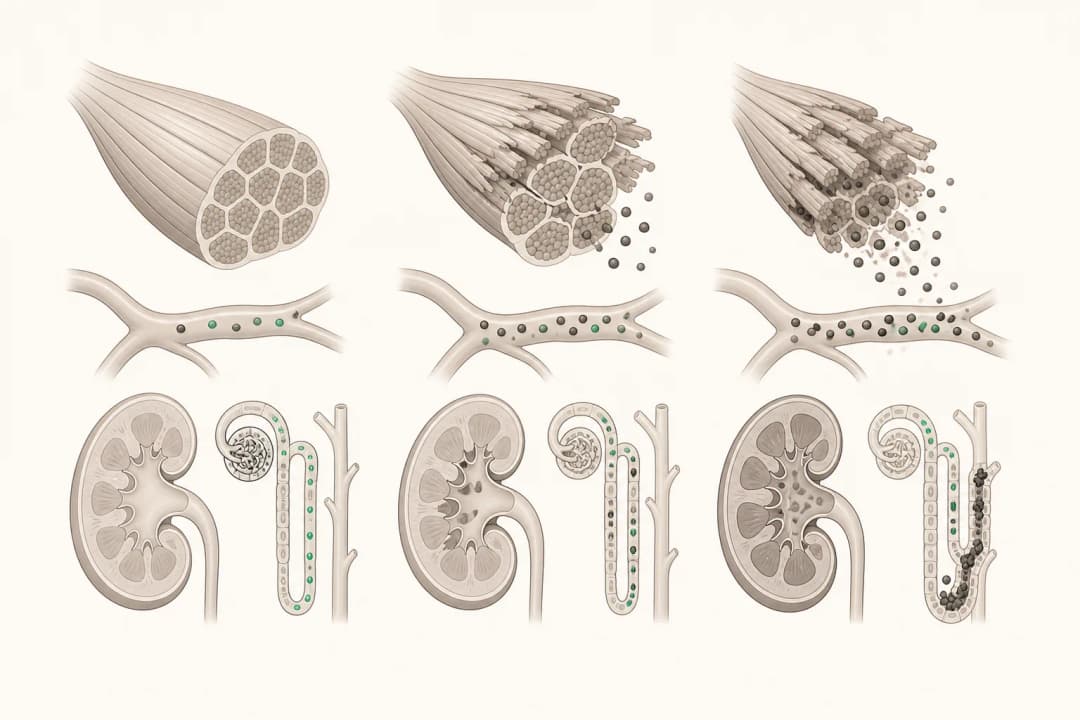
Rhabdomyolysis occurs when damaged muscle releases substances into the bloodstream that can strain the kidneys and disturb body chemistry. Severe cases may require hospital treatment with fluids and repeated blood and urine checks. Muscle soreness after exercise can be ordinary, but rhabdomyolysis may involve pain or weakness that is out of proportion to the activity, swelling, reduced urine, or unusually dark urine. Symptoms alone cannot confirm recovery; laboratory results and the clinical assessment guide decisions.
Supporting recovery
Follow discharge instructions closely, drink fluids only as advised for your health, and avoid strenuous exercise until your clinician gives permission. Do not restart supplements, performance products, or medicines that may affect the kidneys without checking first. Rest the affected muscles, attend repeat tests, and increase activity in stages. A clinician may begin with gentle daily movement, then add light strengthening before higher-intensity exercise. Stop and report renewed muscle pain, weakness, swelling, or dark urine.
When to seek urgent care
Seek urgent care for very little or no urine, dark urine, worsening swelling, severe muscle pain, increasing weakness, confusion, fainting, vomiting that prevents fluids, chest symptoms, or trouble breathing. These changes can signal kidney strain, electrolyte disturbance, or another serious problem and should not be watched at home.
Questions for your doctor
Ask which blood and urine results need repeating, how much fluid is suitable, which medicines or supplements to avoid, when work is safe, and what staged exercise plan you should follow.
Find care
General Clinics & Polyclinics in Abu Dhabi
That answer is general. If you want it applied to your own case, these are licensed general clinics & polyclinics listed in Abu Dhabi.
27 Ar Ruwwad St - Shakhbout City - MSH4 - Abu Dhabi - United Arab Emirates
Accepts: Daman, Thiqa, Cigna, MetLife +20 more
Al Ruwais, Al Dhafrah
Accepts: Daman, Thiqa, AXA, Cigna +16 more
Al Bahyah - Al Bahyah Old - Abu Dhabi - United Arab Emirates
Accepts: Daman, Thiqa, Cigna, Allianz Care +18 more
Abu Dhabi
Accepts: Daman, Thiqa, AXA, Cigna +27 more
Ordered by verification status and how complete each clinic's public record is, then alphabetically. This is a directory listing, not a ranking — Zavis does not rate or recommend providers.
A factual listing drawn from the DHA, DOH and MOHAP licence registers. It is not a referral, an endorsement, or advice that any of these providers is right for you.
Questions people ask
Can I exercise during rhabdomyolysis recovery?
Avoid strenuous exercise until your clinician confirms it is safe, then return gradually with clear limits and monitoring.
Does feeling less sore prove recovery?
No. Symptoms can improve before blood or kidney findings have fully settled, so follow-up testing may still be needed.
Related
Related reading
Keep reading
Medical disclaimer. This page is general health information, not medical advice, and it cannot diagnose you. Always consult a licensed healthcare provider about your own symptoms and treatment. In an emergency in the UAE, call 998 for an ambulance.