
How long does rhabdomyolysis treatment take?
Short answer
Some people need brief observation, while others require hospital care and repeated testing. The decision depends on symptoms, muscle injury, kidney function, electrolyte changes, urine output, and whether the trigger has stopped. Treatment is not timed by urine colour alone; clinicians look for a safe clinical and laboratory trend before reducing monitoring.
This answers one question. It is not a diagnosis and does not replace an assessment by a licensed doctor.
At a glance
- Timeframe
- Varies with muscle injury and kidney effects
- Monitoring
- Symptoms, urine output, and repeat tests
- Activity
- Resume gradually only after clinical advice
Why the timeframe varies
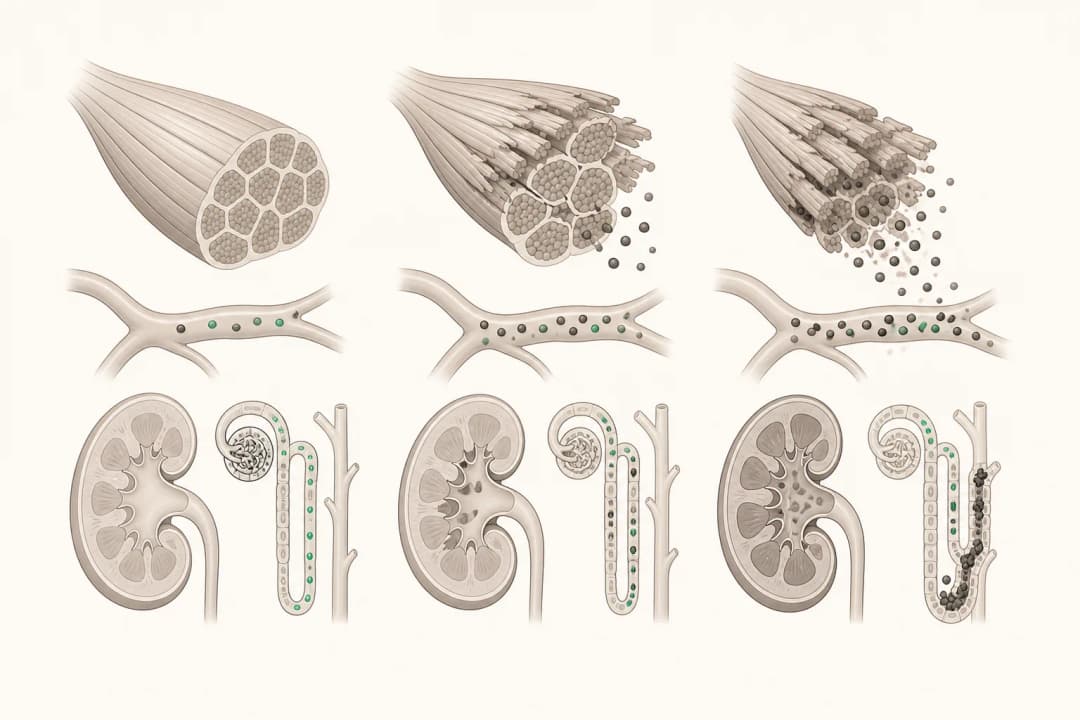
Muscle breakdown may continue after exercise, heat illness, trauma, or another trigger has ended. Fluids may be used to support circulation and urine flow when suitable, while clinicians correct electrolyte problems and address the cause. Recovery can take longer when kidney function is affected, urine output falls, or muscle swelling is severe.
How to support treatment
Rest from strenuous activity and follow the prescribed hydration and testing plan. Keep every follow-up appointment, because symptoms may improve before blood results have settled. Ask before taking anti-inflammatory pain medicines, supplements, or returning to heat and intense exercise. Report changes in urine output, new swelling, or worsening weakness promptly.
When treatment needs urgent review
Seek emergency care for very low urine output, severe or rapidly worsening muscle swelling, confusion, fainting, repeated vomiting, irregular heartbeat sensations, chest symptoms, or breathing difficulty. These signs can accompany kidney strain, electrolyte imbalance, or dangerous pressure within a swollen limb.
Questions for your doctor
Ask which result must improve before discharge, how often testing will be repeated, what activity is safe during recovery, and whether the original trigger needs further evaluation. Clarify the warning signs that should send you back for immediate care.
Find care
General Clinics & Polyclinics in Abu Dhabi
That answer is general. If you want it applied to your own case, these are licensed general clinics & polyclinics listed in Abu Dhabi.
27 Ar Ruwwad St - Shakhbout City - MSH4 - Abu Dhabi - United Arab Emirates
Accepts: Daman, Thiqa, Cigna, MetLife +20 more
Al Ruwais, Al Dhafrah
Accepts: Daman, Thiqa, AXA, Cigna +16 more
Al Bahyah - Al Bahyah Old - Abu Dhabi - United Arab Emirates
Accepts: Daman, Thiqa, Cigna, Allianz Care +18 more
Abu Dhabi
Accepts: Daman, Thiqa, AXA, Cigna +27 more
Ordered by verification status and how complete each clinic's public record is, then alphabetically. This is a directory listing, not a ranking — Zavis does not rate or recommend providers.
A factual listing drawn from the DHA, DOH and MOHAP licence registers. It is not a referral, an endorsement, or advice that any of these providers is right for you.
Questions people ask
Can I decide treatment is finished when muscle pain improves?
No. Pain may settle before muscle markers, kidney tests, or electrolytes return to a safer pattern.
Does everyone with rhabdomyolysis need hospital care?
Not necessarily. The care setting depends on examination findings, test results, urine output, and the suspected cause.
Related
Related reading
Keep reading
Medical disclaimer. This page is general health information, not medical advice, and it cannot diagnose you. Always consult a licensed healthcare provider about your own symptoms and treatment. In an emergency in the UAE, call 998 for an ambulance.