
Understanding rhabdomyolysis test results
Short answer
No single result tells the whole story. Clinicians usually combine creatine kinase, kidney-function tests, electrolyte measurements, urine testing, and your symptoms. Results are interpreted over time because muscle injury can continue after the triggering event, and repeat samples can show whether the process is settling or needs more treatment.
This answers one question. It is not a diagnosis and does not replace an assessment by a licensed doctor.
At a glance
- Muscle marker
- Creatine kinase reflects muscle-cell injury
- Other checks
- Kidney function, electrolytes, and urine
- Why repeat tests
- The trend can reveal ongoing breakdown
How results are interpreted
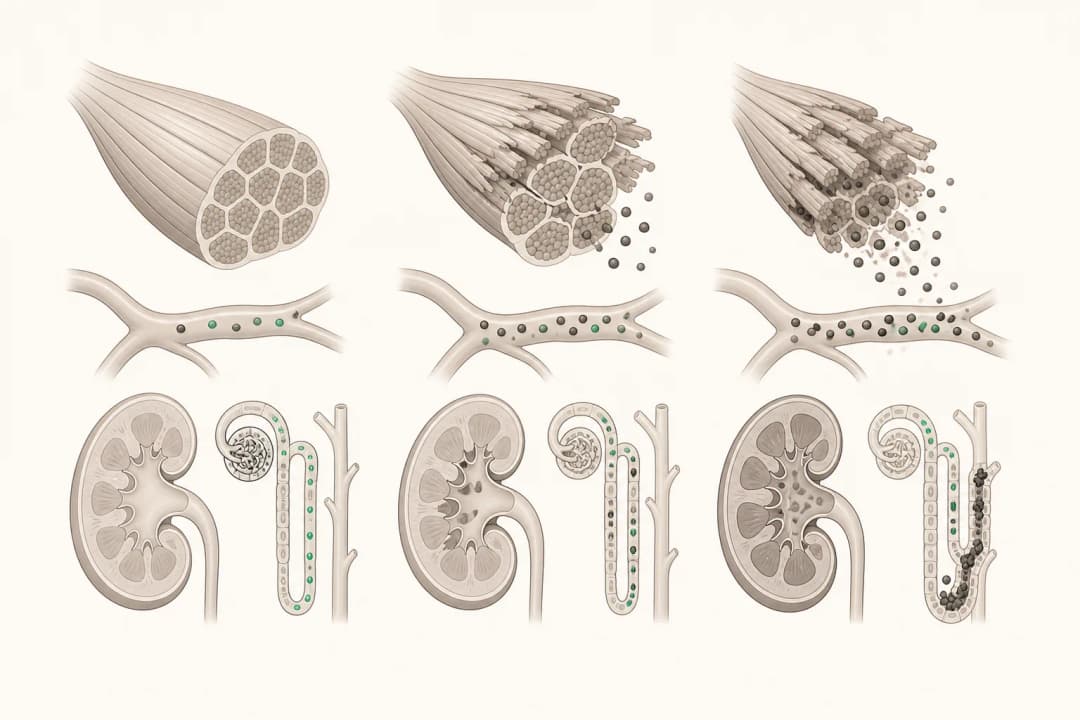
Creatine kinase is an enzyme released from injured muscle and may rise after the damage begins. Kidney tests show how well waste is being cleared. Electrolytes such as potassium matter because muscle breakdown can disturb them. Urine may show pigment from myoglobin, although a normal-looking sample does not exclude rhabdomyolysis. The pattern, symptoms, and trend matter more than one isolated value.
What to do after testing
Follow the testing team’s plan for fluids, observation, medicines, and repeat blood or urine checks. Avoid strenuous exercise until a clinician says it is appropriate. Share a complete list of prescriptions, supplements, and recent illnesses. Do not interpret a falling result as permission to resume training if weakness, pain, swelling, or reduced urination continues.
When to seek urgent care
Get urgent help for reduced or absent urination, increasing muscle swelling, marked weakness, palpitations, fainting, confusion, persistent vomiting, or difficulty breathing. These changes can signal kidney stress, electrolyte disturbance, or a serious muscle-compartment problem and require assessment rather than waiting for a routine appointment.
Questions for your doctor
Ask what each result means for you, whether the values need repeating, which symptoms should trigger emergency care, and when normal activity can restart. Ask whether a medicine, supplement, infection, heat exposure, or exercise pattern could have contributed.
Find care
General Clinics & Polyclinics in Abu Dhabi
That answer is general. If you want it applied to your own case, these are licensed general clinics & polyclinics listed in Abu Dhabi.
27 Ar Ruwwad St - Shakhbout City - MSH4 - Abu Dhabi - United Arab Emirates
Accepts: Daman, Thiqa, Cigna, MetLife +20 more
Al Ruwais, Al Dhafrah
Accepts: Daman, Thiqa, AXA, Cigna +16 more
Al Bahyah - Al Bahyah Old - Abu Dhabi - United Arab Emirates
Accepts: Daman, Thiqa, Cigna, Allianz Care +18 more
Abu Dhabi
Accepts: Daman, Thiqa, AXA, Cigna +27 more
Ordered by verification status and how complete each clinic's public record is, then alphabetically. This is a directory listing, not a ranking — Zavis does not rate or recommend providers.
A factual listing drawn from the DHA, DOH and MOHAP licence registers. It is not a referral, an endorsement, or advice that any of these providers is right for you.
Questions people ask
Can one normal test rule out rhabdomyolysis?
Not always. Timing matters, so clinicians may repeat tests when symptoms or the recent event remain concerning.
What should I bring to a results review?
Bring your medicine and supplement list, recent exercise or injury details, urine changes, and any change in urination.
Related
Related reading
Keep reading
Medical disclaimer. This page is general health information, not medical advice, and it cannot diagnose you. Always consult a licensed healthcare provider about your own symptoms and treatment. In an emergency in the UAE, call 998 for an ambulance.