
Rhabdomyolysis swelling: what it can mean
Short answer
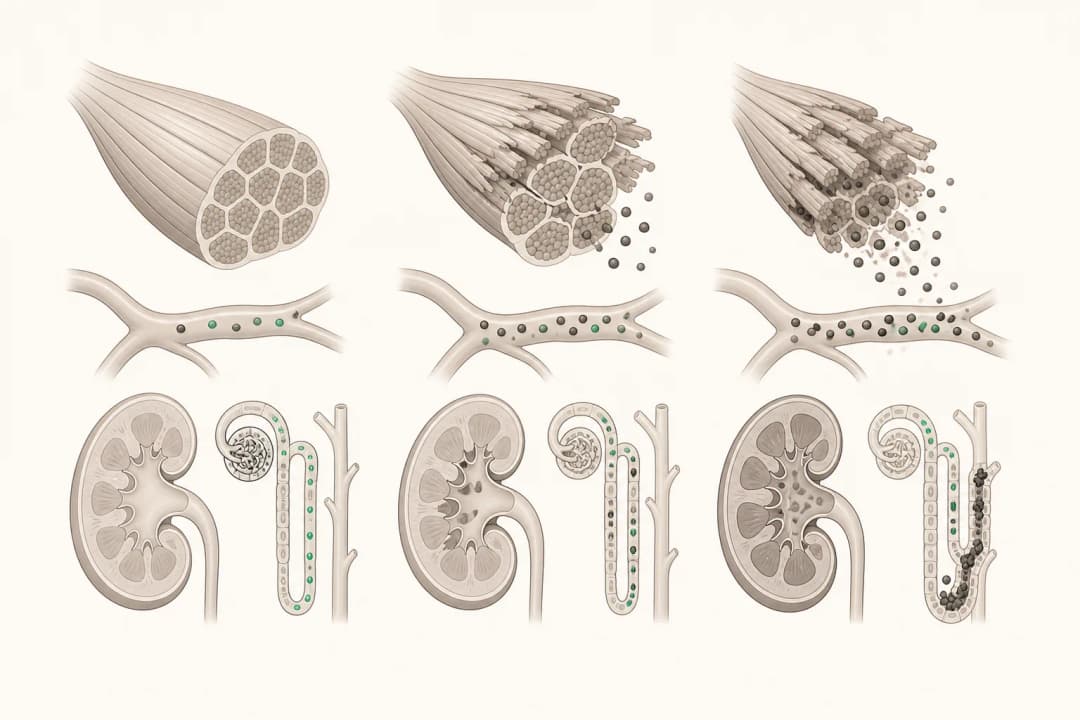
Rhabdomyolysis swelling can reflect injured muscle and pressure within a limb, especially when it occurs with severe pain, weakness, or dark urine.
This answers one question. It is not a diagnosis and does not replace an assessment by a licensed doctor.
At a glance
- Concerning pattern
- Swelling plus severe pain, weakness, or dark urine needs prompt assessment.
- Until assessed
- Avoid strenuous exercise and forceful massage.
Why swelling can occur
When muscle fibres are damaged, the affected area can become inflamed and hold extra fluid. Swelling may feel tight or tender and can limit movement. Rhabdomyolysis may involve one muscle group or several, depending on the trigger, such as intense exertion, a crush injury, prolonged pressure, heat illness, or a medicine-related reaction. Swelling alone cannot diagnose the condition. The combination with marked pain, weakness, reduced movement, or dark urine is more concerning than mild soreness after familiar activity.
What to do now
Stop the activity that brought on the symptoms and arrange prompt medical assessment if swelling is new, significant, or worsening. Avoid strenuous massage, heavy exercise, and unapproved anti-inflammatory medicines while waiting for advice, particularly if dehydration or kidney problems may be present. A clinician may check the limb, urine, muscle-injury blood markers, kidney function, and fluid or mineral balance. Mention injuries, heat exposure, long periods without movement, medicines, supplements, and recent training changes.
When swelling is urgent
Go to urgent care for rapidly expanding or very tight swelling, severe pain out of proportion to movement, numbness, pins and needles, pale or cool skin, inability to move the limb, dark or reduced urine, faintness, or confusion. These findings can signal serious muscle injury, pressure in a limb, or kidney stress and should not be watched at home.
Questions to ask
What could be causing this swelling? Do I need muscle and kidney blood tests? Is movement safe? Which changes in colour, sensation, urine, or pain should prompt emergency help?
Find care
General Clinics & Polyclinics in Abu Dhabi
That answer is general. If you want it applied to your own case, these are licensed general clinics & polyclinics listed in Abu Dhabi.
27 Ar Ruwwad St - Shakhbout City - MSH4 - Abu Dhabi - United Arab Emirates
Accepts: Daman, Thiqa, Cigna, MetLife +20 more
Al Ruwais, Al Dhafrah
Accepts: Daman, Thiqa, AXA, Cigna +16 more
Al Bahyah - Al Bahyah Old - Abu Dhabi - United Arab Emirates
Accepts: Daman, Thiqa, Cigna, Allianz Care +18 more
Abu Dhabi
Accepts: Daman, Thiqa, AXA, Cigna +27 more
Ordered by verification status and how complete each clinic's public record is, then alphabetically. This is a directory listing, not a ranking — Zavis does not rate or recommend providers.
A factual listing drawn from the DHA, DOH and MOHAP licence registers. It is not a referral, an endorsement, or advice that any of these providers is right for you.
Questions people ask
Is swelling after exercise always rhabdomyolysis?
No. Ordinary inflammation, a strain, or another injury can swell, but severe or progressive symptoms need medical assessment.
Can one swollen area still be serious?
Yes. A localised injury can affect one muscle group, so the extent of swelling does not by itself rule out a serious problem.
Related
Related reading
Keep reading
Medical disclaimer. This page is general health information, not medical advice, and it cannot diagnose you. Always consult a licensed healthcare provider about your own symptoms and treatment. In an emergency in the UAE, call 998 for an ambulance.