
Rhabdomyolysis pain relief: safe next steps
Short answer
Pain relief for suspected rhabdomyolysis should be guided by a clinician because muscle injury can affect kidney function and treatment choices.
This answers one question. It is not a diagnosis and does not replace an assessment by a licensed doctor.
At a glance
- First step
- Stop strenuous activity and arrange assessment
- Medicine check
- Kidney function can affect pain-relief choices
- Urgent sign
- Severe pain with weakness or dark urine
Why the pain needs attention
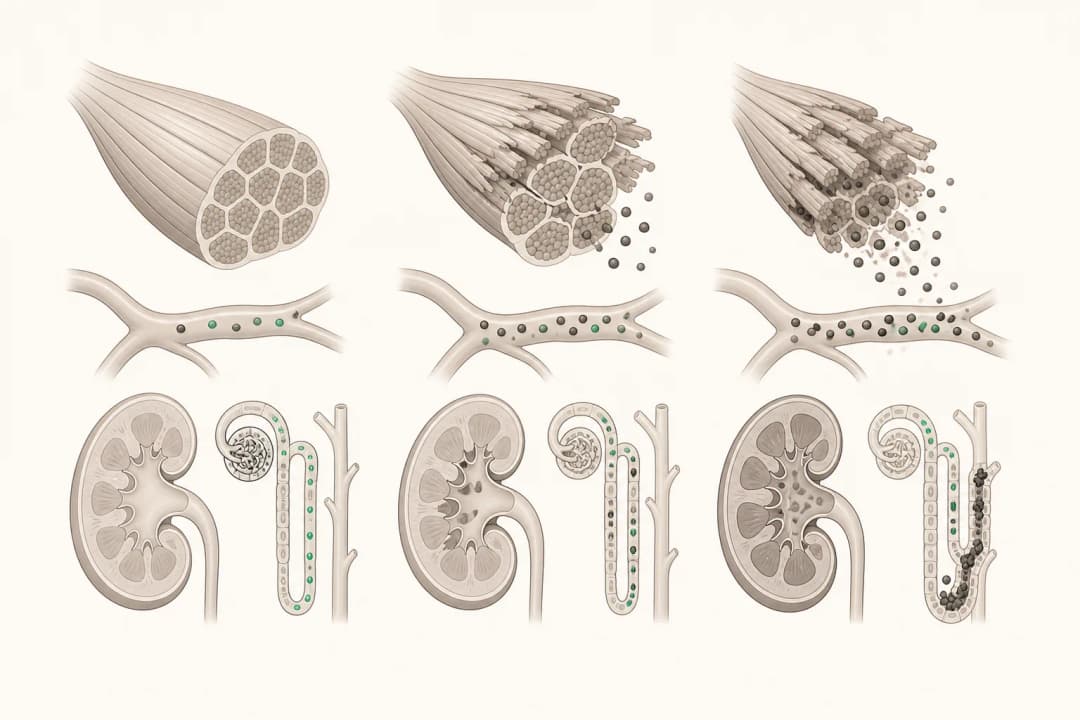
Rhabdomyolysis pain may feel deep, intense, tight, or tender and can occur with weakness or swelling. It differs from routine exercise discomfort when it is severe, keeps escalating, limits ordinary movement, or appears with dark urine or reduced urination. The muscle damage itself matters more than how much the pain responds to a tablet. Pain easing does not prove that the underlying injury has settled. Because kidney function and hydration status influence medicine safety, a healthcare professional should help choose an analgesic and decide whether testing is needed.
Practical relief while arranging care
Stop the activity that triggered the symptoms and rest the affected muscles. Stay in a cool environment and take fluids only as advised for your situation; do not force large amounts if you are vomiting, have a fluid restriction, or feel unwell. Avoid alcohol, strenuous massage, intense stretching, and unapproved supplements. Ask a pharmacist or clinician before taking anti-inflammatory pain medicines or combining products, particularly if you have kidney disease, stomach problems, take blood thinners, or are dehydrated. Record the medicine name and dose if you have already taken something.
When pain needs urgent review
Get urgent care for severe muscle pain with weakness, swelling, dark urine, very little urine, vomiting, dizziness, confusion, chest symptoms, or breathing difficulty. Emergency assessment is also sensible when pain follows heat exposure, prolonged exertion, a fall, a seizure, or being unable to move for a long period. Do not drive yourself if you feel faint or confused.
Questions for your doctor
Ask which pain medicines are suitable for your kidney results, whether you need fluids or observation, how to monitor urine, and what activity is safe during recovery. Tell the clinician about allergies, pregnancy, kidney conditions, and every prescription, over-the-counter medicine, and supplement.
Find care
General Clinics & Polyclinics in Abu Dhabi
That answer is general. If you want it applied to your own case, these are licensed general clinics & polyclinics listed in Abu Dhabi.
27 Ar Ruwwad St - Shakhbout City - MSH4 - Abu Dhabi - United Arab Emirates
Accepts: Daman, Thiqa, Cigna, MetLife +20 more
Al Ruwais, Al Dhafrah
Accepts: Daman, Thiqa, AXA, Cigna +16 more
Al Bahyah - Al Bahyah Old - Abu Dhabi - United Arab Emirates
Accepts: Daman, Thiqa, Cigna, Allianz Care +18 more
Abu Dhabi
Accepts: Daman, Thiqa, AXA, Cigna +27 more
Ordered by verification status and how complete each clinic's public record is, then alphabetically. This is a directory listing, not a ranking — Zavis does not rate or recommend providers.
A factual listing drawn from the DHA, DOH and MOHAP licence registers. It is not a referral, an endorsement, or advice that any of these providers is right for you.
Questions people ask
Can I take an anti-inflammatory for the pain?
Ask a clinician or pharmacist first, because dehydration or kidney involvement may make some anti-inflammatory medicines unsuitable.
Does pain relief treat rhabdomyolysis?
No. It may reduce discomfort, but rhabdomyolysis needs assessment and treatment directed at muscle injury and possible kidney effects.
Related
Related reading
Keep reading
Medical disclaimer. This page is general health information, not medical advice, and it cannot diagnose you. Always consult a licensed healthcare provider about your own symptoms and treatment. In an emergency in the UAE, call 998 for an ambulance.