
Understanding rhabdomyolysis lab results
Short answer
Rhabdomyolysis lab results are interpreted as a pattern over time, including muscle enzymes, kidney function, minerals, urine findings, and symptoms.
This answers one question. It is not a diagnosis and does not replace an assessment by a licensed doctor.
At a glance
- Trend matters
- Clinicians interpret muscle markers with kidney tests, minerals, urine, and symptoms.
- Do not self-interpret
- A single number cannot determine severity or recovery on its own.
What the tests look for
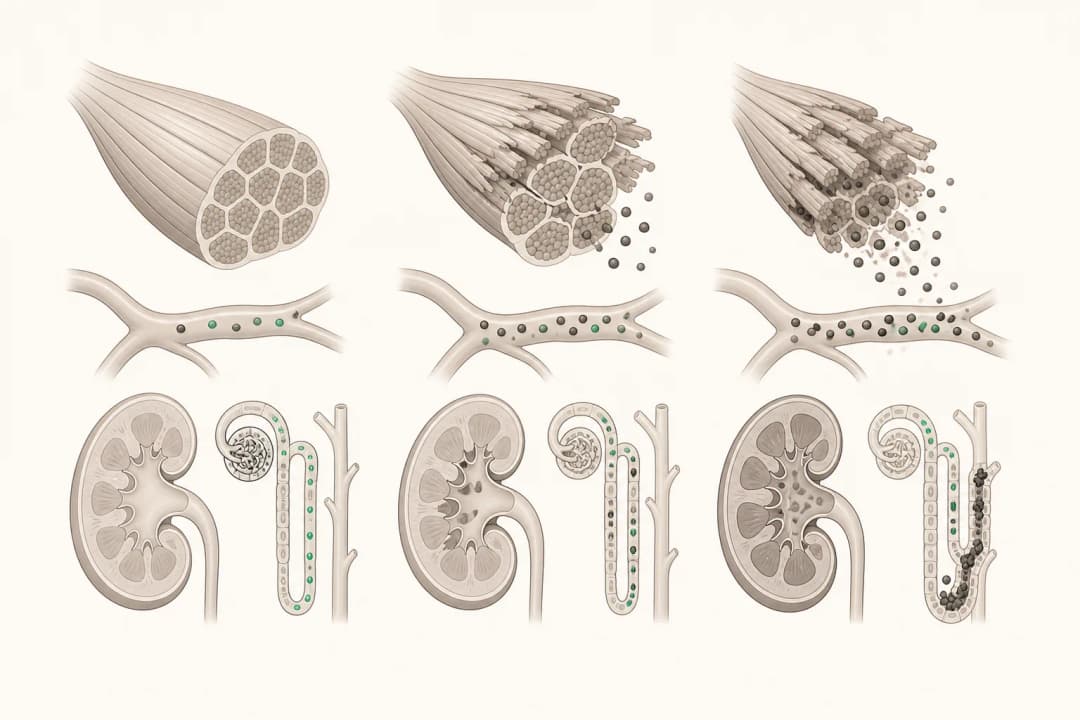
Creatine kinase is a blood marker of muscle injury and may be checked repeatedly to see whether the muscle injury is still active or beginning to settle. Kidney tests, electrolytes, and other blood measurements help clinicians assess how the body is handling released muscle contents and fluid changes. A urine test may detect myoglobin-related pigment or a blood-like reaction without many red blood cells. One result does not explain the whole situation: timing, symptoms, hydration, medicines, injury, and trends all matter.
Muscle soreness alone does not interpret a laboratory report. Background information about ordinary activity-related discomfort is available at [Muscle Soreness After Exercise](/symptoms/muscle-soreness-after-exercise/).
How to use your results
Review the report with the clinician who ordered it rather than comparing a value with someone else's result. Ask which markers are abnormal, whether they are changing, and whether kidney function or minerals need repeat checks. Follow instructions about fluids, rest, medicines, and food. Avoid strenuous exercise until a clinician provides a return plan. Keep a record of urine output, weakness, swelling, pain, vomiting, and new medicines because these details can change the interpretation.
When results need urgent action
Seek emergency care for confusion, fainting, breathing difficulty, repeated vomiting, severe or increasing muscle swelling, profound weakness, dark urine, or very little or no urine. Contact the treating service promptly if symptoms worsen even when a prior report seemed reassuring. Laboratory values can change, and a single test cannot predict the next result without clinical follow-up.
Questions about the report
Ask what the creatine kinase trend means, whether kidney function and electrolytes are stable, when repeat blood or urine testing is needed, and which symptoms should send you to emergency care. Ask when normal daily activity and structured exercise can resume and whether a trigger such as medication, heat, illness, or strenuous effort needs review.
Find care
General Clinics & Polyclinics in Abu Dhabi
That answer is general. If you want it applied to your own case, these are licensed general clinics & polyclinics listed in Abu Dhabi.
27 Ar Ruwwad St - Shakhbout City - MSH4 - Abu Dhabi - United Arab Emirates
Accepts: Daman, Thiqa, Cigna, MetLife +20 more
Al Ruwais, Al Dhafrah
Accepts: Daman, Thiqa, AXA, Cigna +16 more
Al Bahyah - Al Bahyah Old - Abu Dhabi - United Arab Emirates
Accepts: Daman, Thiqa, Cigna, Allianz Care +18 more
Abu Dhabi
Accepts: Daman, Thiqa, AXA, Cigna +27 more
Ordered by verification status and how complete each clinic's public record is, then alphabetically. This is a directory listing, not a ranking — Zavis does not rate or recommend providers.
A factual listing drawn from the DHA, DOH and MOHAP licence registers. It is not a referral, an endorsement, or advice that any of these providers is right for you.
Questions people ask
Does a high creatine kinase result always mean rhabdomyolysis?
No. Creatine kinase reflects muscle injury and must be interpreted with symptoms, timing, other tests, and clinical context.
Can results improve before I feel normal?
Yes. Symptoms and laboratory trends do not always change at the same pace, so follow the clinician's activity and testing plan.
Related
Related reading
Keep reading
Medical disclaimer. This page is general health information, not medical advice, and it cannot diagnose you. Always consult a licensed healthcare provider about your own symptoms and treatment. In an emergency in the UAE, call 998 for an ambulance.