
Rhabdomyolysis and urine changes: what they can mean
Short answer
Rhabdomyolysis can cause dark urine from muscle breakdown, but urine colour alone cannot confirm the diagnosis or show kidney function.
This answers one question. It is not a diagnosis and does not replace an assessment by a licensed doctor.
At a glance
- Possible appearance
- Tea-coloured, brown, or cola-coloured urine.
- Important limitation
- Normal-looking urine does not exclude rhabdomyolysis.
How rhabdomyolysis changes urine
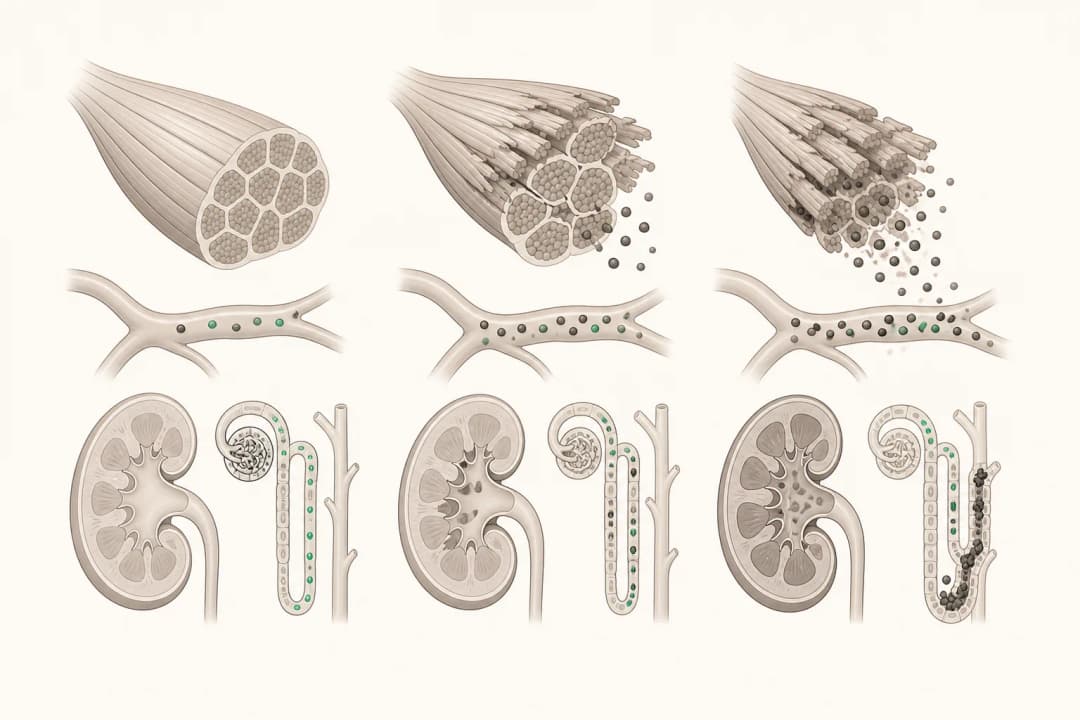
In rhabdomyolysis, injured muscle releases myoglobin. The kidneys filter it, and urine may appear tea-coloured, brown, or cola-coloured. A urine dipstick can react to blood even when few red blood cells are seen, because it may detect muscle pigment. Dehydration, foods, medicines, bleeding, and other illnesses can also alter urine colour, so a visual change has several possible explanations. Some people with rhabdomyolysis have no obvious dark urine.
Muscle soreness after activity is common and may not change urine. Compare the broader symptom pattern with [Muscle Soreness After Exercise](/symptoms/muscle-soreness-after-exercise/), while remembering that testing is needed when symptoms are concerning.
What to do about a urine change
If urine becomes brown or unusually dark after intense exercise, injury, heat, illness, or prolonged immobility, seek prompt medical assessment. Bring a list of medicines and supplements and note when the colour changed, how much you are urinating, and any muscle pain or weakness. Do not delay care while trying to identify the colour at home. Drink only as advised when vomiting, drowsiness, heart disease, or kidney disease affects safe fluid intake.
When urine changes are urgent
Go to emergency care for dark urine with severe muscle pain, swelling, profound weakness, very little or no urine, confusion, fainting, repeated vomiting, or breathing difficulty. Reduced urination is concerning even if urine colour looks normal. Clinicians may test urine alongside blood markers, kidney function, and minerals because urine appearance cannot measure the full effect on the body.
What to ask
Ask whether the urine result suggests muscle pigment, blood, dehydration, or another cause. Ask which blood and urine tests are needed, how to monitor urination, what fluids are safe, and when repeat testing should occur. Clarify which symptoms require emergency reassessment.
Find care
General Clinics & Polyclinics in Abu Dhabi
That answer is general. If you want it applied to your own case, these are licensed general clinics & polyclinics listed in Abu Dhabi.
27 Ar Ruwwad St - Shakhbout City - MSH4 - Abu Dhabi - United Arab Emirates
Accepts: Daman, Thiqa, Cigna, MetLife +20 more
Al Ruwais, Al Dhafrah
Accepts: Daman, Thiqa, AXA, Cigna +16 more
Al Bahyah - Al Bahyah Old - Abu Dhabi - United Arab Emirates
Accepts: Daman, Thiqa, Cigna, Allianz Care +18 more
Abu Dhabi
Accepts: Daman, Thiqa, AXA, Cigna +27 more
Ordered by verification status and how complete each clinic's public record is, then alphabetically. This is a directory listing, not a ranking — Zavis does not rate or recommend providers.
A factual listing drawn from the DHA, DOH and MOHAP licence registers. It is not a referral, an endorsement, or advice that any of these providers is right for you.
Questions people ask
Does dark urine prove rhabdomyolysis?
No. Several conditions can darken urine, so examination and blood and urine testing are needed.
Why can a dipstick say blood when no blood cells are seen?
Muscle pigment can trigger the dipstick reaction, which is why microscopy and other tests help interpret the result.
Related
Related reading
Keep reading
Medical disclaimer. This page is general health information, not medical advice, and it cannot diagnose you. Always consult a licensed healthcare provider about your own symptoms and treatment. In an emergency in the UAE, call 998 for an ambulance.